
Vandaag of morgen in huis

Kwaliteit gegarandeerd

Welkomstaanbiedingen ontgrendelen: GRATIS bezorging | Tot 80% korting | Gratis 30 dagen JoyPlus-proefperiode
Download de app
A jar of Thai curry paste might seem straightforward to pick, but the differences between varieties are significant. A cheap paste can, for example, be high in salt, while a product labelled “authentic” won’t automatically suit a vegan diet or your preferred level of heat. What’s more, home cooks sometimes buy a bulk pack that gradually loses its flavour after opening.
So, keep an eye on three common pitfalls:
The most well-known types are:
Bear in mind: heat level can’t be fully judged by colour alone. Start with a small amount and add more paste later.
Curry paste often contains chilli, lemongrass, garlic, shallot, galangal, lime leaf and spices. Some products also include:
Nittaya Red Curry Paste, for example, lists prawns and shellfish as allergens. Sunlee Panang Curry Paste contains soya according to the product information, and may contain peanuts and sesame. So if you want to cook vegan, don’t just rely on the front of the pack. A product may be marketed as vegan while still containing allergens.
If you have allergies, always check the most recent packaging. Product information in online shops can change, and the packaging remains the definitive source.
For a first try, 50g to 225g is often a sensible amount. Koh Thai Red Curry Paste in the 225g size suggests an average of two tablespoons for two people, giving roughly eight to ten servings. A 400g jar is better suited to families, meal preppers or cooks who regularly make Asian dishes. For professional kitchens or heavy users, 1kg packs such as Mae Ploy Red Curry Paste 1KG are more practical.
Store an opened jar according to the instructions on the label. For many products, that means sealing tightly and keeping it chilled after opening. Always follow the stated shelf life or period after opening.
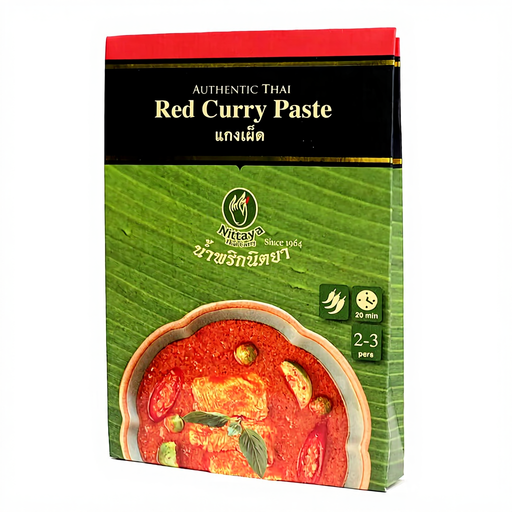
Why it suits this profile: The small pack is ideal for trying red curry without committing to a large quantity. According to the product description, this paste is also suitable for soups, marinades and stir-fries.
The allergens are clearly stated: the product contains prawns and shellfish. That stops you from relying solely on the word “traditional”.
50g pack; ingredients include red chilli, lemongrass and spices; suitable for multiple uses.
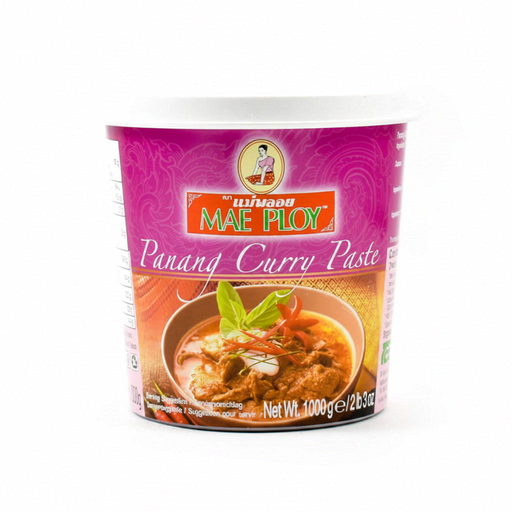
Why it suits this profile: This Panang curry paste has a recipe with red chilli, lemongrass, shallot, galangal, lime and spices. The product information gives a preparation ratio using 400g of coconut milk.
The dosage is clearly described. You can start with half for a milder curry, rather than trying to correct the heat afterwards.
400g pack; suitable for meat, tofu, seafood and vegetables; clear preparation steps.
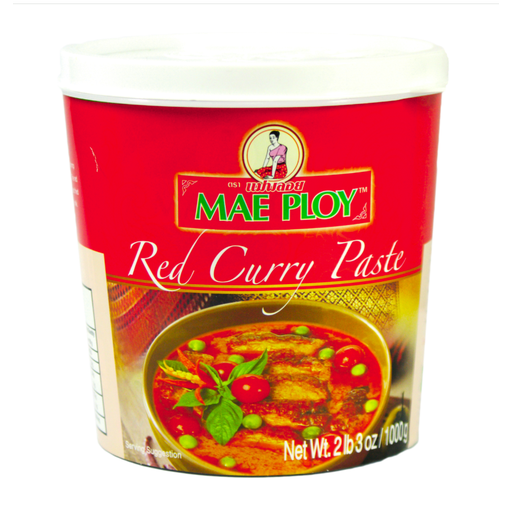
Why it suits this profile: A 1kg pack is aimed at heavy use, for example in a professional kitchen, catering environment or a household where Thai curry is made frequently.
The large quantity means you won’t need multiple small jars for each batch. Just make sure you use the paste within the stated period after opening.
1kg content; red chilli, garlic, lemongrass and shallot in the ingredients list; suitable for curry, soup and marinade.
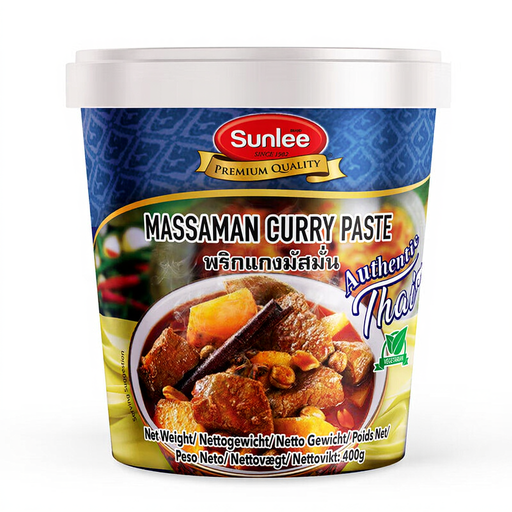
Why it suits this profile: The product information describes this curry paste as vegan and suitable for curry, stews, marinades and soups with coconut milk, tofu or vegetables.
This variety is specifically labelled as vegan, but it does list soya as an allergen. If you have allergies, always check the current packaging.
400g pack; Massaman profile with cinnamon, cumin, clove and cardamom among others; no animal ingredients according to the product labelling.
We’ve put together a full, up-to-date list of products that fully meet these strict selection criteria and comply with current European safety regulations.
A small pack of red or yellow curry paste is practical. Yellow curry paste is often described as milder, while red curry paste has a distinct chilli profile. Start with less than the recommended amount and add to taste.
Fry the paste briefly in a little oil to release the spices. Then add coconut milk and stir well. Add vegetables, tofu, meat or seafood and let everything cook through. Only then season with lime, fish sauce, salt or sugar. The exact ratio varies by product, so follow the label first.
That depends on the brand and the pack. Many jars need to be chilled after opening and used within a certain period. Seal the jar carefully and check the smell, colour, texture and the date on the packaging. When in doubt, don’t use the product.
