
Teacher who wants to show stitches clearly
Films hands, needles and small repair steps, and wants to control the light and shadows on the work surface, even against a dark background.


For a textile repair tutorial filmed against a dark background, an adjustable COB light is a good choice if you want to direct the light onto your hands and the fabric. A desk panel is more suitable when desk space and a clamp are the deciding factors. A small battery-powered light is especially useful for portable close-ups or as additional lighting, but don’t rely on it as your only key light without first making a test recording. Adjustable white light gives you flexibility for different fabric colours, but always check the colour and shadows with the camera and set-up you intend to use.
Films hands, needles and small repair steps, and wants to control the light and shadows on the work surface, even against a dark background.
Works with different fabrics or yarns and wants to keep colour settings and camera white balance consistent between recordings.
Needs to fit the camera, hands and light around a limited amount of table space, so pays attention to the mount, stand and power cable.
Best when: you have a permanent work area and want to direct the light onto your hands and fabric using the positioning or a suitable light modifier.
Bear in mind: you’ll need the right mount, light modifier and space around your work area. Lux figures are only comparable under the same measurement conditions.
Best when: you film at a desk and can attach a clamp in a suitable position beside your camera and hands.
Bear in mind: the angle at which the panel lights the stitches, and whether the power supply is suitable for the chosen brightness.
Best when: you want to move the light around for a close-up or add it to an existing set-up.
Bear in mind: the light output at your filming distance. A small light won’t necessarily be bright enough to illuminate the entire work surface on its own.
| Consideration | What should you check? | Who should consider this? |
|---|---|---|
| Stitches and texture | Check whether you can dim and direct the light. Make a test recording to assess the shadows and lighter details. | If you want viewers to follow the needle and stitches without pale thread looking overexposed, make this a priority. Around 36% of people choosing this tutorial set-up put stitch visibility first. |
| Fabric and yarn colours | Check the colour settings for the exact model and take a reference shot with your camera, using a white card, for example. | If you show different fabrics, you’ll want to minimise colour differences between recordings. This is the top priority for around 29% of people who care most about colour reproduction. |
| Positioning the light | Measure the space available for a clamp or tripod, and test the angle of the light with your actual work surface and background. | On a small table, the light, camera and your hands must not get in each other’s way. You’ll also want to check how much light falls on the background. Positioning is the top priority for around 21% of people. |
| Power and complete set-up | Check the power supply, cable routing and box contents for the exact version. Also check the relevant conformity information and any required CE marking. | If you want to know in advance what you’ll need for a workable set-up, power and mounting are important things to consider. Around 14% of people prioritise these factors. |
A stated CRI or TLCI rating describes a manufacturer’s specification, but on its own it won’t predict how fabric and yarn will look with your camera. So check the white balance, shadows and lighter details in a test recording. Only compare lux figures when the distance, colour setting and reflector are the same.
A lux figure depends on the measurement distance, colour setting and reflector used. Aputure publishes different figures for the amaran 100x S depending on the measurement set-up. These figures don’t automatically predict the light on your work surface.
Only compare measurements taken under similar conditions, then make a test recording where you plan to film.
Ulanzi describes the VL49 Mini LED 1672 as having fixed 5500 K light, while the VL49 RGB is a separate model with adjustable colour temperature. The two versions aren’t interchangeable.
Check the full model name and the colour settings of the version you’re considering.
According to Elgato, the maximum light output of the Elgato Key Light Air MK.2 depends on the power source. Other set-ups may also require a suitable mount or light modifier.
Check the intended light position, table edge and cable route against the contents listed for the exact model. You may otherwise need to buy a suitable mount, light modifier or power source separately.
According to Aputure, the amaran 100x S is an adjustable COB light for a permanent set-up where you want to direct the light and repeat colour settings.
According to Godox, the SL60IIBi is a dimmable COB light with adjustable colour temperature and a Bowens mount for light modifiers.
According to Elgato, the Key Light Air MK.2 is a desk panel with a clamp and adjustable white light, designed for a desk set-up.
According to Ulanzi, the VL49 Mini LED 1672 is a small light with fixed 5500 K output; the separate VL49 RGB has adjustable colour temperature. These models are most useful for portable close-ups or as additional lighting.
These Joybuy products are compact, portable video lights for close-ups or additional lighting. Make a test recording to see whether your chosen model is bright enough to act as a key light at your filming distance.
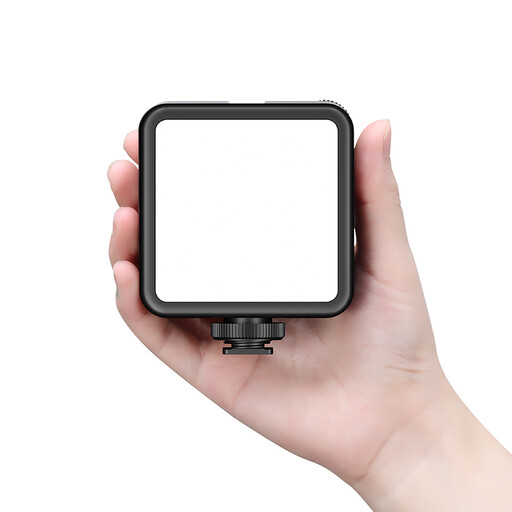 No image available
A rechargeable video light for a portable set-up. The product description mentions mounting it on cameras and tripods.
The product description mentions a cold shoe mount and the option to stack multiple lights.
Avoid prolonged direct exposure to the light. Use the light at full power in a well-ventilated area and keep the connections dry.
 No image available
The battery and adjustable colour temperature may come in handy when moving the light or matching it to different fabrics.
The product name lists a 2000 mAh battery, dimming, a rear magnet and adjustable colour temperature from 2500 K–9500 K.
Avoid direct exposure at close range. Use a standard 5V adapter and don’t use the light in damp conditions.
 No image available
The product name describes this as a portable mini fill light, making it suitable for adding light around a close-up.
The product name lists a magnetic mount and a 500 mAh battery.
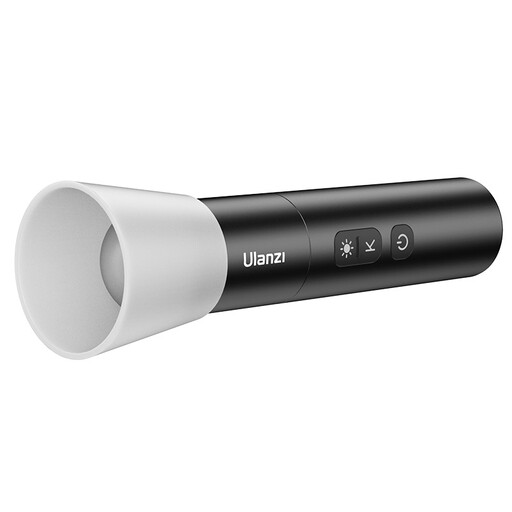 No image available
The stated bi-colour setting can help you match the light to different fabrics. Test the colour result with the camera you use.
The product name lists a range of 2000 K–5500 K, four brightness settings, a 2000 mAh battery, a weight of 187 g and a zoom function.
Don’t shine the light into anyone’s eyes at close range, or use it near flammable materials or in extreme heat. Don’t dismantle the battery.
Make a test recording using the fabric, thread and moving hands you’ll use in the tutorial. Review the image and, if your camera offers one, check the histogram. Canon Europe explains that highlight detail can be lost when bright pixels are clipped. This can help you assess the image, but it won’t give you a guaranteed light setting.
Not necessarily. First check the light’s colour setting and adjust your camera’s white balance accordingly. Nikon explains how automatic white balance and taking a reading with a white card can produce different colour results. A light with a fixed 5500 K setting offers less flexibility than the adjustable colour-temperature models mentioned, for example.
Test the light at a dimmed setting and with the camera settings you plan to use for filming. If necessary, adjust the settings or change the light source. Canon Europe explains that some LED light sources can cause banding when used with an electronic shutter. This doesn’t mean that this will happen with any specific model mentioned here.
For a consumer purchase in the Netherlands, the product must be of satisfactory quality and you can contact the seller for a solution. There is no fixed statutory guarantee period. According to the Dutch government, many distance purchases also come with a 14-day cooling-off period, subject to exceptions. Check which rules apply to your purchase.
Yes. If the light falls under EU rules requiring CE marking, it must meet the applicable requirements and carry the required marking when placed on the market. The rules that apply to a specific light depend on the product and any features it has. The European Union’s guidance on CE marking and the relevant product rules provides the framework.