What should you look for when choosing?
Ring light as the key light
Best when: you’re filming close to the repair with a phone or camera and want to light most of the work surface evenly, provided the light and holder fit clear of your hand movements.
Trade-off: front lighting can reduce shadows, but is less effective at bringing out texture. Also check that it doesn’t unintentionally brighten the dark background too much.
Ring light as fill light
Best when: a work light placed at an angle makes the stitches and fabric texture visible, but your hands still cast unwanted shadows.
Trade-off: you can control the shadows and background more independently, but you’ll need extra equipment, space for mounting and careful balancing between light sources.
Directional work light without a ring light
Best when: you only need to show a small repair area, and a ring light causes reflections from your chosen camera angle or illuminates the dark background too much.
Trade-off: directional light can highlight the work area on its own; make sure you check for shadows cast by your hands and tools in a test recording.
Before buying, check which EU requirements apply to the exact electrical model and which conformity documents go with it. Business.gov.nl stresses that the CE marking is not a quality mark; the applicable requirements depend in part on the power supply and any wireless features.
| What to consider |
What should you check? |
Who is this important for? |
| Visibility of stitches and texture |
Check whether the light can be dimmed and tilted or moved; test it with your own fabric and hand movements. |
If I want to show stitches and thread clearly while my hands move, I want to be able to test the angle of the light. Around 36% of consumers prioritise stitch and texture visibility. |
| Control over the dark background |
Compare a recording with the light directly in front of the work and from another angle; also assess how much light falls on the background. |
When I want the repair area to stand out against the dark background, I pay attention to how the light falls on both surfaces. Around 29% of consumers put control over the background first. |
| True-to-life fabric and thread colours |
Check the colour settings on the exact model, then adjust the camera’s white balance to match the light actually falling on the fabric. |
When showing fabric and thread colours, I want to avoid the lighting making the materials look different. Around 21% of consumers give colour accuracy their highest priority. |
| Space and camera mounting |
Check the holder, tripod or clamp included, and measure whether the setup will fit outside your work area. |
If I’m filming around one table, the camera needs to be stable without getting in the way of my hands. Around 14% of consumers start by considering ease of setup and mounting. |
Joybuy products
These products include directional work lights without a ring and ring lights for phone or tripod setups. Choose according to the angle of light you want, the mounting options and the space available around your repair table.
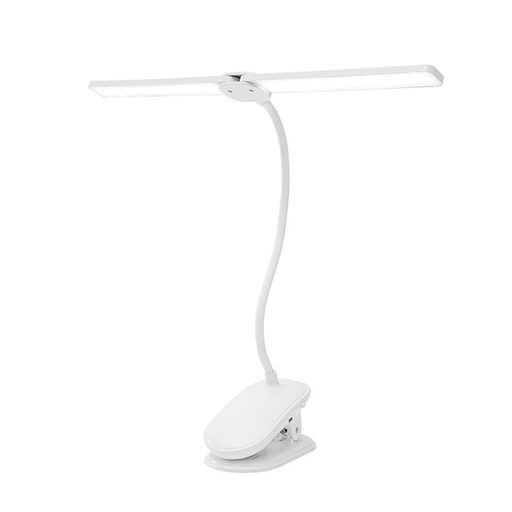 Image unavailable
Dimmable double LED clip-on lamp with flexible gooseneck
The two adjustable lamp heads and flexible neck give you options for directing light at the repair area.
The description lists three colour settings and a clamp for surfaces up to 5 cm thick. Check that the place you want to attach it is suitable for the clamp.
View at Joybuy
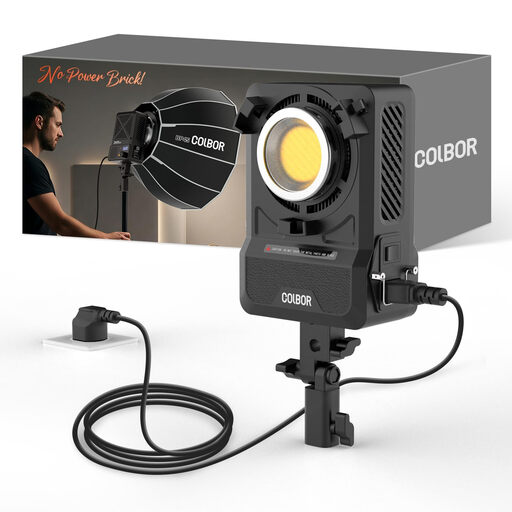 Image unavailable
COLBOR 200W LED video light with Bowens Mount
This video light is an option if you want to position a separate light source for the repair area rather than using a ring light as your key light.
The product information lists colour temperature adjustment from 2700 K–7000 K, a Bowens Mount and a built-in power adaptor.
View at Joybuy
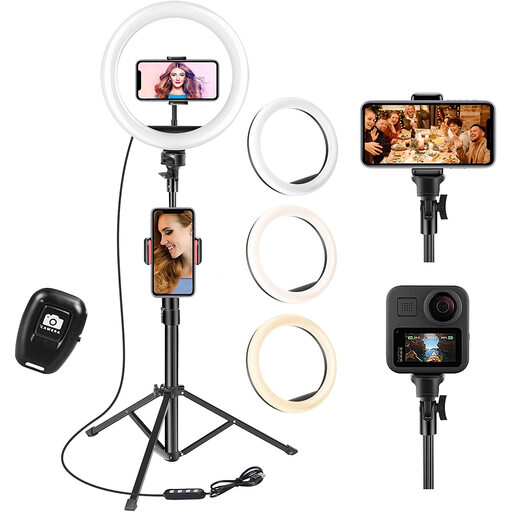 Image unavailable
10-inch ring light with tripod and phone holder
This ring light set may suit a phone setup where you want to position the light on a stand beside the work surface.
The product information lists three colour settings, ten brightness levels and an adjustable tripod with a height of 44 cm to 156 cm.
View at Joybuy
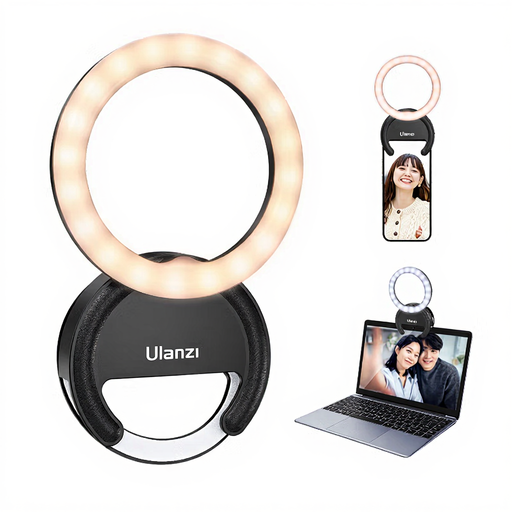 Image unavailable
ULANZI 4-inch phone ring light
This compact ring light is designed to attach to a smartphone and may suit a straightforward phone setup.
The product information lists three colour temperatures from 3000 K–7000 K and five brightness levels. Check that the mount suits your phone and filming angle.
View at Joybuy
Frequently asked questions
Should the ring light be positioned directly above the repair?
No. Compare front lighting with light from an angle in a short test recording. Check that the stitches, your hands and the fabric texture remain visible; directional light can help when front lighting doesn’t show enough texture.
How can I keep fabric and thread colours consistent between recordings?
Keep the lighting setup as consistent as possible and adjust the camera’s white balance to match the light actually falling on the fabric. Otherwise, a change in light colour can create a visible colour cast.
What should I check besides the light for filming at a table?
Check the holder, tripod or clamp included with the exact model, as well as the connection and power supply. A phone holder doesn’t necessarily mean your camera will fit without an additional mount.
Is a CE marking, on its own, an independent quality assessment?
No. According to Business.gov.nl, the CE marking is not a quality mark, but a declaration by the manufacturer that the product complies with applicable EU requirements. The requirements depend in part on the model, so check the information for the specific product.
What cooling-off period usually applies to online purchases by consumers in the Netherlands?
According to the Dutch government, a 14-day cooling-off period applies in many cases to distance purchases. There are exceptions, so check the terms that apply to your specific purchase.


