
Creator of large 3D terrains
You combine elevation data with 3D visualisation or rendering, and want to know whether the memory and graphics card in your chosen configuration are suitable for your software and projects.


Start by matching your PC to the software, files and tasks you actually use. For mainly 2D mapping, you may not need a powerful gaming PC, while 3D visualisation and rendering can demand more memory and graphics power. For every configuration, also compare noise under load, upgrade options and the terms of your purchase. A cooling claim alone doesn’t prove that a PC is quiet enough for a shared office.
You combine elevation data with 3D visualisation or rendering, and want to know whether the memory and graphics card in your chosen configuration are suitable for your software and projects.
You work alongside colleagues and take noise during use into account. A general promise of quiet cooling doesn’t tell you how loud the complete PC will be under your workload.
You work with terrain and map data, and want to check whether a less powerful configuration is enough for your software and files, without choosing graphics hardware your work doesn’t require.
A good fit when: as well as editing maps, you regularly visualise or render 3D terrain, and the specific components suit your software.
Consider: a graphics configuration or cooling claim alone doesn’t tell you how much noise the complete PC makes under your workload.
A good fit when: you need specific workstation features, professional 3D workflows or upgrade options, and can match an exact configuration to those needs.
Consider: the workstation name doesn’t guarantee a suitable graphics card or enough memory. For example, Lenovo offers ThinkStation P3 Tower Gen 2 configurations with integrated graphics.
A good fit when: you mainly edit map layers and elevation data, and don’t need demanding 3D rendering.
Consider: a basic configuration may leave less room for demanding 3D projects in future, so check the PC against your current software and files.
First, decide which software and projects you want to run. Then compare the specific components, and finally check noise levels and purchase terms. The Blender Foundation lists 8 GB RAM and 2 GB VRAM as the minimum for Blender on Windows, and recommends 32 GB RAM and 8 GB VRAM. These are Blender’s software requirements, not a universal baseline for every terrain map.
| Consideration | What to look for | Who is this more relevant to? |
|---|---|---|
| Memory and large files | Check the installed RAM, available memory slots and SSD space. Compare them with your software and files. | If I work with large elevation files, I want enough memory without automatically applying a Blender recommendation to every mapping task. Around 29% of consumers prioritise memory and handling large files. |
| Noise and placement | Where possible, look for a measurement of the exact PC under a similar workload and at a similar distance. Also consider its position and keep air intakes clear. | If I work in the same room as colleagues, I want to know how the complete PC sounds during my tasks. Around 29% of consumers prioritise noise and placement in a shared office. |
| Graphics card for 3D | Check the video memory in the exact configuration and, if using GPU rendering in Blender Cycles, whether the graphics card and backend are supported. | For 3D visualisation or rendering, I want to match the graphics configuration to my application. Around 24% of consumers prioritise these 3D capabilities. |
| Overall configuration and terms | Check the exact model, installed components, software requirements, room for upgrades and the terms that apply to your purchase. | When choosing a PC for my work, I want the complete configuration and purchase terms to suit my situation. Around 18% of consumers prioritise this overall suitability. |
Map editing without Blender rendering doesn’t automatically have the same requirements as a 3D rendering workflow. As a result, a powerful configuration may not suit the work you actually do.
First, work out which software, files and output you use, then compare their requirements with the exact PC.
A cooling claim isn’t a comparable noise measurement of the complete PC. What’s more, configurations in the same product range can have different components.
Check the CPU, RAM and GPU actually installed, and look for a noise measurement of the complete configuration under a relevant workload.
The consumer protection that applies depends in part on who is buying and the main purpose of the contract.
Before placing your order, establish whether you’re buying as a private individual or mainly for business, and check the relevant sales and service terms.
HP offers OMEN gaming desktops and Z workstations. Compare your chosen configuration for the components needed for your 3D workload and how it will fit in your office.
ThinkStation is a workstation range worth comparing when configuration and workstation features matter; Legion is the gaming range.
MAG Infinite S3 is a gaming desktop range with different CPU, GPU and memory configurations.
Dell Pro Precision is a workstation range to consider when configurable components for 3D work or large datasets are relevant.
These gaming desktops are options to compare if you’re looking for a desktop with a dedicated graphics card for a 3D workflow. Check the specifications and compatibility with your software for each configuration.
 No image available
An option to compare for a 3D workflow; check the specific configuration against your software and projects.
32 GB DDR5 RAM, 16 GB video memory and 1 TB NVMe SSD.
 No image available
An option to consider if you want to do 3D visualisation or rendering as well as map editing; check it’s compatible with your intended workflow.
32 GB DDR5 RAM, RTX 5070 with 12 GB video memory and 1 TB SSD.
No image available
An option to compare for a 3D workflow; check that the components suit your software and project files.
32 GB DDR5 RAM, RTX 5070 with 12 GB video memory and 1 TB PCIe 4.0 SSD.
 No image available
A gaming desktop to compare if you’re looking for a dedicated graphics card for your terrain project; check the configuration against your software.
32 GB DDR5 RAM, RTX 5070 with 12 GB video memory, 1 TB PCIe 4.0 SSD and Wi-Fi 7.
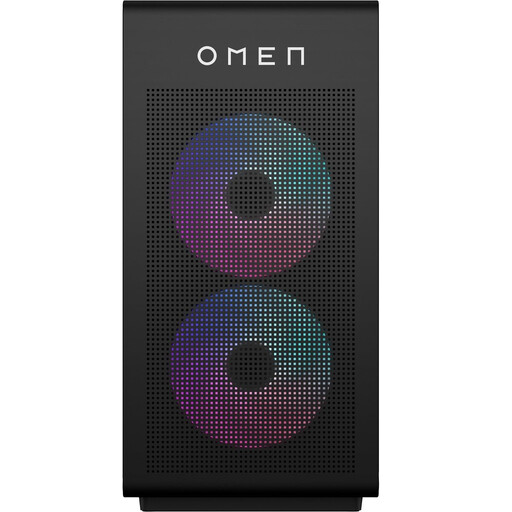 No image available
Worth comparing for a 3D workflow if upgrading suits your needs; check the configuration you’re ordering beforehand.
16 GB RAM, RTX 5060 with 8 GB video memory and 1 TB SSD. The listed RAM is below the 32 GB recommended for Blender; the description states that it can be upgraded to 128 GB.
No, not simply because you’re creating a terrain map. First establish whether you mainly edit map layers and elevation data, or also render a 3D scene. For GPU rendering in Blender Cycles, the graphics card and the selected backend both matter.
Look for a noise measurement of the complete, exact configuration under a similar workload and comparable measuring conditions. Also consider where you’ll place it. Arboportaal points out that disruptive noise at work can be an occupational risk, but limits for harmful daily noise exposure aren’t a standard for a pleasantly quiet office PC.
Before installation, check your software requirements and install the relevant graphics drivers. Keep air intakes clear and check the exact PC specifications before upgrading its memory. For GPU rendering in Blender Cycles, you’ll also need to set the required backend separately.
For a consumer purchase, the seller is responsible for the statutory warranty if a product is faulty, according to the Netherlands Authority for Consumers and Markets (Autoriteit Consument & Markt). If the contract is used mainly or exclusively for business, consumer protection doesn’t necessarily apply under ACM ConsuWijzer guidance. Check the business purchase and service terms as well.
No. Dutch government information describes CE not as a quality mark, but as the manufacturer’s declaration that the relevant EU product requirements have been met. The mark says nothing about the noise level of your PC configuration in the office.