Choose the screen size based on the furthest seat, and check the picture from the seats at an angle too. A wide viewing angle can be important when your group is spread out. Then compare motion handling and reflections on the specific TV: OLED is worth considering if people will be watching from the sides, while LCD with mini-LED may be a contender in a bright room. Also check how you’ll receive the tournament you want to watch, as a smart TV doesn’t automatically give you access to every match.
Who is this choice relevant to?
Viewers spread around the room
You watch with others from seats directly in front of the screen and at an angle, and want everyone to be able to follow the match clearly. Consumentenbond lists a wide viewing angle as a plus when watching sport together.
Tennis fans who follow the action
You pay attention to fast rallies and camera movement, and want to compare real-world motion handling rather than relying solely on the quoted refresh rate. Consumentenbond warns that image processing doesn’t always handle unpredictable movement well.
Viewers in a bright room
You often watch during the day and weigh brightness and reflections against visibility from the other seats. Consumentenbond describes differences in viewing angle between LCD and OLED; you should also assess the specific model in your own setup.
What should you look for when choosing?
OLED TV
When If people will also be sitting at an angle to the screen and viewing angle is a key priority.
Trade-off A good viewing angle doesn’t automatically prevent reflections; for long periods of static images, you should also bear image retention in mind.
Mini-LED LCD TV
When If you watch during the day and brightness matters to you.
Trade-off A high quoted brightness doesn’t prove that reflections will be limited; check the picture from seats at an angle too.
Other LCD TVs
When If the main viewers sit directly in front of the screen, and purchase cost or a more suitable smaller size is a key consideration.
Trade-off Check viewing angle, reflections and motion handling for each model; the term 4K alone tells you nothing about these features.
| What to consider |
What should you check? |
Who is this important for? |
| Visibility from every seat |
Measure the furthest viewing distance and check brightness and colours from the seats at the edges of the room. Consumentenbond suggests around 2.4 times the screen diagonal as a comfortable starting point for viewing distance, not a fixed rule. |
When I watch from the seats at the side, I want to be able to follow the court without having to keep changing seats. For around 36% of consumers, visibility from several seats is the top priority when choosing. |
| Motion handling |
Compare sports footage on the TV itself and try the motion settings; the quoted refresh rate alone doesn’t guarantee a flawless picture. |
During fast rallies, I want to follow the ball without distracting processing artefacts. Around 29% of consumers prioritise motion handling. |
| Daylight and reflections |
Consider windows and lights in the room, and assess brightness, reflections and viewing angle for each model. |
When I watch during the day, I want to see the screen clearly without windows or lights getting in the way. Around 21% of consumers give visibility in daylight top priority. |
| Cost and access to matches |
Compare the energy label for the exact model, and check the provider, reception method and any installation costs for the tournament you want to watch. |
I want to know in advance how I can watch the match and what extra costs my setup may involve. For around 14% of consumers, total cost and access to matches are the biggest considerations. |
What to consider when buying
-
Assuming a high refresh rate guarantees a flawless tennis picture
Image processing can be less accurate with fast, unpredictable movement. Consumentenbond points out that calculated intermediate frames don’t always work well.
Watch sports footage on the exact model and compare the available motion settings.
-
Comparing TVs only from directly in front
When you’re watching together, visibility and colours can look different from seats at the side. Viewing angles vary by model and screen type.
Check both the viewing angle and reflections from the places where your group will actually sit.
-
Assuming a smart TV gives you access to every tournament
Broadcast rights and how you receive coverage vary by tournament and can change.
Before watching the match you’re interested in, check the provider, your subscription and how you’ll receive it.
You may need a suitable subscription or another way to receive the broadcast.
Brands to compare
LG
The LG OLED65C68LA is a 65-inch OLED model worth comparing if multiple seating positions and OLED picture quality matter to you.
- LG lists Brightness Booster for this model.
- This is a manufacturer specification, not an independent measurement of reflections or proof that the TV performs better in every bright room.
TCL
The TCL 65C7K is a 65-inch LCD TV with QD mini-LED to consider when weighing daylight performance against viewing angle.
- TCL lists a native refresh rate of 144 Hz for the C7K series.
- That quoted figure isn’t an independent sports test; assess motion handling and the picture from seats at an angle on the specific model.
Philips
According to Philips, the Philips 65OLED810/12 combines a 65-inch OLED screen with Ambilight, making it an option to compare for shared viewing.
- Ambilight is an additional feature on this model.
- Philips’s statement about viewing from an angle is a brand claim; Ambilight doesn’t replace checking viewing angles and reflections.
Samsung
The Samsung QN80F is a 65-inch Neo QLED Mini LED option to compare with the OLED models listed above.
- The product range is described as Neo QLED Mini LED.
- Check visibility from seats at the side and how each TV handles tennis movement.
TVs for different viewing spaces
These Joybuy products include OLED, LCD, QLED and mini-LED LCD TVs in a range of screen sizes. Compare the size, viewing position and stated motion features with your own room.
 No image available
LG OLED65C68LA 65-inch OLED evo AI C6 4K Smart TV
A 65-inch OLED TV to consider for shared viewing; the right screen size depends on the seating distance and the room.
4K; native refresh rate of 120 Hz; VRR up to 165 Hz. The stated refresh rate alone doesn’t guarantee a flawless tennis picture.
View at Joybuy
 No image available
Hisense 65A6S 65-inch 4K UHD TV
The 65-inch size gives you a practical starting point for comparing the TV with the viewing distance and seating in your room.
DLED; 4K UHD; quoted viewing angle of 178°; 60 Hz and MEMC. These are product specifications, not independent viewing or motion tests.
View at Joybuy
 No image available
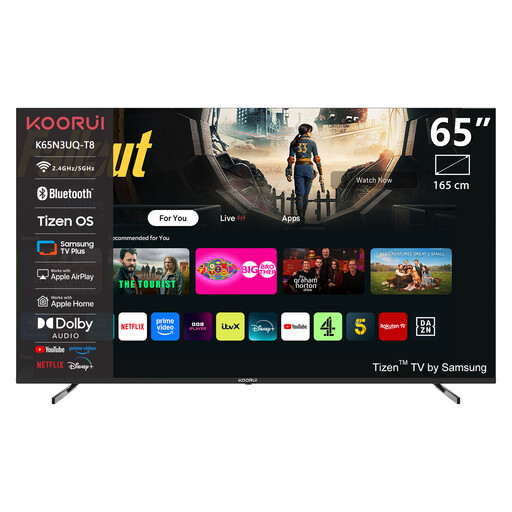
KOORUI K65N3UQ-T8 65-inch 4K UHD QLED Smart TV
A 65-inch QLED model to compare by size and viewing position for a shared entertainment space.
4K UHD; Tizen OS; LAN network support.
View at Joybuy
 No image available
TCL T8D 85-inch 4K QD-Mini LED Smart TV
The 85-inch screen is a large size to weigh up against your viewing distance and available space.
4K QD-Mini LED; 144 Hz. The stated refresh rate alone doesn’t determine how tennis movement will look.
View at Joybuy
 No image available
TCL 50Q6C 50-inch 4K QD-Mini LED TV
The 50-inch size is a starting point for comparison with your measured viewing distance and the viewers’ seating positions.
4K; QD-Mini LED; native refresh rate of 144 Hz. The refresh rate alone doesn’t guarantee a particular level of motion quality.
View at Joybuy
Frequently asked questions
Do I need 120 or 144 Hz to watch tennis?
No, not as a general requirement when buying. A higher panel refresh rate and image processing can make movement look smoother, but calculated intermediate frames can cause errors with unpredictable movement. That’s why Consumentenbond recommends comparing sports footage on the specific TV.
How do I choose a size for different seating positions?
Measure the distance from the seats to where you plan to put the screen, and check visibility from the seats at an angle too. Consumentenbond suggests around 2.4 times the screen diagonal as a starting point for a comfortable viewing distance, not a required measurement.
Can I automatically watch every tennis tournament on any smart TV?
No. The provider varies by tournament, and broadcast rights can change. Ziggo published an overview for the 2026 season; before watching a future match, check the current provider, your subscription and the available reception or app options.
What should I check when setting up and using an OLED TV?
Before buying, check that the TV and its stand or wall bracket will fit, and view the picture from the seats at the edges of the room. With OLED, avoid leaving a static image on screen for long periods. In an older, unusually long test, Consumentenbond observed image retention; that test doesn’t determine the risk for any specific current model.
Which Dutch rules are relevant when buying and claiming under the warranty?
Televisions are covered by EU energy labelling rules for electronic displays; the label helps you compare energy use, among other things. In the Netherlands, statutory warranty applies alongside any manufacturer’s warranty. ACM ConsuWijzer explains that, subject to the applicable conditions, the retailer must provide a solution if a product is faulty; there isn’t simply a fixed two-year statutory warranty period in the Netherlands.


