
Watching from a side seat
You want to follow a tennis match from a seat at an angle to the screen. So pay attention to the viewing angle of the screen material you choose, not just the projector.


Start by checking the viewing angle of the screen material: this is one of the factors that determines whether you can see the picture clearly from a side seat. Then choose a projector with a throw distance, brightness and placement options that suit your room. Motion processing and connections for your match source are also worth considering separately.
You want to follow a tennis match from a seat at an angle to the screen. So pay attention to the viewing angle of the screen material you choose, not just the projector.
You sometimes watch in a bright room and want to weigh up your screen choice, room-darkening options and the stated brightness together.
You can't easily position the projector directly in front of the screen or at the ideal distance. Throw distance, lens shift and digital keystone correction may all be relevant.
First, compare the viewing angle of the exact screen material with your seating positions. Then measure the available throw distance and consider whether you can darken the room. Finally, check your video source and the motion settings for tennis.
| What to consider | What to look for | Who will find this most important? |
|---|---|---|
| Viewing from a side seat | Compare the stated viewing angle of your chosen screen material with the position of your seats. Elite Screens lists 180° for CineWhite and 90° for CineGrey 3D; these are the manufacturers' figures for those materials. | If I'm sitting at an angle to the screen, I want to follow the rally without the picture being unsuitable from my seat. Around 36% of consumers put side-seat visibility first. |
| Picture in a bright room | Consider your options for darkening the room, the stated brightness of the exact projector model, and the viewing angle and throw ratio of any ambient-light-rejecting screen. A stated lumen rating isn't a measure of picture quality in daylight. | When I watch tennis during the day, I want to know whether the combination suits the ambient light and my seating position. Around 29% of consumers give picture quality in daylight top priority. |
| Space for the projector | Measure your desired picture width and the possible distance and position of the lens. Check the throw ratio and, if you use digital correction, how keystone may affect picture quality; BenQ mentions sharpness and picture size, among other things. | If I can't position my projector in the ideal spot, I want to know in advance whether the throw distance or lens shift will work in my room. Around 21% of consumers give placement top priority. |
| Rallies and match source | Check the connections for your set-top box or streaming device, and try the motion settings with your own match source. Epson lists frame interpolation and HDMI connections for the EH-TW7100; input lag alone doesn't show how a TV broadcast will look. | I want to follow fast rallies clearly and connect my match source without any fuss. Around 14% of consumers put motion handling and source connections ahead of other buying considerations. |
Keystone correction adjusts the shape of the picture when the projector is positioned at an angle. It doesn't change the direction in which the screen material reflects light towards viewers.
Mark the seating positions and projector position separately, then check the viewing angle of the exact screen material.
Elite Screens gives CineGrey 3D a minimum throw ratio of 1.5 times the picture width, and says that the material isn't suitable for ultra-short-throw or short-throw projectors.
Check the screen's stated throw ratio and compare it with the distance your projector needs for your chosen picture width.
A gaming specification or a statement that a projector supports a particular signal doesn't, by itself, tell you how your match source and motion settings will look.
Check the specifications for the exact model and, where possible, try the motion setting you want with the source you use for matches.
The EH-TW7100 is an example to consider when assessing lens shift, optical zoom, HDMI sources and motion settings.
The TK710STi is an example of a short-throw projector.
The UHZ66 is an example to consider if you're looking at a laser projector with a standard throw distance.
The CineWhite and CineGrey 3D screen materials show why you should compare the specifications of the exact screen surface.
Worth considering if you're looking into automatic screen alignment on certain portable projector models.
These projectors offer different features for short-throw viewing, connectivity and flexible placement. If you're watching tennis from a side seat, also check the viewing angle of the screen material separately.
 No image available
The short throw ratio may be useful if you have limited space between the projector and screen; it doesn't determine the viewing angle from a side seat.
The product description lists a throw ratio of 0,52:1, WXGA 1280 × 800, 3.800 ANSI lumens, a sports mode and an HDMI input.
 No image available
The stated short throw ratio may be useful if the projector needs to sit closer to the screen; check the distance required for your picture width.
The product name lists 520 ISO lumens, native 1080P and a 360° gimbal. The description gives a throw ratio of 1,17:1 and HDMI compatibility.
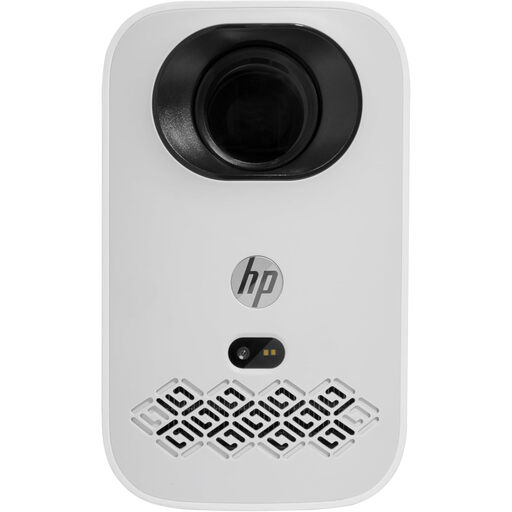 No image available
The listed HDMI connection and wireless casting are useful features to compare with how you want to watch a tennis match.
The product description lists 500 LED lumens, 220 ANSI lumens, native 1080P, HDMI and wireless casting.
 No image available
The stated rotation and automatic screen correction may be useful if you want flexible projector placement; they don't change the screen's viewing angle.
The product name lists a picture size of 50–200 inches, digital zoom of 50%–100%, 180° rotation and HDMI compatibility.
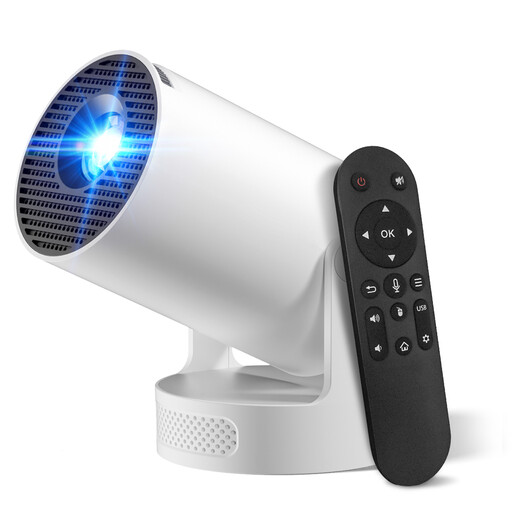 No image available
Automatic image correction and rotation are features to consider if you're looking at different placement options. Also check that the picture width and viewing angle suit your setup.
The product name lists a picture size of 50–200 inches, zoom of 50%–100%, 180° rotation and HDMI compatibility.
Not necessarily. The projector's angle and the screen's viewing angle from your seat are two different things; check the viewing angle of the exact screen material.
Measure your desired picture width and the distance and position of the lens. Then check the throw ratio and, if you need it, the lens shift range of the exact model. Keep the ventilation openings clear, as instructed in the device manual.
The word ‘smart’ alone doesn't tell you. Check whether the streaming service works on the specific device, or which external source you can connect via HDMI. Epson says you can connect a streaming device or set-top box to the EH-TW7100 via HDMI.
According to the Dutch government, the retailer is your point of contact for your statutory guarantee. The Netherlands doesn't have a fixed statutory guarantee period of two years; what you can expect from the product depends on the circumstances.
According to the Dutch government, when you buy online from a business, you generally have a 14-day cooling-off period. The distance-selling rules don't apply in the same way when you buy online from a private individual.