
Vandaag of morgen in huis

Kwaliteit gegarandeerd

Welkomstaanbiedingen ontgrendelen: GRATIS bezorging | Tot 80% korting | Gratis 30 dagen JoyPlus-proefperiode
Download de app
A temperature-controlled kettle is useful if you don’t want to use boiling water for every drink. Green tea, filter coffee and some instant drinks need water at different temperatures. But a long list of features doesn’t tell you everything. The wrong choice could leave you with an appliance that takes up too much space, is difficult to clean or doesn’t keep water warm for long enough.
A kettle with five or seven settings sounds versatile. However, always check which temperatures are actually available. Some models start at 80 or 85 °C, which makes them less suitable if you also need lukewarm water, for certain drinks or household tasks, for example.
A kettle with a digital temperature display also gives you more information than a coloured LED alone. You can see the temperature shown on the display while the water is heating or afterwards. Do check whether it shows the actual temperature or simply offers preset programmes.
A 1.7-litre kettle is practical for a family, but takes up more space and uses more water when you’re only making one cup. For a one-person household or home office, a 1.5-litre kettle may be a more convenient compromise.
Check the difference between the maximum capacity and the minimum fill level. A fast-boiling kettle with a high wattage isn’t automatically more energy-efficient if you heat more water than you need each time.
A kettle with a keep-warm function can save you from having to boil the water again. However, the duration varies by model. Available product information for several appliances specifies a period of 30 or 60 minutes. So don’t just check whether this function is included: look at how long it lasts and how to activate it.
Several temperature settings are useful for tea and coffee. For example, the Midea Stainless Steel Kettle 1.7 L lists six settings: 40, 60, 70, 80, 90 and 100 °C. Other models offer seven settings between 45 and 100 °C. According to Midea’s product description, its 1.7-litre model, with a power rating of 2200 W, can heat up to 1.7 litres in under five minutes. Treat this as a stated product specification, not a guarantee for every situation. The amount of water and its starting temperature affect the actual heating time.
A capacity of 1.5 litres is enough for around six 250 ml cups; 1.7 litres is about seven cups. Never fill above the maximum mark or use the appliance below the minimum level.
A stainless-steel kettle often has a metal interior or casing. Check the specifications to see which parts are actually made of stainless steel. According to the product description, double-walled models have a cooler exterior than single-walled kettles. This can be useful in a household with children, but hot steam and the lid can still pose a scalding risk.
If you’re specifically looking for a BPA-free kettle, check which parts come into contact with the water. Some models only state that their plastic parts are BPA-free, while others specify a stainless-steel interior. Base your choice on the full materials description, not just the product title.
Useful features include automatic switch-off, boil-dry protection and a removable limescale filter. A limescale filter catches loose particles, but it doesn’t replace regular descaling. Limescale may become visible more quickly in areas with hard tap water.
Also look for:
Only use an electric kettle for clean water, unless the manufacturer explicitly says that other liquids are suitable. The safety information supplied with several models warns against immersing the kettle, base, plug or cable in water.
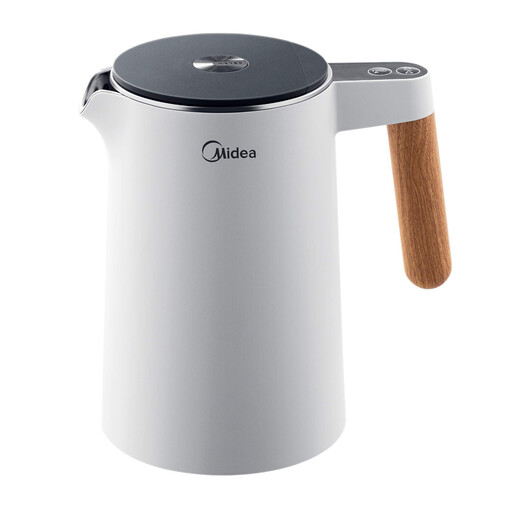
Why it suits this user: This model combines a 1.5-litre capacity with seven temperature settings from 45 to 100 °C, a display and a keep-warm function.
The product information lists specific temperature settings and a digital display, rather than making only a general claim about temperature control.
2200 W, double-walled design, BPA-free parts according to the product description, and keeps water warm for up to one hour.
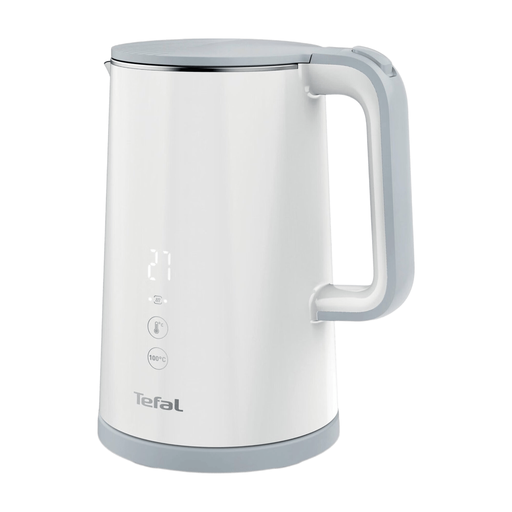
Why it suits this user: The double-walled casing, digital temperature display and touchscreen controls are ideal for users who value convenience and quality finishes.
The product specifications list five settings between 40 and 100 °C, a water-level indicator and automatic switch-off.
Digital temperature display, keeps water warm for 30 minutes, 1800 W and a 360° base.
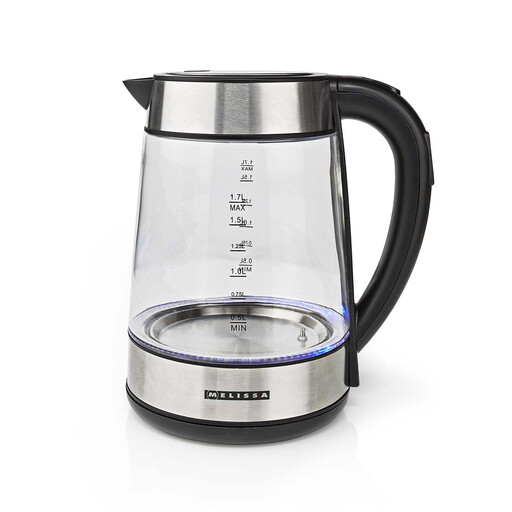
Why it suits this user: With a 1.7-litre capacity, five temperature presets and a concealed heating element, this model is well suited to multiple users or frequent use.
The specifications list a removable limescale filter, boil-dry protection and automatic switch-off.
2200 W, glass casing, settings from 50 to 100 °C and a 30-minute keep-warm function.
We’ve put together a complete, up-to-date list of products that meet these strict selection criteria and current European safety regulations.
It mainly depends on how much water you heat. Setting a lower temperature may use less energy than boiling the water, but the difference is smaller if you fill the kettle with more water than you need. Use the water-level indicator and, where possible, heat only enough for your cups.
It depends on the hardness of your water and how often you use the kettle. Check the inside regularly for limescale and follow the manufacturer’s care instructions. A limescale filter helps catch loose particles, but won’t stop limescale building up inside the appliance.
According to the product descriptions for some double-walled models, the outside stays cooler during use. That doesn’t mean every part stays cool. The spout, lid and steam can be hot. Always hold the kettle by the handle and keep children at a safe distance while it’s in use.
