
Vandaag of morgen in huis

Kwaliteit gegarandeerd

Welkomstaanbiedingen ontgrendelen: GRATIS bezorging | Tot 80% korting | Gratis 30 dagen JoyPlus-proefperiode
Download de app
Buying a beautiful cup seems simple, until you discover that it is too small, the material discolours quickly or the shape turns out to be impractical for everyday use. When choosing tea cups, many consumers focus mainly on colour and pattern. That is understandable, but features such as capacity, material, care requirements and number of pieces ultimately determine whether a purchase is right for you.
You will look for something different for a traditional tea set than for a large cup of coffee at the office. Use the checks below to avoid disappointing purchases and compare models based on practical specifications rather than marketing copy alone.
Japanese and Chinese tea ceremonies often use small tea cups. A capacity of 160 ml may be suitable for this, but can feel limited if you are used to a large mug of tea. For coffee, hot chocolate or a generous morning tea, a capacity of around 280 to 500 ml is more suitable.
Also consider the difference between the stated capacity and the amount you want to pour comfortably. A 300 ml cup is not usually filled right to the brim.
A raised pattern, matt texture or handmade effect can look appealing, but dirt and tea stains are more likely to collect on a rough outer surface. Check whether the inside is glazed and whether the product is dishwasher-safe.
If a product is described as ‘dishwasher-safe’ or ‘microwave-safe’, also check the care instructions. With some ceramic tea cups, hand washing is recommended to keep a decorative finish looking its best for longer.
Coffee cups often have a handle and a wider shape. Tea cups without handles are compact and suit Japanese or Chinese serving styles, but they can feel hotter when you pour in a hot drink. For use at the office or during a busy breakfast, a handle is often more practical.
Choose the capacity based on when you usually drink:
A set of four or six tea cups is practical if you regularly have guests. For individual use, one single cup or a set of two may be enough.
Porcelain tea cups are generally lightweight and often have a smooth finish. Ceramic tea cups can be somewhat heavier and offer plenty of choice in glazes, textures and colours. With ceramic, check that the inside is smooth and glazed.
Glass shows off the colour of tea beautifully, but feels different in the hand and can be more fragile if dropped. Enamel is lightweight and has a distinctive appearance, but it is not the same as ceramic. Check the exact material description for each product.
Product information may also state that a cup is lead- or cadmium-free. Treat this information as a product specification provided by the seller or manufacturer and, if in doubt, check the packaging and instructions for use.
For everyday use, microwave-safe cups and dishwasher-safe cups are convenient. However, keep the following points in mind:
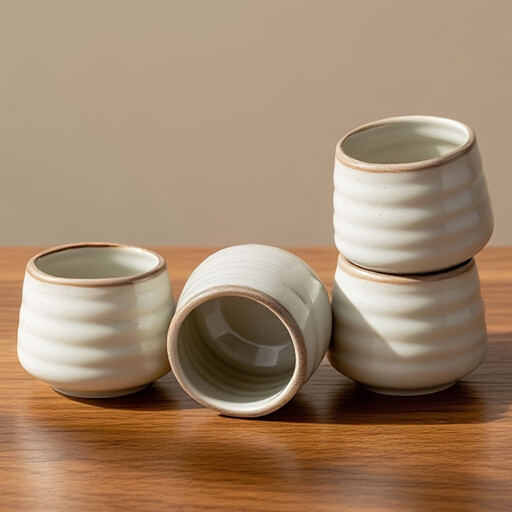
Why it suits this profile: A set of four is a simple starting point for everyday use and entertaining, without requiring you to buy a large dinner service straight away.
The number of pieces is clearly stated, so you will not accidentally buy one single cup when you are looking for a small set.
Four ceramic cups in one pack; check the product page for the available capacity, dimensions and care information.
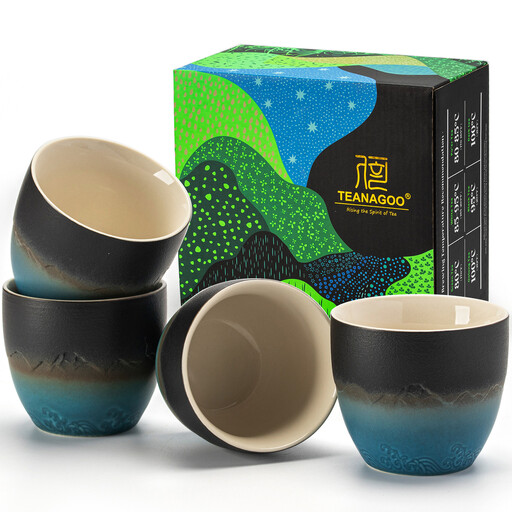
Why it suits this profile: The compact capacity and handle-free design suit Japanese and Chinese tea rituals and those who enjoy a calm, considered serving style.
The 160 ml capacity is clearly stated. According to the product information, the glazed interior is smooth and easier to clean than a rough inner surface.
Four 160 ml ceramic cups; the product information states that they have a textured exterior, glazed interior and are suitable for microwave and dishwasher use.
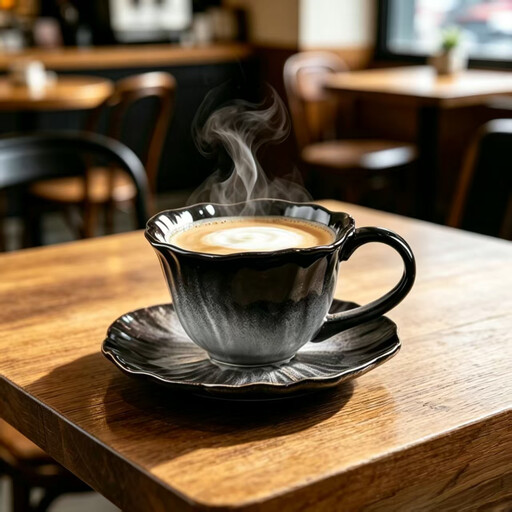
Why it suits this profile: The cup and saucer combination is ideal for coffee breaks, entertaining and as a gift for someone who sees tableware as part of the table setting.
The set states a capacity of 300 ml and includes a saucer. This makes it clearer what you are paying for than a product photo showing only a cup.
Ceramic, 300 ml capacity, cup with saucer and, according to the product information, suitable for microwave and dishwasher use; hand washing is recommended to protect the decoration.
For green tea, oolong or a tea ceremony, small tea cups of around 160 ml are a sensible choice. If you mainly drink black tea, cappuccino or coffee, it is better to look at capacities between 280 and 350 ml. Matcha mugs are generally wider and more stable, allowing you to whisk the drink without spilling. For example, take a look at the YumiPLUS Handmade Matcha Mugs Set of 2pcs.
If you mainly want a practical cup for home or work, look for a handle, a sturdy base and a smooth interior. A playful design, such as a cat, astronaut or sloth mug, can be a great gift. With these models, always check the capacity and the information about microwave and dishwasher use; product specifications vary between versions.
A handle-free cup is not automatically unsafe or impractical, but it does require more attention to the temperature of the drink. When drinking very hot tea, use the recommended fill level and hold the cup at the base if the shape allows.
We have put together a complete, up-to-date list of products that fully meet these strict selection criteria and the applicable European safety regulations.
That depends on the serving style. Tea cups of 160 ml are compact and suit Japanese or Chinese tea. For everyday use, cups of around 250 to 350 ml are more common. Do not rely on the name ‘tea cup’ alone; always check the stated capacity.
Some ceramic models are dishwasher-safe, while others have a delicate print, textured coating or handmade finish. Check the product specifications. Even when dishwasher use is permitted, hand washing can help preserve the decoration and texture for longer.
A small tea cup can work perfectly well for espresso or strong coffee. For coffee with milk, cappuccino or a large filter coffee, coffee cups with a capacity of around 250 ml or more are generally more practical. A cup with a handle is also more comfortable to hold when serving hot drinks.
