Who is this guide for?

Teacher in a physical classroom

You move around during speaking exercises and want pupils to be able to hear you. Check whether the existing sound system can amplify your voice and whether pupils’ responses will still be audible. Drullman Spraak&Gehoor explains that more noise and reverberation reduce speech intelligibility in classrooms.

Teacher speaking to people online

You speak and listen through a computer. Look for a suitable connection, a microphone you can position easily and a mute control you can reach during the lesson. Logitech and Trust describe physical controls on their headset models.

Teacher who finds buttons hard to see

In low light, you’ll want to adjust the volume and mute the microphone without having to search the screen. Try the buttons with the headset on, in the place and teaching position you’ll use.

What should you look for when choosing?

Wired computer headset

A good fit if: pupils hear you through the classroom computer and you usually stay near it.

Trade-off: you don’t need to charge the headset, but the cable limits how far you can move.

Wireless headworn microphone with receiver

A good fit if: you move around and your voice needs to be amplified through the classroom sound system.

Trade-off: you’ll need extra equipment and a suitable connection. Also check that the frequency version can be used at your teaching location.

Wireless computer headset

A good fit if: you teach online and want to move around the room.

Trade-off: you’ll need to keep it charged and test the connection where you teach.

What to consider What to look for when buying Who is this important for?
Speech intelligibility in the classroom Check the complete connection, from the headworn microphone and receiver to the speakers. Test from different places in the classroom to make sure you can still hear pupils’ responses. If I move around during an in-person lesson, I want to know that pupils can hear me and that I can hear their responses. Around 33% of consumers prioritise speech intelligibility in the classroom.
Two-way speech online Position the microphone boom close to your mouth and check that you can hear your pupils clearly. Choose mono or stereo depending on how much of your surroundings you want to hear. When I have online conversations, I want to speak clearly and hear pupils’ responses well. Around 27% of consumers prioritise clear two-way speech online.
Controls in low light Try the mute and volume controls with the headset on, without looking at the buttons. Check where the controls are and whether you can reach them from your usual teaching position. When I teach in a dimly lit room, I want to mute the microphone and adjust the volume without searching for on-screen controls. Around 20% of consumers prioritise controls that are easy to use in low light.
Comfort and connection Check the exact connection and fit, as product variants can differ. Consider whether a cable will work for the way you move around, or whether you’d prefer a wireless model that needs charging. When I wear a headset throughout a lesson, I want a suitable connection and a comfortable fit. Around 20% of consumers prioritise comfort and device compatibility.

Which buying mistakes can you avoid?

  • Assuming a call headset is a complete classroom amplification system

    A USB headset for calls through a computer won’t, by itself, tell you whether pupils at the back of the classroom will hear your voice or whether you’ll hear their responses clearly.

    Before you buy, map out the route your voice and pupils’ voices will take. Test it in the classroom and check the connection to the sound system.

  • Confusing microphone noise cancellation with what you hear

    Microphone noise cancellation affects the sound your conversation partners hear from you. Isolation around the ears affects what you hear. They’re two different features.

    Have a test call and check separately what online pupils hear from you, and what you can hear from them and in the classroom.

  • Choosing a wireless radio system by model name alone

    The frequency version and its connection to the sound system both matter. The Dutch Authority for Digital Infrastructure (RDI) notes that the available frequency spectrum can vary from one location in the Netherlands to another.

    Before use, check the frequency of the exact version, the conditions at your teaching location and the connection to the sound system.

  • Confusing a product range name with the exact model

    Trust describes separate Ayda models, including USB and USB-ENC versions. The range name alone doesn’t tell you which connection or microphone model you’re buying.

    Compare the full model number, connection and microphone model on the product detail page.

Brands worth considering

Shure

The BLX14/PGA31 system is designed as a wireless headworn microphone with receiver for teachers who move around the classroom.

  • Shure describes a system with a BLX4 receiver and BLX1 bodypack.
  • Shure warns that the frequency band must comply with local regulations. Check that the version and setup you choose are suitable for your teaching location.

Trust

The wired Ayda USB-ENC is a computer headset for online conversations.

  • For the USB-ENC version, Trust describes on-ear controls, a USB or USB-C connection and a microphone boom that flips up.
  • The product description isn’t an independent measure of speech intelligibility, and it doesn’t show that the headset can amplify your voice through classroom speakers.

Logitech

The H390 is a wired computer headset for speaking from a fixed teaching spot.

  • Logitech lists volume and mute controls on the cable, along with a positionable microphone.
  • Check whether the version you choose has USB-A or USB-C. The 1.9 m cable length applies to the USB-A version described and won’t let you move freely around a classroom.

Jabra

The Evolve2 40 SE is a wired headset for calls, available in mono and stereo versions with different connections.

  • Jabra describes three microphones, passive noise isolation and muting via the microphone boom.
  • Jabra’s headset description doesn’t say how clearly you’ll hear pupils’ voices or the classroom acoustics. Check the exact connection and version.

HP Poly

The Blackwire 3200 series offers wired mono and stereo options. The Voyager Focus 2 is a wireless option for talking online while moving around.

  • HP states that the Voyager Focus 2 offers up to 25 hours of use, provided ANC and the call indicator are switched off.
  • A 3.5 mm connection isn’t available on every Blackwire version. Also check that the connection is compatible with your computer.

Joybuy products for online conversations

These Joybuy products are wired or wireless computer headsets for online conversations. They aren’t complete amplification systems for a physical classroom. Check the connection and controls for each version.

Jabra Evolve2 30 SE headset

Jabra Evolve2 30 SE

For online conversations on a computer when you want to adjust the volume and mute the microphone while using the headset.

USB-A connection with volume and mute controls on the cable.

The wired connection means there’s a cable while you’re using it.

Joybuy
Logitech PC 960 USB headset

Logitech PC 960 USB

For online conversations on a computer when you want to use the microphone boom and controls on the cable.

USB connection, adjustable microphone boom, and volume and mute controls on the cable.

The wired connection means there’s a cable while you’re using it.

Joybuy

Jabra Evolve2 65 USB-A Black MS Mono headset

Jabra Evolve2 65 USB-A Black MS Mono

For online lessons on a computer when you want to move around wirelessly and prefer a mono model.

Bluetooth connection and USB-A adapter for connecting to a computer; this version is described as a mono headset.

The headset needs to be charged before use.

Joybuy

Jabra Evolve 30 II MS Stereo headset

Jabra Evolve 30 II MS Stereo

For online conversations on a computer when you’re looking for a wired stereo headset.

3.5 mm connection and an included controller for USB connection.

The connections described are wired.

Joybuy
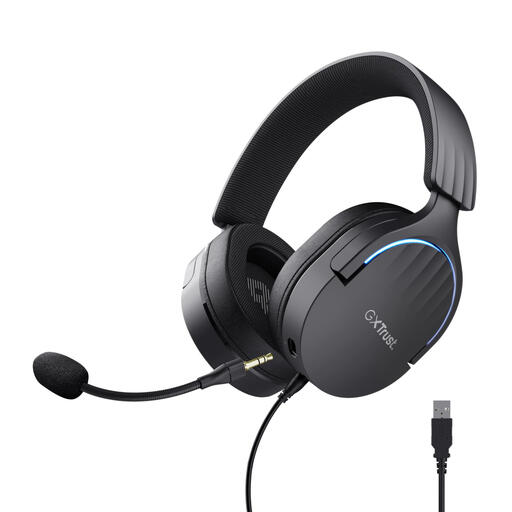
Trust GXT 490 FAYZO over-ear 7.1 USB gaming headset

Trust GXT 490 FAYZO Over-Ear 7.1 USB

For online conversations on a Windows PC when you want to use the controls on the ear cup.

USB connection, detachable microphone, and volume and mute controls on the ear cup.

The wired USB connection means there’s a cable while you’re using it.

Joybuy

Frequently asked questions

Can a standard USB headset make my voice audible to pupils at the back of the classroom?

Not by itself: the USB models described are headsets for conversations through a connected computer. To amplify your voice in the classroom, assess the complete connection to suitable speakers and test that you can still hear pupils’ responses.

How do you set up a headset for a conversation lesson?

Connect the right version to the teaching device, position the microphone boom near your mouth and have a test conversation in both directions before the lesson. Try the mute and volume controls with the headset on, in the lighting conditions at your teaching spot.

Do you need a licence for a wireless headworn microphone in the Netherlands?

It depends on the frequency version. The RDI describes frequencies that can be used without a licence as well as bands that require one. The available space within the UHF broadcasting band also varies by location in the Netherlands. Check the frequency of the exact version and your teaching location before using the system.

Can you record conversations with pupils using the headset?

Having a headset doesn’t, by itself, give you permission to record conversations. The Dutch Data Protection Authority highlights the importance of clear arrangements about making, storing and explaining recordings when teaching online. Discuss how the recording will be handled in line with your school’s policy and the applicable privacy rules.

What rights do you have when buying a headset online?

When you buy from a business at a distance, you’ll usually have a 14-day cooling-off period, although there are exceptions. The Dutch Government also distinguishes between statutory guarantees and additional manufacturer’s warranties. In the Netherlands, there’s no fixed statutory guarantee period that applies to every product.
