What should you look for when choosing?
If you only have room for one appliance and regularly want to tumble dry, a washer-dryer could suit your needs. If you can hang your towels up, compare a standard washing machine and a drying rack too.
Washer-dryer
A good fit if: you can only fit one appliance and regularly want to wash and dry without transferring the load midway.
Bear in mind: the Consumers’ Association highlights the energy use of standard washer-dryers and the length of combined cotton programmes.
Washing machine and drying rack
A good fit if: you can hang your tea towels up and don’t need to tumble dry every time.
Bear in mind: you’ll need the space and time to hang the towels up and let them dry.
Separate washing machine and heat pump tumble dryer
A good fit if: you have room for two appliances and regularly tumble dry larger loads.
Bear in mind: you’ll need to transfer the laundry between appliances; according to Milieu Centraal, a heat pump tumble dryer uses far less electricity than a condenser dryer without a heat pump.
| What to consider |
What should you check? |
Who is this particularly relevant to? |
| Space and installation |
Measure the space and access route; check the appliance’s dimensions and the clearance needed for connections. |
If I have limited space in an upstairs flat, the appliance must fit through the stairs and doorways and have a stable place to stand. Around 33% of consumers put space and installation first. |
| Noise and vibration |
Compare the stated spin-cycle noise level and check that the floor is firm and level. |
I want to avoid the spin cycle causing unnecessary noise or vibration on my floor; a quiet motor label doesn’t tell me how the machine will sound on my floor. Around 25% of consumers prioritise noise and vibration. |
| Clean towels and drying convenience |
Check that the wash programme and temperature match the care label, and compare washing and drying capacities. |
When I need to use my tea towels again, I want to know whether I can wash them appropriately and how many I can dry straight away. This is a priority for around 25% of consumers. |
| Energy and water use |
Compare the label information for washing only and for the complete wash-and-dry cycle separately. |
If I don’t need to tumble dry every time, I weigh up the energy used by a complete cycle against hanging the towels on a rack. Around 17% of consumers mainly choose based on energy and water use. |
Products available at Joybuy
Here are Joybuy products for machine washing and drying, from mini models for small textile loads to washer-dryers. Compare the stated capacity of each model and check that its dimensions suit your installation space.
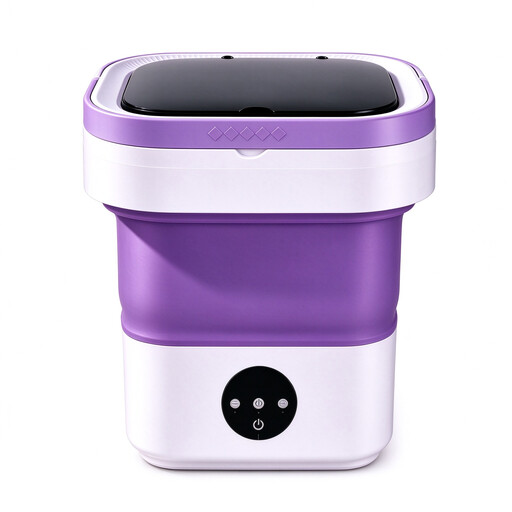 Image unavailable
3-in-1 foldable mini washing machine, 12 litres, 12LZSZDXYJ
The product description says it can wash and dry small textile loads.
The description states a capacity of 12 litres; the title describes a foldable, portable design.
View at Joybuy
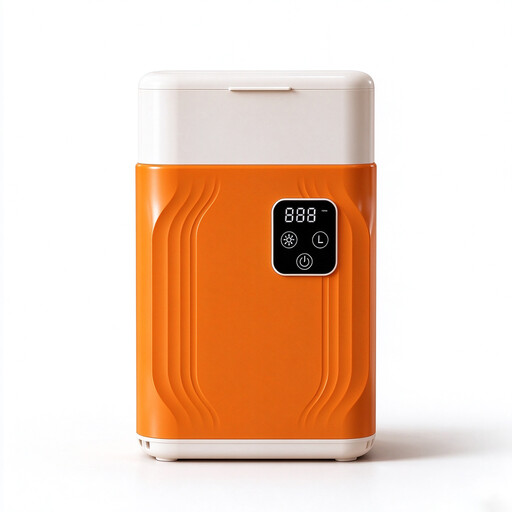 Image unavailable
3-in-1 foldable mini washing machine, HB-222
The product description says it can wash and dry small textile items.
The title describes a foldable mini model for use at home, when travelling or in a student room.
View at Joybuy
 Image unavailable
Bosch WNA13400EU, 8 kg/5 kg
The Bosch WNA13400EU combines washing and drying in one appliance.
Capacity: 8 kg for washing and 5 kg for drying.
The product description mentions AutoDry and a 60-minute Wash&Dry programme. Keep any load you want to dry straight away within the drying capacity.
View at Joybuy
 Image unavailable
TCL CP1210WA0, 10 kg/6 kg
This washer-dryer is an option if you’re looking for one appliance to wash and dry your laundry.
The title lists a 10 kg washing capacity, 6 kg drying capacity, a steam wash function and a 60-minute wash-and-dry programme. Keep any load you want to dry straight away within the drying capacity.
View at Joybuy
 Image unavailable
Comfee CFP03ED100W-HR, 10 kg/7 kg
This freestanding washer-dryer is an option if you want to wash and dry in one appliance.
The title lists a 10 kg washing capacity and 7 kg drying capacity. The product description mentions a Woolmark-certified wool programme; keep any load you want to dry straight away within the drying capacity.
View at Joybuy
Frequently asked questions
What temperature should you wash used tea towels at?
The Netherlands Nutrition Centre advises washing used hand towels and tea towels at 60 °C and hanging damp towels up. Check the care label on the towel too; an Eco 40-60 label doesn’t mean every wash runs at a constant temperature of 60 °C.
Can the whole wash load be dried straight away in the same programme?
Only if the load fits within the drying capacity of the chosen programme. This may be lower than the washing capacity, so check both figures before planning a complete wash-and-dry cycle.
What should you check before delivery to an upstairs flat?
Measure the stairs, doorways and installation space, and check the connections and installation requirements in the model’s manual. The Consumers’ Association recommends a firm, flat and stable surface; also check whether delivery and installation on your floor are included in the service you choose.
Which energy label details should you compare for a washer-dryer?
Compare the figures for washing alone separately from those for the complete wash-and-dry cycle. The European Commission lists energy use per 100 cycles, water use per cycle, programme duration and noise among the information shown on the label.
What are your rights when buying online or if a product is faulty?
For an applicable online consumer purchase, you generally have a 14-day cooling-off period, according to the Dutch government. In the Netherlands, the legal guarantee is the right to a product that meets expectations, with no fixed statutory guarantee period; if something is faulty, you should generally contact the seller. Before ordering, also check the terms for delivery, connection and any additional services.


