
Vandaag of morgen in huis

Kwaliteit gegarandeerd

Welkomstaanbiedingen ontgrendelen: GRATIS bezorging | Tot 80% korting | Gratis 30 dagen JoyPlus-proefperiode
Download de app
A TCL wine fridge can be a useful addition to your kitchen, bar, dining room or office. However, an attractive product image does not always tell you everything you need to know. A fridge described in the product title as holding 18 bottles may be less flexible in practice if you store different bottle shapes. Similarly, do not simply assume that a glass door, quiet operation or low energy consumption is included unless the product specifications clearly confirm it.
Below, you’ll find what to look for in a small wine fridge or wine cooler, as well as what to consider when buying a model car as a gift for a collector.
A 12-bottle wine fridge, 18-bottle wine fridge or 33-bottle wine fridge usually refers to a stated maximum capacity. This capacity may be based on uniformly shaped bottles that fit efficiently on the shelves. Champagne bottles, magnums and wide Burgundy bottles take up more space.
So don’t just check the number of bottles. Also consider:
A wine fridge with a glass door makes it easier to view the contents without opening the door. That’s practical, but also check the information provided about the door seal, insulation and any protection against light. If these details are not mentioned, do not treat them as guaranteed features.
The product titles of the three TCL models mention a glass door and a wine cooler. For exact temperature settings, noise levels and energy consumption, it is advisable to check the current product specifications on the product page.
A 35-litre wine fridge and a 51-litre wine fridge indicate the amount of internal space, but they do not tell you exactly how many wide bottles will fit. A 97-litre wine fridge offers more volume, but it also requires more room and may be unnecessarily large for a small collection.
Measure the alcove or space where you plan to place the appliance beforehand. Also allow for ventilation space if required by the manual. Do not automatically place a wine fridge inside a fully enclosed cupboard.
For occasional use or a smaller collection, a small 12-bottle wine fridge may be enough. If you regularly buy bottles and store different types of wine, a model for 18 or 33 bottles may be more suitable.
Use this layout as a practical guide:
The actual layout will still depend on the shape of the bottles. Always check the product information before relying on the maximum capacity.
A 35-litre fridge is not automatically suitable for every kitchen shelf. Check the total height, width and depth, including clearance for the door and ventilation. This is even more important with a 51-litre wine fridge or 97-litre wine fridge.
Also consider the surface it will stand on. A stable, level position will help keep the appliance properly in place. Do not place it where direct sunlight, moisture or a heat source could affect its operation.
A wine fridge is designed to store wine in controlled conditions, but models can differ in their temperature range and controls. Check:
Only rely on performance claims when they are clearly stated in the product information. Results based on a brand’s own testing may also differ from your situation at home. It is therefore best to focus on verifiable specifications and user experiences.
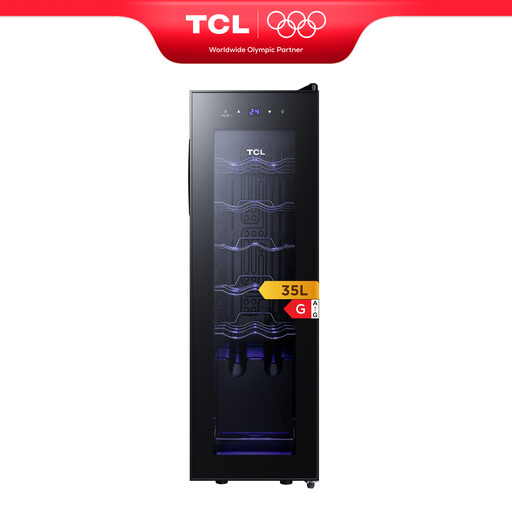
Why it suits this profile: With a 35-litre capacity and a stated capacity of 12 bottles, this model is suitable for anyone looking to make a compact start in a kitchen, apartment or office.
The stated bottle capacity and internal volume are clear from the outset, making it less likely that you’ll buy an appliance that is too large for a small stock of wine.
35-litre capacity, space for 12 bottles and a glass door according to the product title.
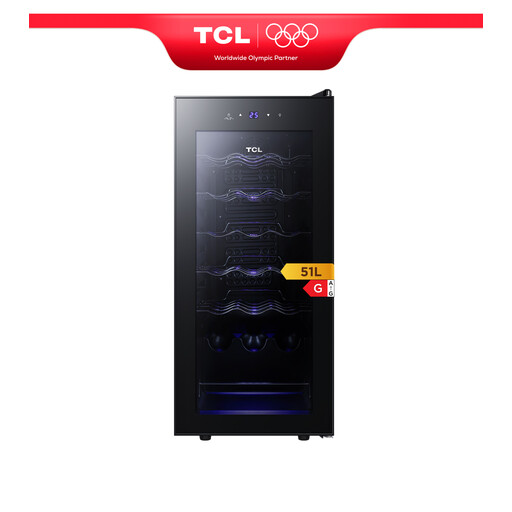
Why it suits this profile: This model offers a medium-sized option for households that want to store more than a few bottles without moving straight to a large cabinet.
The combination of 18 bottles and 51 litres gives you a clearer idea of the relationship between storage capacity and size than a general term such as compact.
51-litre capacity, space for 18 bottles and a glass door according to the product listing.
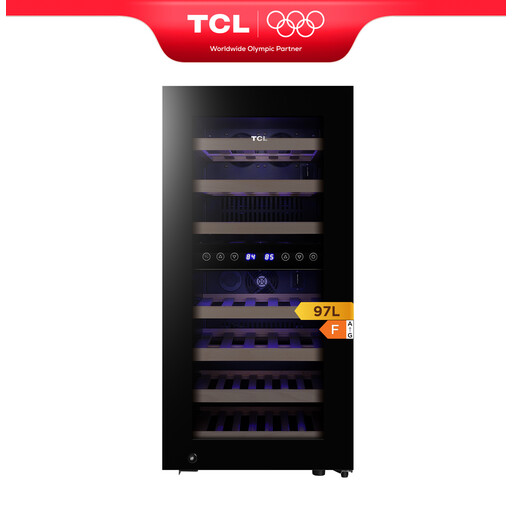
Why it suits this profile: The capacity of 33 bottles is aimed at a larger collection, a home bar or a workplace where wine is served regularly.
The larger capacity reduces the chance of running out of space quickly. However, measure beforehand to make sure 97 litres will fit in your space.
97-litre capacity, stated capacity for 33 bottles and a glass door.
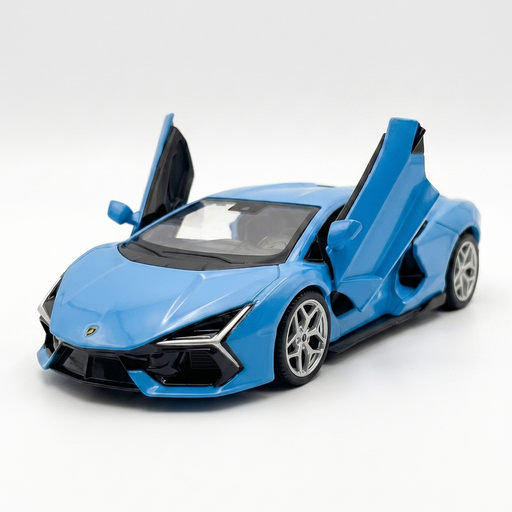
Why it suits this profile: This collector’s model car is aimed at Lamborghini fans and gift hunters aged 14 and over who are looking for a display model with moving details.
The scale, colour, opening doors and pull-back function are described clearly. When buying, check whether the model is intended mainly for display or also for play.
1:36 die-cast alloy model car, matte blue finish, opening doors and pull-back function; recommended for ages 14 and over.
When choosing a wine fridge, the main considerations are capacity, dimensions, temperature information and positioning. Compare the 12-, 18- and 33-bottle models based on the space you have available, not just the number of bottles.
With a Lamborghini Revuelto model car, consider the scale, material and moving parts. A 1:36 die-cast model car is relatively compact for a display cabinet or desk. The pull-back function adds a play element, while the opening doors are particularly appealing for display. As it is recommended for ages 14 and over, it is not a toy for young children.
We’ve put together a complete, up-to-date list of products that fully meet these strict selection criteria and the applicable European safety regulations.
That depends on its size, ventilation requirements and the space available. The 35-litre and 51-litre models are described as small in their product titles, but always measure the alcove and check the installation instructions. A glass door also needs enough clearance to open.
The stated capacity is a guideline based on the product specification. A 12-bottle wine fridge, 18-bottle wine fridge or 33-bottle wine fridge may hold fewer bottles in practice if you use wide or unusually shaped bottles. Allow for space between different bottle sizes when planning your storage.
This varies depending on the model, the selected temperature, the ambient temperature and how long it is in use. Check the product page and energy label, where available, for the stated consumption. Avoid opening the appliance more often than necessary, and do not place it next to an oven or radiator; these conditions can affect its energy consumption.
