Which appliance is right for you?

Making a single serving

You make a small amount of dressing at a time and want the ingredients to reach the blending foot or blades. In that case, a suitably narrow beaker may matter more than a high wattage alone. The Consumentenbond considers hand blenders suitable for small batches.

Making thick dips

You want to combine tahini with ingredients such as garlic or herbs, and are considering blending, chopping and adding liquid. KitchenAid lists features on its mini chopper such as pulse and an opening for adding liquid.

Quick midweek cooking

You often make a small batch and want the cleaning effort to be proportionate to the preparation. Philips says the parts of the HR2510/90 are easy to clean; check the manufacturer's instructions for each part.

What should you look for when making small batches of tahini dressing?

Hand blender with a narrow beaker

Choose this when: you usually make one small batch and prefer to blend it in a beaker.

The trade-off: the Consumentenbond notes that thick mixtures can be tricky; check that the blending foot and beaker suit your recipe.

Mini chopper

Choose this when: you want to chop garlic or herbs as well as blend, or add liquid while mixing. KitchenAid lists these features for the 5KFC3516EAC.

The trade-off: an 830 ml bowl capacity doesn't tell you the minimum amount of dressing needed to reach the blades. The bowl, lid and blade also need cleaning.

Compact blender

Choose this when: you also want to make smoothies or other liquid recipes; Philips lists sauces as a use for the HR2510/90.

The trade-off: according to the Consumentenbond, blenders are less suitable for small batches or thick ingredients. A compact blender doesn't guarantee that the blades will reach a small amount.

What to consider What to check before buying Who is this important for?
Will the appliance work with a small amount? Check the supplied beaker or bowl, the position of the blending foot or blades, and any guidance on minimum quantities. If I'm only making one small batch, I want the blending foot or blades to reach the ingredients. Around 36% of consumers prioritise an appliance that works with a small amount.
Can it blend thick dressing? Check whether the appliance is designed for blending or puréeing and, if you use solid additions, whether it can chop too. Follow the instructions when adding liquid and using the pulse function. When making thick tahini with garlic or herbs, I want to be able to blend and chop if needed. Around 29% of consumers prioritise processing thick dressing.
How much effort does cleaning involve? Count the parts you use for your recipe and check whether each one is dishwasher-safe. If I make this often, I don't want to wash more parts than necessary. Around 21% of consumers pay most attention to easy cleaning after repeated use.
Can you use the appliance for other recipes too? Compare the recipes you actually want to make with the supplied beaker, any chopping function and the storage space required. If I also want to use the appliance for smoothies or chopping, versatility matters more. Around 14% of consumers prioritise these additional uses.

Common pitfalls when buying for small batches

  • Confusing the capacity of a beaker with the minimum working quantity

    An 830 ml bowl or a 0.6 l jug tells you its capacity, not how much dressing is needed for the blades to reach it. If the amount is too small, you may need to make more than you intended.

    Check where the blades sit for your recipe and what minimum fill level the instructions specify.

  • Assuming a chopper and a jug blender are interchangeable

    The mini chopper mentioned has chopping and pulse functions; the Consumentenbond describes a blender as mainly suitable for mixtures with plenty of liquid. So these appliance types aren't automatically suited to the same recipes.

    Decide whether you'll mainly make liquid mixtures or also want to chop ingredients such as garlic and herbs.

  • Confusing the manufacturer's guarantee with your full statutory rights

    A manufacturer's guarantee doesn't replace your statutory rights. According to ACM ConsuWijzer, a product should perform as you could reasonably expect it to under normal use.

    Keep your proof of purchase and contact the retailer if the product is faulty.

Brands to compare

Braun

Worth considering if you mainly want to work in a small beaker; Braun describes the MQ50220M as having a shaft designed for small batches.

  • Braun lists a small beaker and a chopper for this version.
  • Check which accessories are included with the exact version. The beaker's capacity doesn't guarantee a minimum blending quantity.

KitchenAid

The 5KFC3516EAC mini chopper is an option if you want to blend dressing and chop additions.

  • KitchenAid lists an 830 ml bowl, two speeds, pulse and an opening for adding liquid during preparation.
  • These specifications don't show how well it handles a very small batch of tahini dressing.

Philips

The HR2510/90 mini blender may suit you if you want to make smoothies as well as sauces.

  • Philips lists sauces among its uses, along with a compact design and easy-to-clean parts.
  • Check that the blades reach the amount in your recipe and which parts the manual says are safe to clean.

Bosch

The VitaPower MMB2111S is a compact blender option if you also want to use a to-go cup for other recipes.

  • Bosch lists a 0.6 l blending jug and dishwasher-safe parts.
  • The jug's capacity doesn't prove that very small, thick batches will blend well.

Joybuy products for small batches

These Joybuy picks are hand blenders for making small batches of sauce. Check that the beaker and accessories supplied with each model suit your recipe.
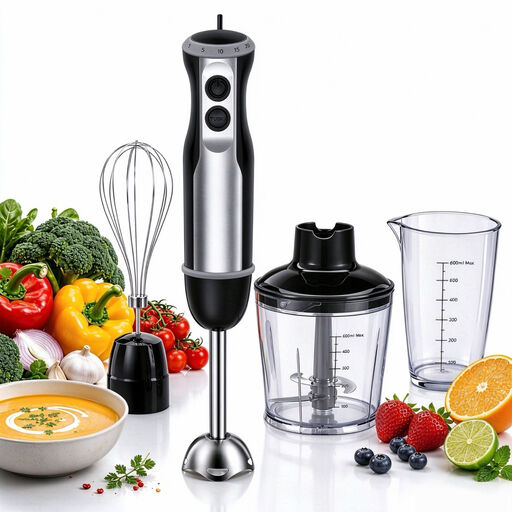
Hand blender with 6 speeds and turbo function

Hand blender with 6 speeds and turbo function

The shape of this hand blender lends itself to blending small batches of sauce.

The product information lists a 600 ml blending beaker, a whisk and a chopper. A hand blender may struggle with very thick tahini.

View at Joybuy

Braun MQ55254M MultiQuick 5 Pro hand blender

Braun MQ55254M MultiQuick 5 Pro

This hand blender may suit you if you want to blend a thick sauce and chop ingredients too.

The product information lists speed settings for thick mixtures and a chopper with three texture settings. A hand blender may struggle with very thick tahini.

View at Joybuy
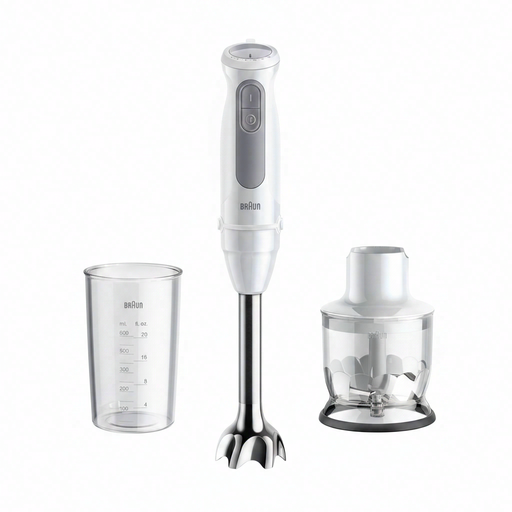
Braun MultiQuick MQ50201M hand blender

Braun MultiQuick MQ50201M

The beaker and chopper may come in handy if you make small batches and also want to chop herbs or nuts.

The product information lists a 600 ml beaker and a 350 ml chopper. A hand blender may struggle with very thick tahini.

View at Joybuy

Braun MultiQuick 5 MQ50001 hand blender, white

Braun MultiQuick 5 MQ50001, white

The described blending beaker and hand blender foot for small batches are well suited to making a small amount of dressing.

The product information also lists mayonnaise and dips among its uses. Check that the blending foot reaches the amount you need; a hand blender may struggle with very thick tahini.

View at Joybuy
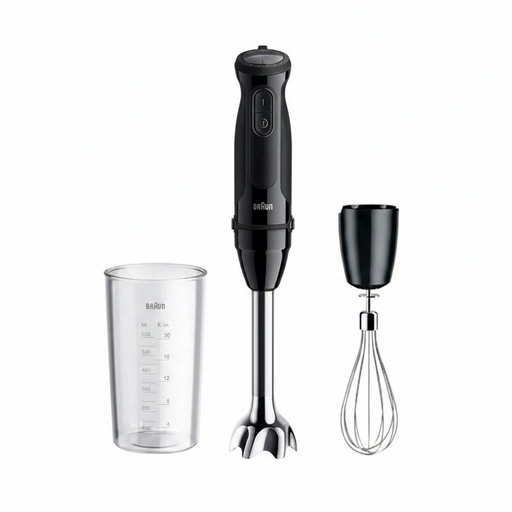
Braun MQ50051M MultiQuick hand blender, 1000 W

Braun MQ50051M MultiQuick, 1000 W

This hand blender may suit you if you want to chop or whisk as well as blend.

The product information lists a hand blender foot, whisk and chopper. A hand blender may struggle with very thick tahini.

View at Joybuy

Frequently asked questions

Is a regular blender or a hand blender better for one small batch?

A hand blender is the more obvious choice for one small batch: the Consumentenbond considers it suitable for small batches. With thick tahini, the beaker and batch size still need to be right; neither type of appliance guarantees a smooth result.

How do you clean the blending parts after use?

Follow the instructions for the exact model. Braun refers to the manual to check which parts of its mini hand blender foot are dishwasher-safe; Philips says the parts of the HR2510/90 are dishwasher-safe.

Should fresh tahini dressing be kept in the fridge?

Cover any leftovers and refrigerate them within 2 hours, setting the fridge to 4 °C, as advised by Voedingscentrum. This doesn't specify a storage time for every recipe.

Are you only entitled to a two-year guarantee on a blender in the Netherlands?

No, two years isn't the general statutory period. According to ACM ConsuWijzer, statutory rights apply alongside any manufacturer's guarantee for as long as the product should meet what you could reasonably expect under normal use.

Which product regulations are relevant when buying in the Netherlands?

The NVWA sets out requirements for materials that come into contact with food, as well as the mandatory CE marking for electrical products covered by those rules. A CE logo or the label ‘BPA-free’ doesn't, on its own, establish that a specific item meets all the applicable requirements.
