
Making one large batch
You want to make dressing for several family members at once, so you mainly need a suitable usable capacity. The Consumers’ Association (Consumentenbond) recommends considering the jug and how you intend to use it.


For a larger batch that’s sufficiently liquid, a jug blender may be practical. For smaller or varying portions, you could consider using a hand blender in a suitable bowl. A personal blender is best suited to small portions, but making a family-sized batch may take several rounds. Compare the usable filling capacity, the space the blades need and the cleaning instructions; a higher wattage alone doesn’t guarantee better results with tahini.
You want to make dressing for several family members at once, so you mainly need a suitable usable capacity. The Consumers’ Association (Consumentenbond) recommends considering the jug and how you intend to use it.
You want to mix the tahini and liquid gradually, checking the consistency before serving the dressing. The Netherlands Nutrition Centre (Voedingscentrum) describes a dressing made with tahini, lemon juice and water; the ideal proportions depend on the recipe.
Sometimes you make a small portion, and sometimes enough for a family get-together. In that case, both the size of the blending container and how easy it is to clean after use matter. The Consumers’ Association provides advice on using blenders and hand blenders.
First decide how much dressing you want to make at once and how you’d like to adjust its consistency. The Consumers’ Association advises staying within the maximum fill line, while a recipe from the Netherlands Nutrition Centre shows tahini dressing made with tahini, lemon juice and water.
| What to consider | What to look for | Who it matters more to |
|---|---|---|
| Making enough dressing in one go | Compare the recipe volume with the usable filling capacity and maximum fill line, not just the jug’s total capacity. | For a family get-together, I’d prefer to make the dressing in one go; around 36% of consumers prioritise having enough capacity for a full batch. |
| Control over the consistency | Look for adjustable speeds or a pulse setting, and a blending container that lets you check the consistency as you go. | If I want to adjust the dressing before serving, control while blending is important; around 29% of consumers prioritise this. |
| Small or varying portions | Compare the size of the supplied beaker with both your smallest portion and your planned family-sized batch. | If I sometimes make a small portion and sometimes a larger one, I want an appliance that suits both; around 21% of consumers prioritise this flexibility. |
| Cleaning after use | Check whether each component is removable and which cleaning method the manual recommends. | After cooking, I want to know which parts are easy to clean; around 14% of consumers consider cleaning their top buying priority. |
A good fit if: you want to blend a larger, sufficiently liquid quantity in one go and it fits within the maximum filling capacity.
Bear in mind: a larger jug needs storage space, and its total capacity isn’t necessarily the same as its usable filling capacity.
A good fit if: you want to blend in a suitable tall bowl or beaker and adjust the portion size as needed.
Bear in mind: you’ll need to choose a sufficiently deep beaker or bowl, and check which blending foot and accessories come with the exact model.
A good fit if: you usually make small portions and want a compact blending cup.
Bear in mind: a smaller cup may mean blending a family-sized batch in several rounds.
A jug’s total capacity may be greater than the amount you can safely or practically blend at once. For the Tefal BL811D, the manufacturer lists a capacity of 2 litres, while the product title states 1.5 litres.
Compare your recipe volume with the usable filling capacity and the markings on the jug.
If the usable capacity isn’t enough, you may need to make the dressing in several batches.
High wattage alone doesn’t tell you how well an appliance will blend a thick or small portion of tahini dressing. In its blender tests, the Consumers’ Association describes preparing other foods, such as smoothies and vegetable purée.
Choose based on your portion size, blending container and desired level of control; don’t treat general power claims as a test of tahini dressing.
Cleaning instructions can vary by component and model. A claim that certain parts are dishwasher-safe doesn’t automatically apply to the entire blender or hand blender.
Check the manual for separate instructions for the jug, seals, blades and blending foot.
Parts that need to be washed by hand mean extra washing up after cooking.
The Perfectmix+ BL811D is an example of a jug blender for anyone looking to blend a larger batch with the lid on.
The VitaPower MMB6172S is a jug blender to consider if you value a glass jug and removable parts that are easy to clean.
The MultiQuick 5 range is worth considering if you’d rather use a hand blender in a suitable beaker or bowl.
The Pro 900 NB910CP is an example of a personal blender for smaller portions and limited storage space.
This selection includes jug blenders and a hand blender for mixing dressing. Compare the filling capacity and controls with your recipe; also check the information on applicable product regulations and food-contact parts for the exact model.
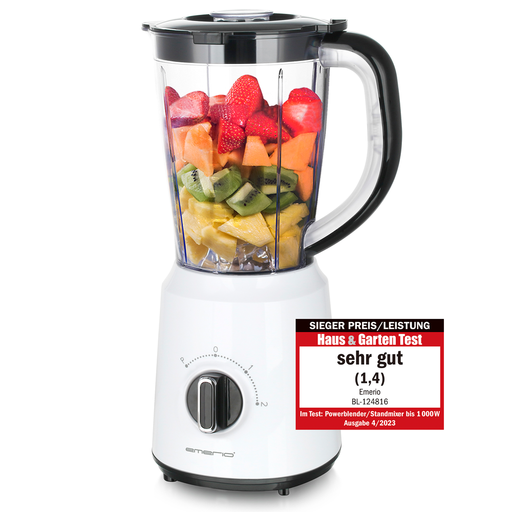 No image available
A jug blender for anyone who wants to mix dressing in a jug; check that your recipe fits below the maximum fill line.
The product information lists a 1.5-litre jug, two speeds and a pulse function. Removable parts are described as dishwasher-safe.
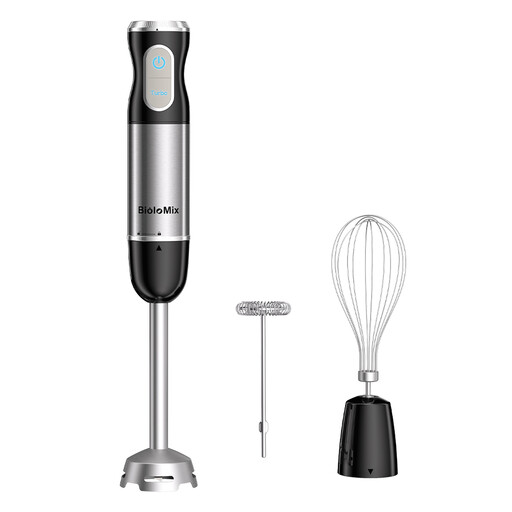 No image available
A hand blender for mixing in a suitable bowl or beaker of your choice; the product information lists sauces and puréeing among its uses.
The title mentions a detachable design and splash protection. Check which accessories are included with this version.
 No image available
A jug blender for anyone who wants to prepare a recipe in the jug and adjust the blend using several speeds.
The product information lists three speeds and a minimum of 300 ml of liquid. According to the instructions, heavy blending cycles must not last longer than one minute, followed by a two-minute rest.
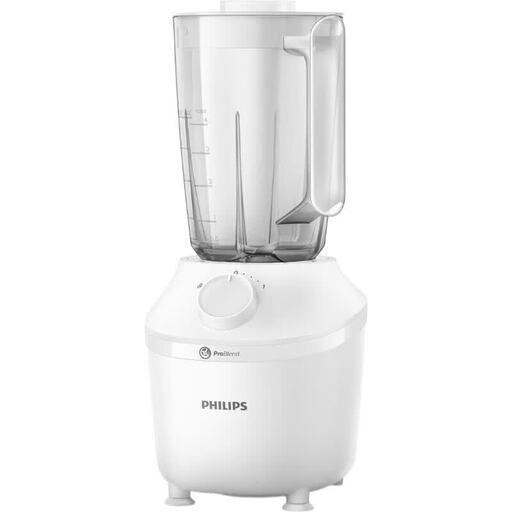 No image available
A jug blender with a pulse function for making quick adjustments while blending.
The product information lists 450 W, one speed plus pulse and an effective capacity of 1.0 litre; the total capacity is 1.9 litres. Removable parts are described as dishwasher-safe.
 No image available
A jug blender for larger batches when you want to be able to adjust the blending speed.
The product information lists a usable capacity of 1.5 litres, speed control and pulse. The heat-resistant glass jug is described as dishwasher-safe, and an Auto-Clean programme is also mentioned.
No, a blender isn’t essential. A recipe from the Netherlands Nutrition Centre mixes tahini, lemon juice and water into a dressing without specifying a blender. Choose an appliance if you find it more practical for making the amount you need or mixing the ingredients.
Stay below the indicated maximum fill line and close the lid securely; this is the Consumers’ Association’s advice. Before putting any parts in the dishwasher, check the manual for each component. If you’re using a hand blender, choose a suitable tall beaker or bowl.
Tahini is made from sesame, which the Netherlands Nutrition Centre lists as an allergen. Ask about allergies, check the ingredients in the products you use, and keep preparation and utensils separate for any guest with a relevant allergy.
Use clean utensils and quickly refrigerate any leftover dressing in a sealed container. The Netherlands Nutrition Centre advises cooling cooked leftovers within two hours and eating them within two days; for dressing made with other ingredients, also follow the relevant storage advice.
A blender must comply with the applicable EU product regulations, including the required CE marking where those regulations specify it. Parts that come into contact with food are also subject to Dutch and European requirements for food-contact materials, as explained by the Netherlands Food and Consumer Product Safety Authority. A CE marking alone doesn’t prove that a blender performs well.