
Workshop leader making small portions
You let participants each mix their own dressing and want an appliance that works with small quantities. The Dutch Consumers’ Association says hand blenders are suitable for small portions.


For small portions made by each participant, a hand blender with a suitably sized beaker is a good choice. For one larger, sufficiently liquid batch, a jug blender is more suitable. A mini blender could be a middle ground, but check for each model that the dressing reaches the blades, how much you can realistically blend and how to clean the parts between batches.
You let participants each mix their own dressing and want an appliance that works with small quantities. The Dutch Consumers’ Association says hand blenders are suitable for small portions.
You’re making one batch for several participants and need enough room to blend a fairly liquid sauce. The Dutch Consumers’ Association says blenders are suitable for larger quantities and liquid mixtures.
You use the appliance one participant or recipe after another, so you’ll want to consider how easy it is to dismantle and clean. If you’re a business serving food to consumers, information about the allergens present is also relevant; the Netherlands Food and Consumer Product Safety Authority (NVWA) explains this requirement.
Start with the quantity you’ll make in each batch: individual portions for participants call for something different from one batch for everyone.
Best for: individual small portions or dressing that you want to adjust to each participant’s preferred consistency.
Bear in mind: check that the blending foot can be submerged in the beaker and that the dressing isn’t too thick; you may need to add extra liquid. The Dutch Consumers’ Association says hand blenders are suitable for small portions.
Best for: a small quantity of liquid dressing that you want to blend in a sealed jug. Philips describes the HR2510/90 as a compact blender suitable for sauces, among other things.
Bear in mind: a small jug isn’t automatically suitable for just a few spoonfuls of dressing; making several portions may mean blending one batch after another.
Best for: one larger, sufficiently liquid batch that you prepare in advance or for the group. The Dutch Consumers’ Association says blenders are suitable for larger quantities and liquid mixtures.
Bear in mind: a larger jug takes up more space and creates more washing-up, and it isn’t automatically practical for small or thick portions.
| What to consider | What should you look for? | Who is it most important for? |
|---|---|---|
| Blending small portions | Check that the blending foot or blades reach the ingredients; also look at the beaker’s shape and filling lines. | If I’m making a small portion for each participant, I don’t want to rely on a large batch. Around 33% of consumers prioritise blending small quantities. |
| Desired texture | Consider the blending method and speed, and whether you can add extra liquid without losing the desired thickness. The Dutch Consumers’ Association says a blender is often suitable for a smoother mixture. | If the dressing needs to be smooth without unnecessary extra features, I want to know whether the blending method suits my recipe. Around 27% of consumers prioritise their desired texture. |
| Cleaning between batches | Check which parts can be removed and which cleaning methods the manual allows for each part. | When I’m making different recipes, I want to be able to clean the parts thoroughly before starting the next batch. Around 20% of consumers prioritise cleaning between batches. |
| Quantity for the group | Compare the recipe quantity with both the permitted capacity and the practical usable capacity of the exact model. | If I’m making one batch for several participants, I don’t want to have to blend repeatedly. Around 20% of consumers prioritise enough capacity for the way they work with a group. |
The stated capacity doesn’t tell you whether the blades will reach a small quantity. The Dutch Consumers’ Association says blenders are less suitable for small portions.
Compare the quantity in your recipe with the blade position, filling lines and instructions for the exact model.
An unsuitable small portion may require extra blending cycles.
For this choice, portion size and consistency matter more than the wattage figure alone. A wattage rating doesn’t prove how well a model blends tahini dressing.
Choose the type of appliance and a suitable quantity first; don’t use wattage as a substitute for information about your recipe and the operating instructions.
Permitted cleaning methods vary from part to part. If your business serves food to consumers, food safety and allergen information also need to be considered.
Check the manual for each part and, where relevant, plan an appropriate cleaning and allergen-management routine.
Dismantling and cleaning between batches takes time.
The MultiQuick 5 range includes hand blenders. Braun describes the MQ50236M as coming with a beaker, whisk and chopper.
Philips describes the compact HR2510/90 as a blender suitable for sauces, among other things, with a sealed jug.
The ErgoMixx MS6CB6110 is a hand blender with variable speed; Bosch lists a measuring beaker for small quantities.
The selection below includes hand blenders and jug blenders for making sauces and preparing different quantities for workshops.
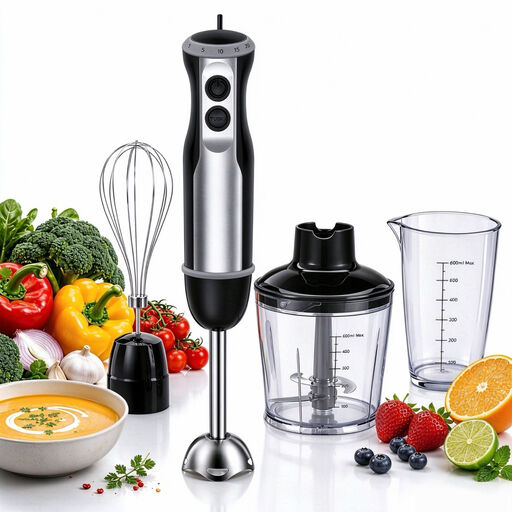 No image available
The hand blender and beaker are a good match if you want to make sauce in smaller quantities.
The description lists six speeds, a turbo function, a 600 ml beaker and removable dishwasher-safe accessories.
 No image available
This jug model is an option if you’re looking for a blender with multiple speeds; check that the quantity in your recipe will blend properly in the jug.
The product title lists 600 W, a 1.5 l jug and three speeds.
 No image available
Philips describes this mini blender as suitable for sauces, among other things; check that the quantity of dressing reaches the blades.
The product information lists a 0.6 l jug, 350 W, two speeds, a pulse setting and removable dishwasher-safe parts. The description says it is for indoor domestic use, not commercial use.
 No image available
The product description lists sauces as one of its uses; choosing a suitable beaker and working quantity is still important for your recipe.
The description lists 25 speeds, a turbo function, removable parts and dishwasher-safe parts.
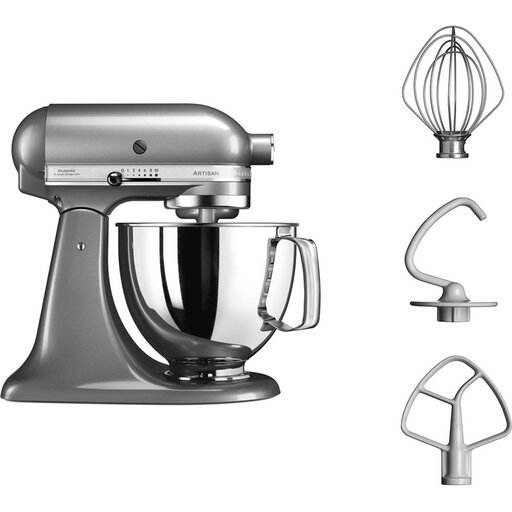 No image available
This jug model may suit you if you’re looking for a blender with a glass jug; for small portions, check that the ingredients reach the blades.
The product title lists five speeds and an ice-crushing function.
No, an electric blender isn’t essential: a tahini dressing recipe published by Good Food mixes the ingredients in a bowl and uses water to thin the dressing. An appliance can be handy if you’re making portions repeatedly or want a smoother mixture.
Don’t fill a blender above the marked maximum line, and check the manual for each removable part before putting it in the dishwasher. The Dutch Consumers’ Association advises checking the instructions to see which cleaning methods are permitted for each part.
If you prepare, process or sell food as a business, the Netherlands Food and Consumer Product Safety Authority (NVWA) says you must work with an HACCP food safety plan or an applicable hygiene code. If you serve food to consumers, you must tell them about the allergens present; the NVWA lists sesame seeds as an allergen. This isn’t a general requirement for every private workshop.
No, a small jug doesn’t automatically tell you the minimum usable quantity. For the exact model, check that the ingredients in your recipe reach the blades, and allow for the possibility of extra blending cycles if you’re making several portions.