
If you usually make a small portion
If you mainly make dressing for yourself, look for a blending beaker and appliance suited to that quantity. Bosch lists a measuring beaker for small quantities with the MSM64110.


For a small portion of tahini dressing, a stick blender with a suitable blending beaker is usually a practical first choice. Check that the blending foot can be submerged sufficiently for the amount you’re making. A chopper is a better fit if you also want to chop ingredients for dips, while a jug blender is worth considering if you make smoothies too. In a shared kitchen, it’s important to follow the cleaning instructions for all food-contact parts and handle sesame carefully.
If you mainly make dressing for yourself, look for a blending beaker and appliance suited to that quantity. Bosch lists a measuring beaker for small quantities with the MSM64110.
When an appliance is shared, it’s useful to know which parts can be removed and how to clean them. As tahini contains sesame, it’s especially important to clean food-contact parts thoroughly.
If you make dips, chopped ingredients or smoothies as well as dressing, compare the included accessories and the space you’ll need for them.
A good fit if: you usually make a small portion of sauce; Bosch lists a measuring beaker for small quantities with the MSM64110.
Bear in mind: check that the blending foot can be submerged sufficiently for your portion, and find out how to clean the stick and beaker.
A good fit if: you want to chop ingredients for dips as well as make dressing; Philips lists dips and sauces among the uses for the HR1501/00.
Bear in mind: the bowl and blades are separate parts to clean, and a 1-litre bowl capacity doesn’t tell you the smallest quantity you can blend.
A good fit if: you make smoothies too and like to use your own blending cup; nutribullet lists a 700 ml cup for the NB603DG.
Bear in mind: check how to clean the cup and detachable blade assembly, and whether the exact model is suitable for your portion of dressing.
A good fit if: you regularly make larger quantities and have enough space for a jug blender.
Bear in mind: a larger capacity isn’t automatically convenient for a single small portion. Also consider how you’ll clean the jug and blade unit.
| What to consider | What should you check? | Who is this most relevant to? |
|---|---|---|
| Small portions | Check the minimum working quantity and whether the blending foot or blades will be sufficiently submerged for your portion. | I usually make one small portion and want the ingredients to reach the blending foot or blades properly; around 36% of consumers say small quantities are their top buying priority. |
| Cleaning and sharing | Check which parts can be removed and the cleaning instructions for each one. | In a shared kitchen, I want to be able to clean food-contact parts thoroughly before someone else uses them; around 29% of consumers put cleaning and sharing first. |
| Space and noise | Compare the dimensions and storage requirements of the accessories. For noise, check independent measurements of the exact model. | If worktop or cupboard space is shared, I want to know in advance where the appliance and attachments will fit; around 21% of consumers list space or disruption as their top buying priority. |
| Other uses | Decide whether you want to purée, chop or blend, and check which accessories are included with the model. | I want to use the same appliance for dips, chopped ingredients or smoothies too; around 14% of consumers prioritise versatility or the texture they want. |
A 1-litre bowl or 700 ml cup tells you its capacity, but not how much thick dressing the blades can process effectively.
Look for the minimum working quantity in the instruction manual and choose a blending container that suits the portion you usually make.
If the blending container is too large for your portion, you may need to make a bigger quantity or use a narrower container.
Cleaning instructions can vary from one part to another. When sharing an appliance, it’s important to know how to clean the cup, blades and other food-contact parts.
Check the instructions for each part, especially if several people use the appliance.
Removable parts may need extra hand-washing and space to dry.
According to Consumentenbond, there is no fixed legal guarantee period in the Netherlands of exactly two years.
Keep your proof of purchase and contact the retailer if a product develops a fault sooner than it reasonably should through no fault of your own.
Bosch offers stick blenders with blending beakers. The MSM64110 is worth considering if you want to blend small quantities.
MultiQuick stick blenders are an option if you want to make sauces and dips as well as dressing.
The compact HR1501/00 chopper is designed for anyone who also wants to chop and mix ingredients for dips.
Personal blenders with a blending cup are worth considering if you make smoothies too and want to use your own cup.
The Quickchef+ HB67G8 is a stick blender with accessories for anyone who wants to prepare more than just blended mixtures.
This selection features stick blenders and hand blenders for sauces, including some models with extra attachments for other uses.
 No image available
The set includes a blending stick and measuring beaker for puréeing sauces.
The measuring beaker has a capacity of 700 ml. The set also includes a 500 ml chopper and a whisk.
The blending stick is detachable. Clean detachable parts with warm, soapy water and don’t immerse the motor unit.
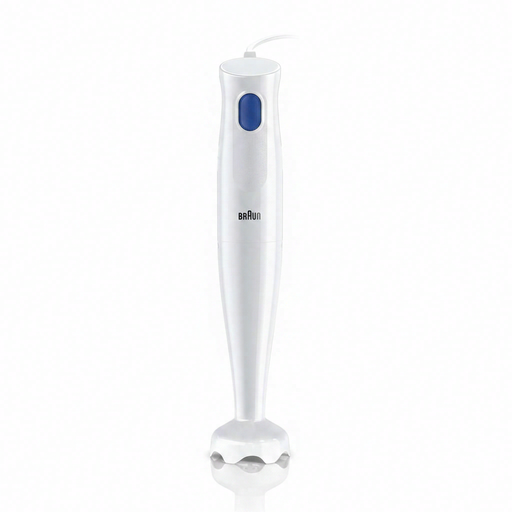 No image available
A hand blender with a measuring beaker for mixing sauces.
The measuring beaker has a capacity of 600 ml, and this model has one speed setting.
The blending stick is detachable and dishwasher-safe. Don’t immerse the motor unit in water.
 No image available
This hand blender is a good option if you want to blend sauces and chop ingredients for dips.
The product description lists 25 speeds, a turbo function and a chopper with three texture settings.
The listed parts are dishwasher-safe. Don’t immerse the motor unit in water.
 No image available
The set includes a blending stick and measuring beaker for mixing sauces.
The measuring beaker has a capacity of 700 ml, and the chopper has a capacity of 500 ml. The product name lists a maximum of 1200 W and 15.000 rpm.
According to the description, the accessories can go in the dishwasher at temperatures below 60 °C. Use the appliance for no more than one minute at a time.
 No image available
This hand blender is designed for mixing and puréeing sauces and thick soups.
The product description lists 20 speeds and a turbo function.
The description mentions detachable, dishwasher-safe parts and a splash-proof design.
Before anyone else uses the appliance, clean the cup, blades and other food-contact parts thoroughly, following the instruction manual. Sesame is a recognised allergen; Voedingscentrum recommends using clean equipment to prevent cross-contamination. If someone you live with has a sesame allergy, agree clear rules for using and cleaning the appliance.
No. Follow the cleaning instructions for each part and model. Philips says the bowl and blades of the HR1501/00 are dishwasher-safe. For the nutribullet NB603DG, nutribullet says to clean the blade assembly with soap and water and place the cup on the top rack of the dishwasher.
Contact the retailer if the appliance breaks through no fault of your own sooner than you could reasonably expect. According to Consumentenbond, there is no fixed legal guarantee period in the Netherlands of exactly two years; the protection that applies depends on what you could reasonably expect from the product.
For online purchases from a business, you generally have a statutory 14-day cooling-off period, according to the Dutch Government. Check the retailer’s information and the terms that apply. Any longer returns period offered by a shop is a separate arrangement.
Applicable European safety requirements apply to electrical kitchen appliances. Ondernemersplein outlines manufacturers’ obligations regarding conformity assessment, CE marking and an EU declaration of conformity. Dutch and European requirements for food-contact materials apply to parts that come into contact with food, as explained by the Netherlands Food and Consumer Product Safety Authority. A general product description alone doesn’t prove that a specific model meets all applicable requirements.