For a small portion of tahini dressing, a stick blender with a suitably deep beaker or bowl is a sensible option. For a larger, sufficiently liquid batch for several guests, a jug blender may be more practical. Compare the usable capacity, minimum blending quantity and cleaning requirements of the exact model, rather than looking at motor power alone. The NVWA states that CE marking is mandatory for electrical products placed on the market, so check for this marking on the appliance you’re considering.
Which blender is right for you?
If you make small portions
You’re making one small bowl of dressing or preparing different flavours separately, and want the blender foot to reach the ingredients properly. The Dutch Consumers’ Association points out that blenders may not be well suited to small portions.
If you’re cooking for a group
You want to blend a larger, pourable batch in one go, so you’re looking at the jug’s usable capacity. Tefal lists a usable capacity of 1.5 litres for the BL871D31.
If you want to tidy up quickly
You’re considering how many parts need cleaning and which ones are dishwasher-safe according to the instructions. For the MSM66120, Bosch lists a removable blender foot and measuring beaker, among other features.
What should you look for when choosing?
Stick blender
Choose this option: for a small portion or separate dressings, using a suitable beaker or bowl that lets the blender foot reach the ingredients.
Bear in mind: a very thick mixture can be harder to blend. The quantity and shape of the beaker still matter.
Jug blender
Choose this option: when you want to blend a larger, sufficiently liquid batch for several guests in one go, and the minimum operating quantity suits your recipe.
Bear in mind: a large jug is less convenient for small or very thick batches, and usually takes up more space and means more washing up.
Mix by hand
Choose this option: if you’re mixing ready-made tahini with liquid ingredients and don’t need an appliance for other recipes.
Bear in mind: this isn’t an equivalent approach if you want to grind sesame seeds into tahini yourself.
If you’re choosing a blender for tahini dressing to serve at a shared meal, the main things to consider are portion size, the thickness you want and how easy it is to clean.
| What to consider |
What should you check? |
Who is this most relevant to? |
| Blending a small portion |
Check the shape of the beaker, whether the blender foot can reach the ingredients and the minimum quantity specified in the instructions. |
If I’m making one small bowl, I don’t want the ingredients to be out of reach of the blender foot. Around 31% of consumers prioritise making small portions. |
| Making enough for guests |
Compare the usable capacity with the amount of dressing your recipe makes, rather than looking only at the jug’s total capacity. |
I want to blend enough dressing for several guests in one go. Around 31% of consumers prioritise making a batch for a group. |
| Cleaning |
Check the cleaning instructions for each part and whether the blades can be removed safely. |
After blending, I want to know how many parts I’ll need to wash and which ones are dishwasher-safe. Around 23% of consumers prioritise easy cleaning. |
| Thick dressing |
Decide whether you’re mixing ready-made tahini with liquid or want to grind sesame seeds into tahini yourself; check the instructions for the preparation you have in mind. |
I want to blend a thick dressing without significantly changing the texture I’m after. Around 15% of consumers prioritise a smooth, thick texture. |
Common buying mistakes
-
Looking only at the jug’s total capacity
The usable capacity and minimum blending quantity both help determine whether the amount in your recipe will fit in the jug. An awkwardly small portion may mean you have to blend in several batches.
Compare the quantity your recipe makes with the usable capacity, and check the instructions for guidance on small portions for the exact model.
-
Assuming wattage guarantees a smooth result
Blending also depends on the quantity, the thickness of the dressing, the container you use and the amount of liquid. For the Braun MQ50236M, the manufacturer lists both 1000 W and 750 W.
Check the full model number and the instructions. Don’t rely on wattage or claims about other ingredients alone to decide whether the appliance is right for your recipe.
-
Assuming a similar model number means it’s the same appliance
Tefal BL871A and BL871D31 are different model numbers; a similar product name doesn’t confirm that they’re the same version.
Compare the full model number and relevant specifications before choosing a version.
Brands to consider
Braun
The MultiQuick range of stick blenders includes versions with accessories for small portions and other food preparation tasks.
- The Dutch product page for the MQ50236M lists a beaker, whisk, chopper and 21 speed settings.
- For the MQ50236M, the manufacturer lists both 1000 W and 750 W. Check the exact version and its instructions; these specifications don’t guarantee a particular result when blending tahini dressing.
Bosch
The ErgoMixx MSM66120 stick blender is worth considering for small preparations and food prep tasks.
- Bosch lists a measuring beaker, chopper and removable blender foot for the MSM66120.
- Check the cleaning instructions for each part of the exact version; accessories alone don’t indicate how well it will blend a thick dressing.
Philips
Philips presents the HR2685/00 from its 5000 Series as suitable for preparing sauces, among other things.
- The model is a stick blender that the manufacturer positions for making sauces.
- For your recipe, check the minimum quantity and cleaning instructions for the version you choose.
Tefal
The PerfectMix+ BL871D31 jug blender is a model to compare if you want to prepare a larger liquid batch.
- Tefal lists a glass jug with a usable capacity of 1.5 litres and removable blades.
- The jug capacity and cleaning features don’t guarantee that it will blend a small or thick batch well; compare the version with the amount in your recipe.
Joybuy products for this recipe
This selection includes stick blenders for small quantities in a suitable bowl or beaker, and jug blenders for larger portions. Compare the minimum blending quantity and follow the instructions. The NVWA states that CE marking is mandatory for electrical products placed on the market, so check for the marking on the exact version.
 No image available
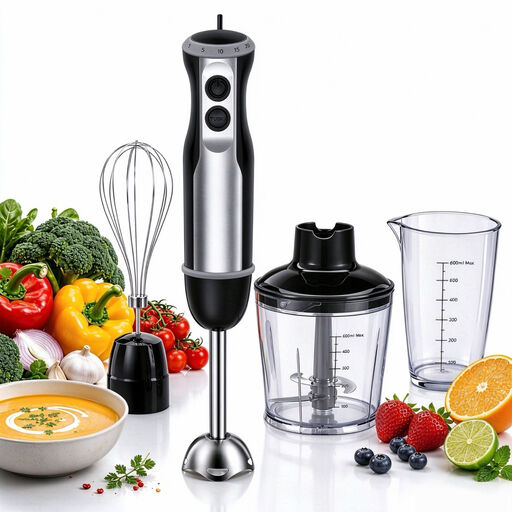
Stick blender with 6 speeds and turbo function
The listed 600 ml blending beaker is designed for preparations such as sauces.
The product name mentions 6 speeds and a turbo function; the product information lists removable accessories.
View at Joybuy
 No image available
Braun MultiQuick 5 MQ50001, white
The product information lists a beaker for small portions, including salad dressing.
According to the product information, this version has 21 speeds and dishwasher-safe parts.
View at Joybuy
 No image available
Royalty Line stick blender, 800 W, stainless steel
Suitable for blending a dressing or sauce in a suitably sized bowl of your own; no blending beaker is included.
The product information lists 20 speeds, a turbo setting and removable, dishwasher-safe parts.
View at Joybuy
 No image available
Emerio BL-124816.7, 1.5 l, white
The 1.5-litre jug is designed for larger preparations; a jug blender is less suitable for small portions.
The product information lists 2 speeds, a pulse function and 4 stainless steel blades. The jug, lid and blades are dishwasher-safe. Do not blend liquids above 60 °C.
View at Joybuy
 No image available
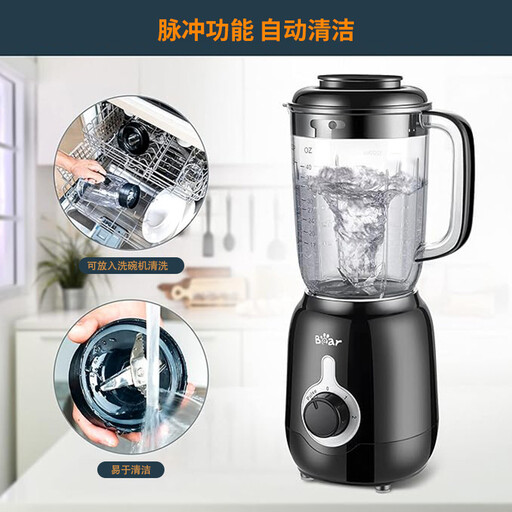
Bear LLJ-B12K1 table blender, 1.2 l, 500 W
The 1.2-litre jug is designed for larger portions; the product information also lists 100 g grinding and chopping cups.
This version has 2 speeds, a pulse function and 4 stainless steel blades. Add at least 300 ml of liquid during use. The product information recommends cleaning with warm, soapy water.
View at Joybuy
Frequently asked questions
Do you need to be able to grind sesame seeds to make tahini dressing?
No, not if you’re using ready-made tahini. You simply mix the paste with the other ingredients. Grinding sesame seeds into tahini yourself is a different preparation, so check the instructions for the exact model.
How should you clean the blender after use?
Follow the instructions for the exact version. A removable blender foot or removable blades can make cleaning easier, but don’t assume that every part is dishwasher-safe, and take care when handling the blades.
How should you serve and store dressing for guests?
Tell your guests that the dressing contains sesame, and avoid cross-contamination if anyone has a sesame allergy. The Dutch Nutrition Centre advises chilling perishable food promptly, keeping your fridge at 4 °C and not leaving perishable food out of the fridge for more than 2 hours. The allergen information requirements described by the NVWA apply to businesses offering food to consumers; they don’t automatically apply to a private meal.
What should you know about CE marking and warranties in the Netherlands?
Check the CE marking on the exact version: the NVWA states that it is mandatory for electrical products placed on the market. According to the Dutch government, you’re entitled to a product that is fit for purpose, but there is no fixed statutory warranty period in the Netherlands. If there’s a problem, contact the retailer.


