
Vandaag of morgen in huis

Kwaliteit gegarandeerd

Welkomstaanbiedingen ontgrendelen: GRATIS bezorging | Tot 80% korting | Gratis 30 dagen JoyPlus-proefperiode
Download de app
Choosing a new set of tableware seems straightforward, until you realise that important information is often missing. A plate may look stylish but not be suitable for the microwave. A serving platter may look spacious in the photo but turn out to be too small for a group. And a reusable cup is not automatically leakproof or suitable for hot drinks.
With this guide, you can compare plates, bowls, serving platters, serving boards, trays, drinking cups and other table accessories based on the features that matter in everyday use.
Wooden tableware, slate and coloured enamel finishes give a table a distinctive look. However, they can vary considerably when it comes to care. Some wooden products, for example, are not suitable for the dishwasher. Always check the material, dimensions and cleaning instructions.
Claims such as ‘durable’, ‘leakproof’ or ‘unbreakable’ should be checked against the product information. According to the description of the Thermos REFRESHING SERIES, the cup keeps drinks hot or cold for up to 6 hours. This is a stated product specification, not a guarantee that the temperature will remain constant in all conditions.
Products labelled ‘biodegradable’ or ‘compostable’ also require you to check your local waste disposal rules. The correct way to dispose of them may depend on the material, your local council and the collection services available.
Not every plate, bowl or storage container is suitable for the microwave. According to the product information, the PURECOOK 304 stainless steel bowl is not suitable for microwave use. The Mepal Cirqula containers can be used in the microwave, according to the description, but without the lid. Checking details like these helps prevent damage and unsafe use.
Choose the material to suit how you plan to use it:
Measure not only the space in your cupboard, but also the space available on your table. A rectangular slate board measuring 24 x 32 cm offers more room for several appetisers than a narrow 11 x 30 cm version. The narrower board may be better suited to restaurant presentation or a long table setting.
Capacity is important when choosing drinking cups. A 580 ml cup is practical for commuting or short trips. A 1.1-litre model is better suited to long working days or outdoor activities, but it will also take up more room in a cup holder.
Decide in advance what you need the tableware for:
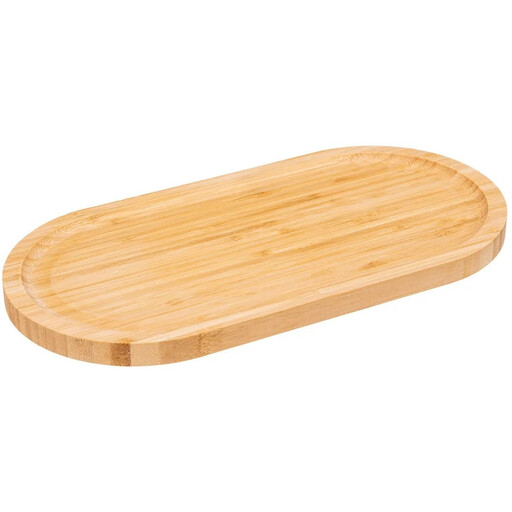
Why it suits this type of user: A compact serving board for cheese, tapas and small appetisers, without having to invest in a large collection of tableware straight away.
The dimensions of 30 x 15 cm and the bamboo material are clearly stated. Bear in mind that, according to the product information, the board is not dishwasher-safe.
Oval shape, natural colour, and suitable for food and snacks.
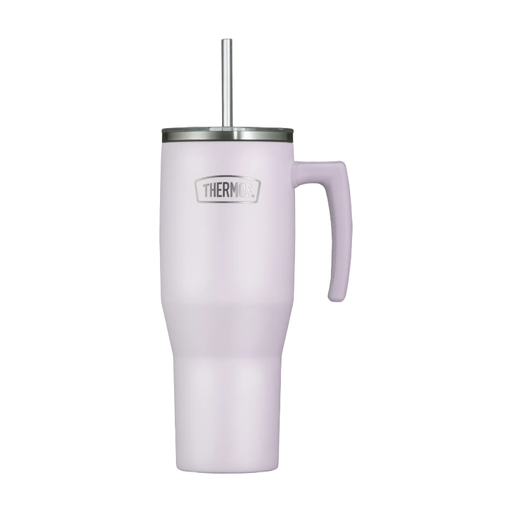
Why it suits this type of user: A good choice if you want a large reusable drinking cup for the commute, the office or outdoor activities.
The capacity, material and stated thermal performance are specified: 1.1 litres, double-wall 18/8 stainless steel and, according to the description, hot or cold drinks for up to 6 hours.
Straw and wide drinking opening, carry handle, silicone seal and BPA-free plastic lid.
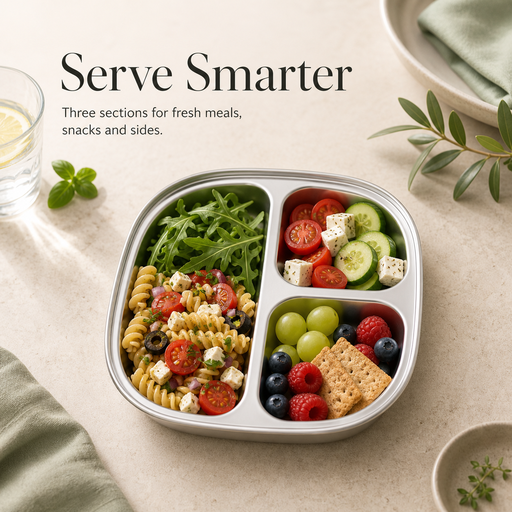
Why it suits this type of user: Handy for families, caterers, canteens, hospitality businesses and campers who want to serve different foods separately.
The tray has three fixed compartments and a seamless design, keeping different foods separate. The product is not suitable for microwave use.
304 stainless steel, dimensions of 19.5 x 19.5 x 3.9 cm and, according to the product information, dishwasher-safe and suitable for sterilisation.
We’ve put together a complete, up-to-date list of products that meet these strict selection criteria and the applicable European safety regulations.
Choose lightweight materials that are not easily broken, and check that they are easy to clean. Stainless steel, plastic and certain types of reusable tableware are practical for outdoor use. For disposable tableware, it’s worth looking beyond the packaging and checking the material information and local waste disposal guidance too.
Its lifespan depends on the material, how often you use it and how well you care for it. Stainless steel can be suitable for frequent use, while wood and bamboo can last longer if you don’t leave them to soak and wash them by hand as instructed. Check regularly for cracks, splinters, damaged coatings or worn closures.
Disposable tableware can be handy for a large one-off event, as there’s no washing up. For regular use, plates, bowls and cups that you can use again may be more practical. So compare more than just the purchase price: consider how often you’ll use them, how much storage space they need and how much care they require.
