
Vandaag of morgen in huis

Kwaliteit gegarandeerd

Welkomstaanbiedingen ontgrendelen: GRATIS bezorging | Tot 80% korting | Gratis 30 dagen JoyPlus-proefperiode
Download de app
A compact refrigerator is indispensable for a student dorm or a small apartment, or as a secondary fridge in the garage. But the search for the right tabletop refrigerator with a freezer compartment can be surprisingly tricky. Manufacturers often use confusing specifications and marketing jargon that obscure more than they reveal. Before you make a choice, it's crucial to know what to look for to avoid a bad purchase.
Common pitfalls include a lack of clarity about energy consumption and noise levels. A model that seems quiet on paper can be quite disruptive in a small space. Additionally, the actual usable capacity is often presented in a misleading way, leaving you with less space than you expected. This guide will help you avoid these issues and find a model that truly fits your needs.
You don't need to understand every technical detail to make a good choice. Focus on the three key factors that determine whether a compact refrigerator will be an asset or a source of annoyance.
Since 2021, the energy label for refrigerators has been updated. The old A+, A++ and A+++ labels have been replaced by a clearer scale from A (most efficient) to G (least efficient). An energy-efficient refrigerator with a C energy class is now an excellent choice. These models are among the most efficient on the market and will help keep your energy bills low. So don't be misled by older models with an A+ label; a new C-rated model is often significantly more efficient.
In a studio, office, or bedroom, a quiet tabletop refrigerator is essential. The noise level is expressed in decibels (dB).
Always look at the specific dB number and don't be swayed by vague terms like "silent" or "low noise".
The total capacity in litres can be misleading. More important is the split between the refrigerator and freezer compartments. A small refrigerator with a freezer compartment often has a freezer of 10 to 15 litres. This is enough for a few pizzas, ice cream, or freezing leftovers. Consider what you truly need beforehand. Do you need more fridge space for fresh produce? Then a model with a smaller freezer, or even without one, might be a better option. A small freestanding refrigerator should, above all, have a practical layout.
Based on these criteria, we have selected several models that suit different user profiles.

Why it's a match: Ideal for a student dorm or first apartment. This Bella refrigerator offers an excellent balance between a compact size, low energy consumption, and a practical layout, without requiring a large budget.
With a noise level of just 37 dB, this model is very quiet and perfect for a studio. The C energy class label guarantees low consumption according to the latest standards.
Combines a very low noise level with excellent energy efficiency (89 kWh/year). The capacity of 95 L for the fridge and 14 L for the freezer is practical for one or two-person households.
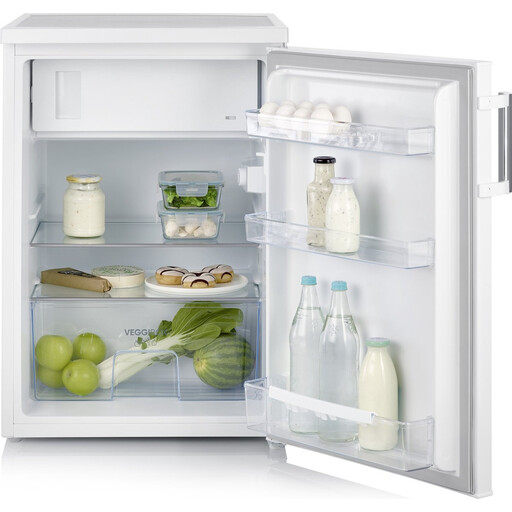
Why it's a match: For those seeking a reliable and highly efficient refrigerator for the long term, for instance, for an office, utility room, or garage. Severin is known for its solid build quality.
The specifications are clear: C energy class with an annual consumption of just 87 kWh and a noise level of 37 dB. The clear capacity split (107 L/13 L) prevents any surprises.
Exceptionally low energy consumption and quiet operation. The spacious vegetable drawer and the total net capacity of 120 litres make this a very practical choice.
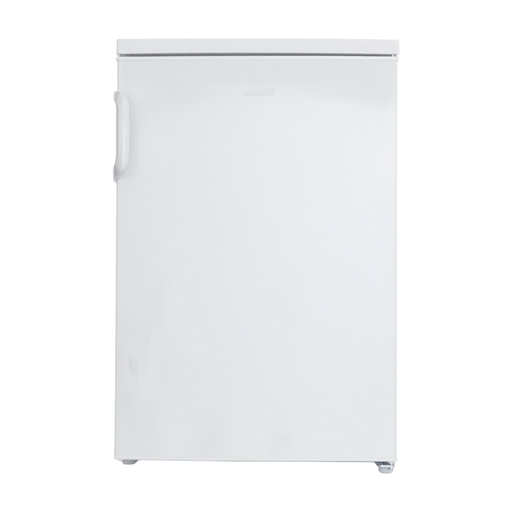
Why it's a match: For those who realise they don't actually need a freezer and would rather use all the space for refrigeration. This model offers a very generous 133-litre capacity in a compact tabletop format.
This model forces you to make a conscious choice: do you really need a freezer? By focusing on this, you avoid the pitfall of having a fridge section that's too small. The noise level of 39 dB is still comfortably quiet.
Massive cooling capacity of 133 litres. According to Exquisit, the standard 2-year warranty is extended by three years free of charge, offering extra peace of mind.
We have compiled a complete, up-to-date list of products that meet these strict selection criteria and EU safety standards.
A modern tabletop refrigerator with a C-label is very efficient. Annual consumption is typically between 85 and 100 kWh (kilowatt-hours). This is significantly less than older models and translates into lower energy costs. You can always find the exact value on the energy label of the specific product.
For a living or sleeping area like a studio, a noise level of below 38 dB is recommended. This is considered very quiet and won't disturb your sleep or concentration. Models around 39–40 dB can be acceptable, but if possible, test it or choose a quieter model to be safe.
The average lifespan of a compact refrigerator is about 10 to 15 years. This heavily depends on the quality of the model, the intensity of use, and how well the appliance is maintained. Regularly cleaning the dust from the back and keeping the interior clean can significantly extend its lifespan.
