
Vandaag of morgen in huis

Kwaliteit gegarandeerd

Welkomstaanbiedingen ontgrendelen: GRATIS bezorging | Tot 80% korting | Gratis 30 dagen JoyPlus-proefperiode
Download de app
A tabletop refrigerator might seem like a simple purchase. You need a compact cooling solution for your dorm room, office, or garage, and you pick a model that fits. However, there are pitfalls that can lead to buyer's remorse. Many models are advertised with specifications that turn out differently in practice.
As a Joybuy Product Recommendation Officer, I see the issues buyers face every day. Before you make a decision, it's wise to be aware of the most common missteps:
By understanding these points, you can choose a model that truly fits your situation, without any unexpected drawbacks.
To avoid a bad purchase, it's important to look beyond the marketing jargon. Focus on the objective specifications that determine how the refrigerator performs in real-world use.
The capacity of a compact refrigerator is expressed in litres, but this number doesn't tell the whole story. Pay attention to the net capacity, which indicates the actual usable space. Even more important is the layout.
Measure the available space beforehand, but also account for the necessary ventilation space at the back and sides (usually 5-10 cm) to prevent overheating and unnecessary energy consumption.
For a refrigerator for a dorm room or office, the noise level is a critical factor. A quiet tabletop refrigerator prevents irritation. The noise level is expressed in decibels (dB).
Since 2021, a new energy label has been in effect, ranging from A (very efficient) to G (least efficient). An energy-efficient refrigerator with a better label (e.g., C or D) is often slightly more expensive to purchase but pays for itself through a lower energy bill.
Also, pay close attention to the type of freezer section. There is an important distinction:
Based on these objective criteria, we have selected several models that suit different user profiles.
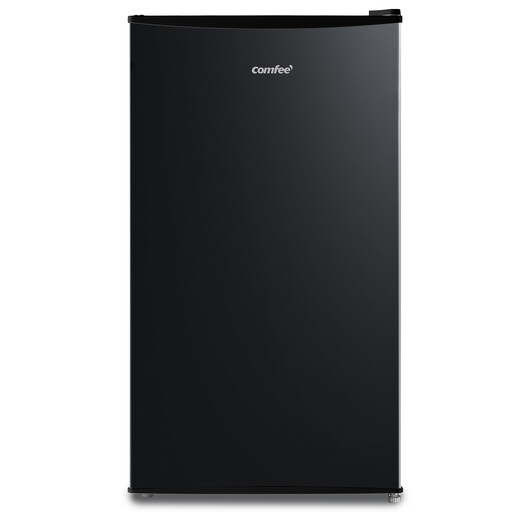
Why This Fits Their Persona: This model offers a great balance for the budget-conscious. It's compact but has a practical 80-litre capacity and a proper 4-star freezer compartment for freezing meals or ice cream.
With a noise level of 39 dB, it's relatively quiet for its price range, avoiding the 'noisy fridge' trap. The 4-star freezer is a clear specification, not a misleading chiller box.
Proper 4-star freezer compartment (12L) and a reversible door for flexible placement.
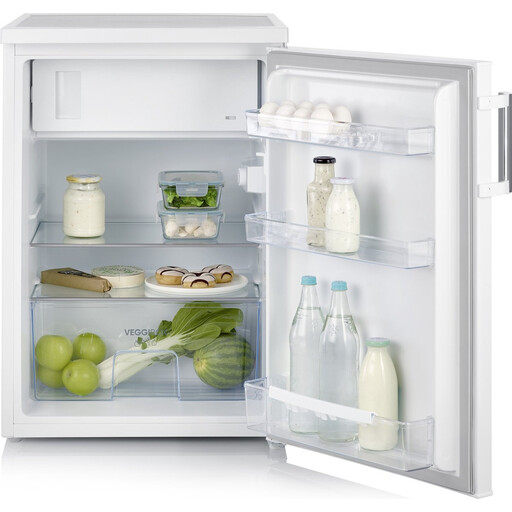
Why This Fits Their Persona: For those living in a studio or placing a fridge in an office, noise and energy costs are crucial. This model excels in both areas while offering a generous 120-litre capacity.
This model tackles the two most important pitfalls: at 37 dB it is exceptionally quiet, and with an energy class of C, it is very efficient, avoiding the hidden costs of high energy consumption.
Very low noise level (37 dB) and an excellent energy label (C). Spacious 120-litre net capacity.
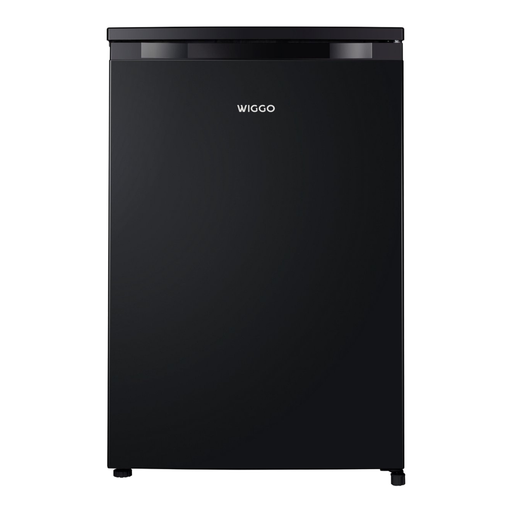
Why This Fits Their Persona: Ideal as an extra fridge in the attic, garage, or for camping. This model offers a generous 107-litre net capacity and a practical 4-star freezer, making it a versatile all-rounder.
This model bypasses the 'misleading capacity' trap by offering an honest and spacious 107-litre net capacity. The inclusion of a 4-star freezer makes it a functional choice, not a stripped-down mini-fridge.
Large capacity for a tabletop model, a proper 4-star freezer compartment, and an efficient D energy label.
We have compiled a complete, up-to-date list of products that fully meet these strict selection criteria and local regulations.
A model is considered quiet when its noise level is below 40 decibels (dB). Models around 37-38 dB are very quiet and barely audible, making them ideal for placement in a bedroom or an open-plan kitchen. Always check this specification before making a purchase.
A chiller box is a cold compartment within the refrigerator that maintains a temperature of around 0 °C. It is suitable for making drinks extra cold or for short-term storage of cold cuts. A 4-star freezer compartment is a sealed freezer that reaches a temperature of -18 °C or lower. Only in a 4-star freezer compartment can you freeze fresh products and store frozen goods for an extended period.
Consumption depends on the energy class. An energy-efficient refrigerator with a C or D rating consumes significantly less than a model with an F or G rating. For example, a C-rated model might consume around 87 kWh per year, while an F-rated model can easily approach 172 kWh. This difference can save you several tens of euros on your annual energy bill.
