
If you have a small kitchen
You’re short on space and, alongside opened cream, only need to store a modest amount of shopping. A tabletop fridge with a small freezer compartment could suit you if you don’t keep many frozen foods.


A tabletop fridge is a good choice for a small household if you mainly need fridge space and only freeze a little. A fridge-freezer is a better fit if you regularly freeze portions or other groceries. Start by making sure there’s enough fridge space, and check that the fridge can be set to 4 °C. Having more freezer space won’t extend how long opened cream keeps in the fridge.
You’re short on space and, alongside opened cream, only need to store a modest amount of shopping. A tabletop fridge with a small freezer compartment could suit you if you don’t keep many frozen foods.
You cook or shop for a small household, but also want to freeze portions regularly. Compare the freezer capacity separately and check which type of freezer compartment best suits the food you keep in stock.
You want to weigh up the dimensions and annual energy use together, rather than looking at the energy rating alone.
Start with the food you usually buy and the space you have available. Then compare fridge and freezer capacity separately, and weigh up features such as No Frost against any potential drawbacks.
A good fit if: you’re short on space, mainly need fridge space and only freeze small amounts.
Things to consider: freezer space may be limited, so check the separate capacity and the external dimensions.
A good fit if: you regularly freeze meals or other groceries and have room for a taller appliance.
Things to consider: check that the larger appliance will fit in your kitchen and compare the capacity of each compartment.
A good fit if: width is a key limitation and you’re looking for a model with a freezer compartment.
Things to consider: check the height, other installation dimensions, and the separate fridge and freezer capacities of the model.
| What to consider | What should you check? | Who is this important for? |
|---|---|---|
| Fridge temperature | Check whether you can set the fridge to 4 °C, then measure the temperature after installation using a fridge thermometer. | I want to keep opened cream chilled and check that the fridge is cold enough. Around 29% of consumers put confidence in food being kept cold first. |
| Dimensions and fridge space | Measure the available height, width and depth, then compare the fridge capacity in litres. | If my kitchen is short on space, I want an appliance that fits and has enough room for my usual shopping. Around 29% of consumers give the highest priority to suitable dimensions and fridge space. |
| Freezer space and defrosting | Compare the freezer capacity and check whether the chosen freezer compartment has No Frost. | I want to freeze portions regularly, so I check how much space will be left for other frozen foods. For around 24% of consumers, freezer space or easy defrosting comes first. |
| Annual energy use | For models with suitable dimensions, compare the stated consumption in kWh per year as well as the energy rating. | When replacing an appliance, I want to take its stated energy use into account without choosing a larger model based on its energy rating alone. Around 18% of consumers put energy use first. |
Storage advice varies depending on the type of cream. According to the Netherlands Nutrition Centre, unwhipped double cream is less suitable for freezing because its texture may change.
Check which type of cream you’re using and follow the label and relevant storage advice. Don’t rely on a freezer compartment to extend storage time in general.
A large total capacity doesn’t tell you how much space is set aside for chilled groceries and frozen food.
Compare the fridge and freezer capacities separately in litres, and check that both suit the food you usually keep in stock.
No Frost can remove the need to defrost by hand. The Dutch Consumers’ Association also points out that the technology can take up freezer space and use more energy and make more noise.
Check that the exact model has this feature, and weigh the convenience of not having to defrost against the stated capacity, energy use and noise level.
The energy rating and stated annual consumption in kWh provide different information; choosing the right size is important too.
First choose a capacity that suits your household, then compare the annual energy use on the energy label.
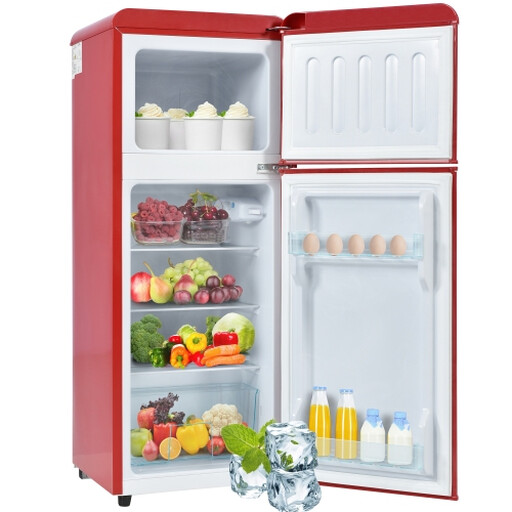
The ETNA KVV856WIT is a tabletop fridge with a freezer compartment, offering a point of reference if you have limited height and mainly need fridge space.
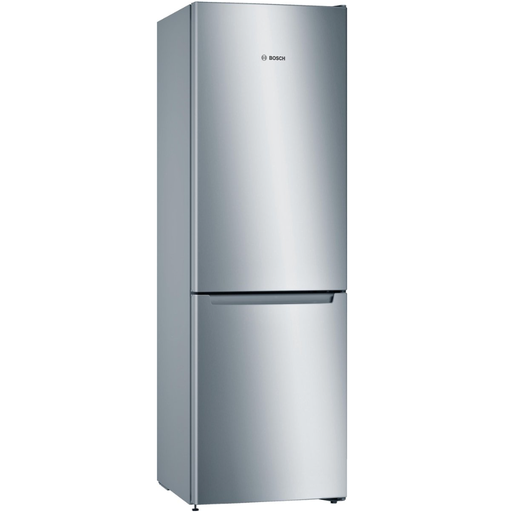
The freestanding Bosch KGN33NLEB is a point of reference if you’re looking for a larger freezer compartment and have room for a tall fridge-freezer.
The freestanding Beko B3RCNO256S is a point of reference if you want to keep the width down and are looking for a tall model with a freezer compartment at the bottom.
This selection includes tabletop models with a separate freezer compartment and freestanding fridge-freezers for anyone looking for more freezer space.
 No image available
A tabletop fridge with a separate freezer compartment for a compact setup.
Total capacity: 109 litres. Energy rating C.
 No image available
A tabletop fridge with a separate freezer compartment for anyone looking for a compact fridge.
Total capacity: 107 litres. Energy rating C.
 No image available
A compact fridge with a separate freezer compartment for keeping chilled and frozen food apart.
Total capacity: 92 litres. Freezer compartment: 28 litres, with a four-star rating.
 No image available
A freestanding fridge-freezer with separate fridge and freezer compartments for anyone looking to freeze more than a small freezer compartment can hold.
Fridge capacity: 153 litres. Freezer capacity: 52 litres. Low Frost. Energy rating E.
 No image available
A freestanding fridge-freezer with a larger freezer compartment for anyone who regularly freezes portions or other groceries.
According to Bosch: 193 litres of fridge space and 89 litres of freezer space. No Frost. Dimensions: 176 × 60 × 66 cm. Check that the appliance will fit in the space available.
The Netherlands Nutrition Centre recommends keeping your fridge at 4 °C. Place a fridge thermometer in the middle of the bottom shelf and adjust the fridge if the reading is higher. This checks the temperature in that spot; it doesn’t guarantee that every model will maintain the same temperature in all conditions.
You can, but the Netherlands Nutrition Centre says unwhipped double cream is less suitable for freezing because its texture may change. For opened unwhipped double cream, the Centre recommends 4–6 days in the fridge, and for opened cooking cream, 3–5 days. Always follow the product label too.
According to the Dutch Consumers’ Association, No Frost prevents ice from building up in the freezer compartment, so manual defrosting isn’t necessary. Check that the chosen model and the relevant freezer compartment have this feature. No Frost can also take up freezer space and use more energy and make more noise.
The European Union uses an A to G scale for fridges. As well as the energy rating, compare the stated consumption in kWh per year and choose a capacity that suits your household.
No. According to the Dutch government, there is no fixed legal guarantee period in the Netherlands; what you can reasonably expect depends, among other things, on the product and how it’s used. If a product is faulty, contact the seller. A manufacturer’s guarantee is in addition to your legal rights.