
Vandaag of morgen in huis

Kwaliteit gegarandeerd

Welkomstaanbiedingen ontgrendelen: GRATIS bezorging | Tot 80% korting | Gratis 30 dagen JoyPlus-proefperiode
Download de app
A tabletop fridge is ideal for a student room, studio flat, office or small apartment. But choosing one can be more complicated than it first seems. A mini fridge with a low price tag, for example, may offer less usable space than you expect, while a compact fridge with a freezer compartment may not be suitable for long-term frozen food storage.
Joybuy’s Product Recommendation Officer has picked out the most important product specifications and common buying pitfalls. This guide will help you compare small fridges by their dimensions, capacity, noise level, energy consumption and intended use.
A manufacturer may list the total capacity, but shelves, door compartments and a freezer compartment all take up space. So check the net capacity and how it is split between fridge and freezer space. A capacity of 43 litres may be enough for drinks and a few groceries for one person, but a household is more likely to need around 100 litres of fridge space.
A small compartment at the top of a mini fridge is not automatically suitable for long-term storage. According to the product description for the Salora CFB4300WH, its freezer compartment is intended for temporarily storing frozen products, not for freezing fresh food. So, when choosing a fridge with a freezer compartment, check its freezing capacity, temperature and any star rating.
The EU energy label runs from A to G. You should also always compare the stated annual energy consumption in kWh. This makes it easier to compare models with different capacities. Look out for inconsistencies in product descriptions too: a model may have one energy rating in the title and another in its technical specifications. If in doubt, check the current product page and energy label.
Measure not just the alcove, but also the space needed to open the door and allow heat to escape. A tabletop fridge needs space around it for ventilation; check the manual for the exact clearance required. A model around 47 cm wide and 45 cm deep is suitable for a narrow space, while models around 55 to 60 cm wide offer more fridge space.
Check the height too. A compact fridge around 49 cm high may fit under a desk or in a student room. Models around 85 cm high are more suited to fitting under a worktop or standing next to a kitchen unit.
Look for:
A tabletop fridge without a freezer compartment may offer more usable fridge space. If you only store chilled drinks, lunch and fresh food, you may not need a freezer compartment.
The noise level in dB matters if you’re using the fridge in a bedroom, studio flat or office. The models in this selection range from around 37 to 41 dB. The difference may seem small on paper, but it can be noticeable in a quiet room.
You can tell how energy-efficient a fridge is not just by its rating, but also by its annual consumption. For example, compare 72, 87, 89 or 107 kWh per year. Your actual costs will depend on your electricity tariff, room temperature, settings and usage. Any cost figures quoted by a brand are therefore estimates, not guaranteed savings.
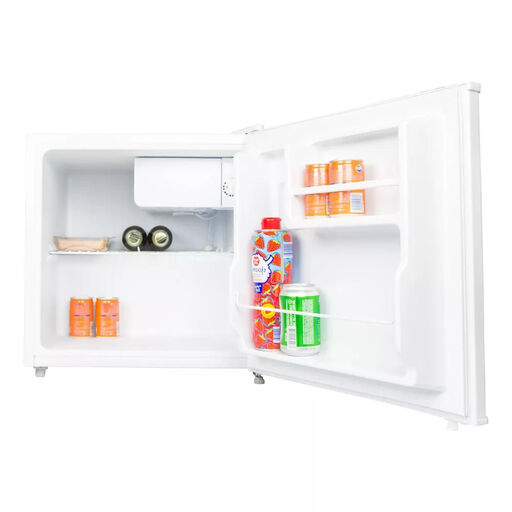
Why it suits this profile: Its 43-litre capacity and 49.2 cm height make it a good fit for a student room, bedroom or a space for extra drinks.
The net capacity, dimensions and 41 dB noise level are clearly stated. The freezer compartment is not presented as a full-size freezer.
43-litre capacity, reversible door and stated annual energy consumption of 107 kWh.
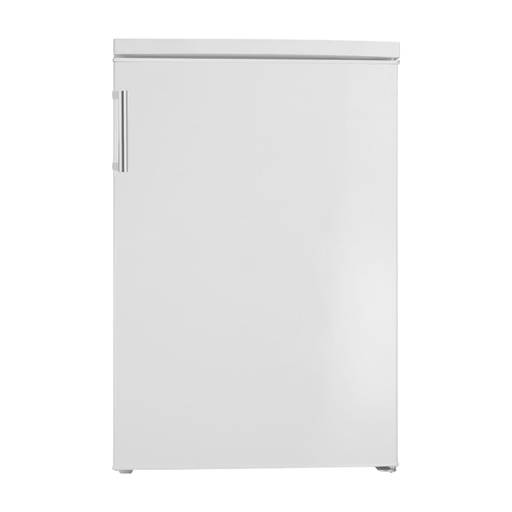
Why it suits this profile: Its spacious fridge layout, freezer compartment, reversible door and 37 dB noise level make it a good choice for a studio flat, office or small household.
The product details list 95 litres of fridge space and 14 litres of freezer space separately, as well as manual defrosting.
C energy rating, 89 kWh per year, three glass shelves and a reversible door.
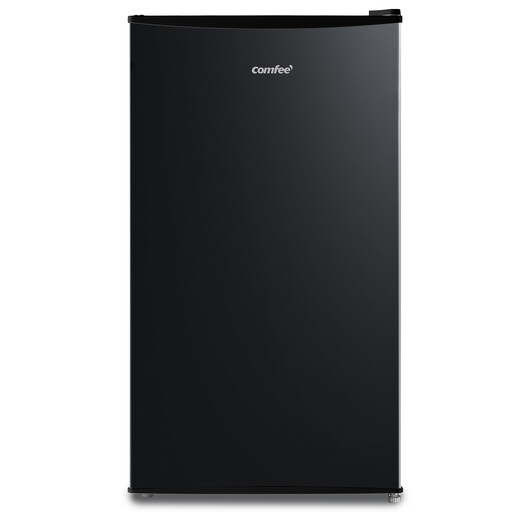
Why it suits this profile: This model is designed for people who want a separate freezer compartment and flexible storage in a compact fridge.
The specifications list a 12-litre freezer compartment, a 4-star rating and a stated freezing capacity of up to 2 kg per 24 hours.
Reversible door, LED lighting and a stated noise level of 39 dB.
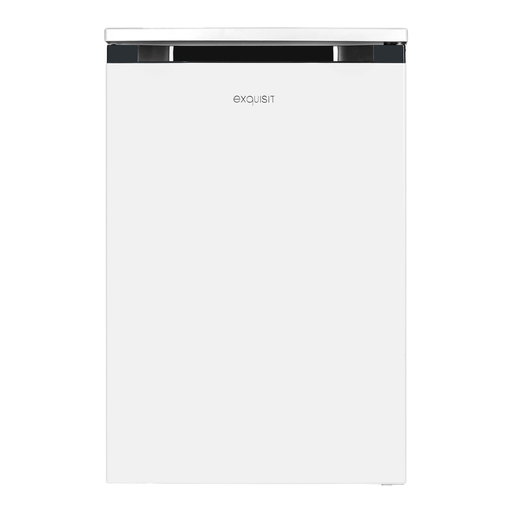
Why it suits this profile: The balance between fridge space and freezer compartment makes it suitable for everyday use in a small household, office or studio flat.
The technical information lists 107 litres of fridge space, 13 litres of freezer space, manual temperature control and manual defrosting.
C energy rating, 87 kWh per year, 37 dB and a stated storage time of 8 hours in the event of a power cut.
Place a freestanding fridge on a flat, stable surface and keep the ventilation openings clear. If it has been transported on its side, leave it upright for a few hours before plugging it in, as instructed in the manual. Don’t place the appliance next to a radiator or oven, or in direct sunlight.
A reversible door can be useful in a cramped kitchen, but check beforehand that the hinges can actually be fitted on either side. Don’t overfill the fridge, and let hot food cool down before putting it inside. Models with manual defrosting need extra maintenance when a layer of ice starts to form.
We’ve put together a complete, up-to-date list of products that meet these strict selection criteria and current European safety regulations.
Dimensions vary considerably. A mini fridge may be around 49 cm high, while a larger tabletop model is around 84 to 88 cm high. Always measure the available width, depth and height, as well as the ventilation space required.
Yes, provided the noise level, capacity and placement are right for the room. A 43-litre model is best suited to drinks and a few groceries. For everyday cooking, a tabletop model with a capacity of around 100 litres or more is more practical.
That depends on its annual consumption in kWh and your electricity tariff. Multiply the stated annual consumption by your price per kWh. Use the energy label as a starting point, but bear in mind that room temperature, temperature settings and how often you open the door can all affect consumption.
