
Vandaag of morgen in huis

Kwaliteit gegarandeerd

Welkomstaanbiedingen ontgrendelen: GRATIS bezorging | Tot 80% korting | Gratis 30 dagen JoyPlus-proefperiode
Download de app
A tabletop fridge fits neatly into a student room, studio flat, office, holiday home or small kitchen. But compact size isn’t the only thing to consider. A fridge that looks convenient on paper may not offer enough space in practice, make more noise than expected or use more electricity than necessary.
Here are some common pitfalls to watch out for:
A tabletop fridge is usually freestanding and around 80 to 85 cm tall. The width and depth vary considerably between models. So measure not only the available space, but also the clearance needed for the door to open.
A freestanding fridge shouldn’t be placed right up against a wall or piece of furniture if this blocks heat from escaping. Leave the clearance specified in the manual. Place the appliance on a flat, stable surface, away from radiators, ovens and other heat sources.
Check which way the door opens, too. A reversible door is handy if you change the layout of your room or kitchen later on.
A small fridge with a capacity of 80 to 90 litres may be enough for one person’s everyday shopping. For two people, or as an extra fridge at home, around 120 to 127 litres is more practical.
Check how the space is divided:
A fridge with a freezer compartment isn’t necessarily suitable for storing large amounts of frozen food. Models such as the Severin RKS 8832 and Exquisit KS16-4-051CW have a 13-litre freezer compartment. According to its product specifications, the Salora 47CFT80BL has 68 litres of fridge space and 12 litres of freezer space.
To find a quiet fridge for your home or workspace, compare the stated noise levels. The models in this range vary from 37 to 41 dB. This is a product specification measured under the stated conditions; actual noise levels may also depend on the surface, ventilation and the compressor switching on and off.
Also compare annual energy consumption:
So, you can’t judge how energy-efficient a fridge is by the letter on its label alone. If you like, divide the annual consumption by twelve for a simple monthly comparison. Your actual costs will depend on your energy tariff.

Why it suits this profile: This black fridge is just 48 cm wide and has a well-organised interior, making it a good fit for a student room, office or holiday home.
The net capacity, dimensions and noise level of 39 dB are clearly stated. There’s no freezer compartment, so the fridge space isn’t reduced by a small freezer section.
88 litres of net fridge space, three adjustable glass shelves, a crisper drawer, three door shelves and annual energy consumption of 90 kWh.
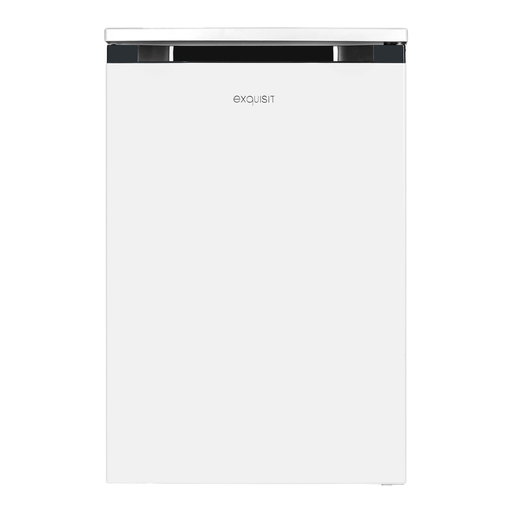
Why it suits this profile: This model combines fridge space with a separate freezer compartment and has a stated noise level of 37 dB, making it a good fit for a small home or open-plan kitchen.
The total capacity is broken down into 107 litres of fridge space and 13 litres of freezer space. This makes it clear how much room is available for everyday refrigeration.
Energy rating C, 87 kWh per year, 13 litres of freezer space and a stated food storage time of 8 hours in the event of a power cut.
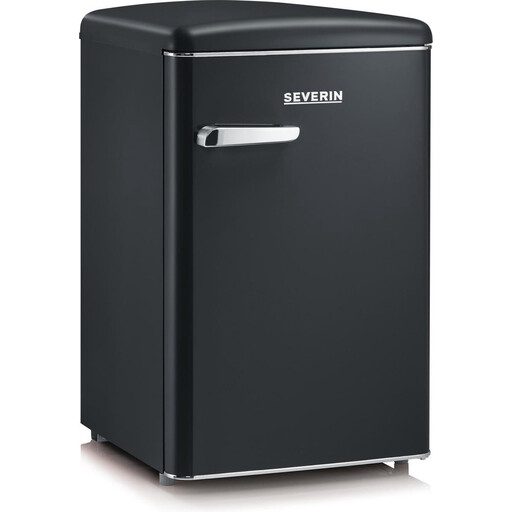
Why it suits this profile: This retro-style model is ideal if you want a practical extra fridge that looks good on display in a kitchen, studio flat or living space.
The product specifications list 93 litres of fridge space and 13 litres of freezer space separately. The noise level of 41 dB and annual energy consumption of 110 kWh are also stated.
106 litres of total net capacity, a 3-star freezer compartment, LED lighting, glass shelves and a matt black finish.
We’ve put together a complete, up-to-date list of products that meet these strict selection criteria and the applicable European safety regulations.
After transporting a tabletop fridge horizontally, leave it upright for a few hours before plugging it in. Check the manual for the exact waiting time; some models specify four hours. Use an earthed socket if possible, and avoid extension leads or multi-plug adaptors if the manufacturer advises against them.
Make sure there’s ventilation at the back and adjust the feet so the appliance stands securely. Don’t leave the door open longer than necessary, and check that it closes properly. Clean the shelves and door compartments with a soft cloth and mild detergent. Models that need manual defrosting should be defrosted when a thick layer of ice starts to build up.
Dispose of an old fridge safely. Remove the door or door seals before getting rid of the appliance, so children can’t become trapped inside.
Yes, a compact model can be a good choice if there’s enough room for ventilation and a suitable socket nearby. Pay particular attention to the noise level, door width and available fridge space. A capacity of 80 to 90 litres may be enough for drinks and light meals, while 120 litres or more is more practical for everyday shopping.
It varies by model. The product information cited here gives annual energy consumption figures ranging from 72 to 137 kWh. Multiply this figure by your own electricity tariff to estimate the annual cost. Actual figures can vary depending on the ambient temperature, settings, ventilation and how often the door is opened.
Only if the dimensions, ventilation and door design are suitable. A model around 85 cm tall may line up with a worktop, but always check the manual and leave enough space for heat to escape. Don’t build in a freestanding fridge unless the manufacturer says it’s suitable.
