What should you look for when choosing one?
Start by checking whether the full load will fit. Then check the connections, the instructions for your lunchboxes and the energy use based on how often you’ll use the machine.
| What matters when buying |
What should you check? |
Who is this most important to? |
| Everything in one load |
Measure your lunchboxes and lids, and check whether the rack layout leaves room for your dinnerware too. Use the place-setting capacity as a guide, not a guarantee that everything will fit. |
If I want to wash lunchboxes, separate lids and dinnerware together, I need to know whether everything will actually fit in the rack. Around 36% of consumers prioritise fitting everything into one load when making this choice. |
| Water supply, drainage and installation |
Check the connection and installation instructions for the exact model, including where to place the drain hose and plug socket. |
If there’s no fixed water supply, I want to know in advance whether filling the machine by hand and draining the used water are both practical. Around 29% of consumers prioritise connections and installation when choosing a model. |
| Lunchbox components and drying |
Read the instructions for both the lunchbox and lid, including the permitted temperature and rack position. Check plastic items after the programme has finished, before closing the lunchbox. |
If I wash plastic lunchboxes, I want to be able to treat the box and lid according to their individual instructions. Around 21% of consumers focus particularly on whether plastic components are suitable for dishwashers. |
| Energy use with small loads |
Compare the electricity use per 100 eco cycles, water use per eco cycle and programme duration on the EU energy label. Consider these alongside how often you’ll be able to fill the machine. |
If I often have only a small amount of washing up, I want to know whether a machine makes sense for the way I use it. Around 14% of consumers prioritise energy use per cycle. |
Tabletop dishwashers at Joybuy
These models are tabletop dishwashers for compact kitchen spaces; the connections and product details listed vary between models. Check the dimensions of your own lunchboxes and dinnerware before relying on the stated place-setting capacity.
 No image available
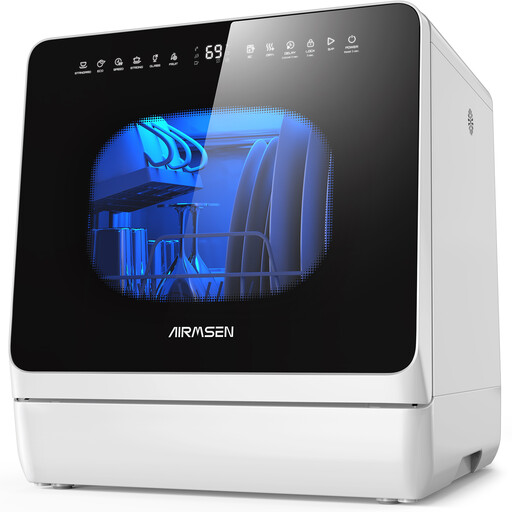
AIRMSEN Countertop Dishwasher
An option to compare if you’re looking for a compact tabletop model. Check how the rack layout works with your lunchboxes, lids and dinnerware.
The product name lists 8 wash programmes.
Joybuy
 No image available
AIRMSEN Tabletop Dishwasher
This model is worth comparing if you’re looking for a built-in water tank. Also check how the used water is drained.
The product name lists a 5-litre tank, 9 wash programmes and dimensions of 37 × 50 cm.
Joybuy
 No image available
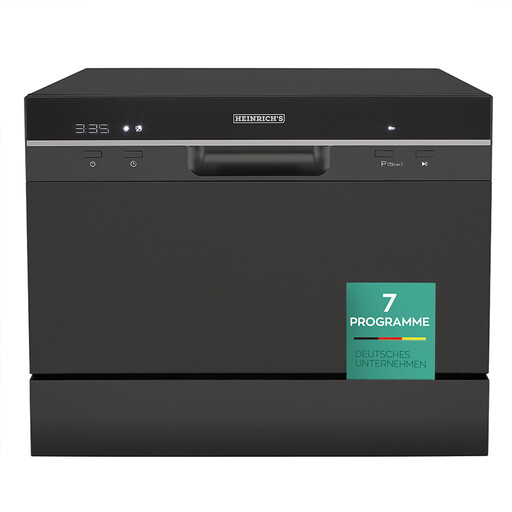
Heinrich's HTG 8840 Schwarz
Compare this tabletop model with the space you have available and the items you want to wash. Check the dimensions and rack layout before buying.
The product name lists 7 programmes and a 24-hour delay-start function.
Joybuy
 No image available
Heinrich's HTG 8855
Compare this tabletop dishwasher with your available connections and the full load you want to wash. Check whether your lunchboxes, lids and dinnerware will fit in the rack together.
The product name lists 7 programmes and energy class C.
Joybuy
 No image available
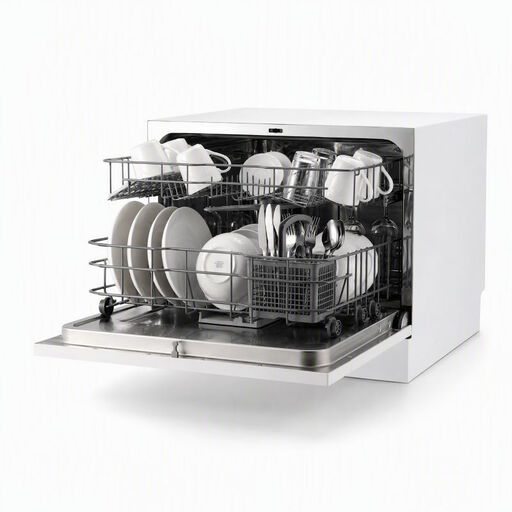
ochama Counter-Top Dishwasher
An option to compare for compact loads. The stated number of standard place settings doesn’t guarantee that your lunchboxes and dinnerware will fit.
The product name lists space for 6 standard place settings, a 30-minute quick programme and 8 functions.
Joybuy
Frequently asked questions
Can every part of a dishwasher-safe lunchbox go in any programme?
No, check the box, lid and any separate parts individually. The Voedingscentrum points out that the instructions may, for example, only allow washing in the top rack or at a low temperature.
How can I keep my dishwasher clean when lunchboxes leave food residue behind?
Remove loose food residue beforehand and check the filter regularly. The Voedingscentrum also recommends checking that the spray arms can rotate freely before starting a cycle. Follow your model’s manual for maintenance.
What does the energy label tell me about a dishwasher’s energy use?
The EU energy label includes details such as electricity use per 100 eco cycles, water use per eco cycle and programme duration. Your actual costs also depend on how often you use the machine and your tariff, so don’t judge them by the energy class alone.
In the Netherlands, do I have no rights once the manufacturer’s guarantee expires?
That doesn’t follow. According to the Rijksoverheid, statutory guarantees in the Netherlands don’t have a fixed time limit. What you can expect from a product depends, among other things, on the product and how it’s normally used. If a product is faulty, contact the seller.
Is an energy label useful when comparing household tabletop dishwashers?
Yes, the label provides details you can use to compare models, such as energy use per 100 eco cycles, water use per eco cycle and capacity. The European Commission provides this information for household dishwashers; compare the details for the exact model you’re considering.


