What should you look for?
Tabletop model with capacity for around six place settings
Suitable for: washing several bowls, cups and cutlery in one load, if you have the worktop space and can arrange the connections.
Bear in mind: it takes up space permanently, and the standard capacity doesn’t tell you whether your bowls will fit. Check the basket layout and energy label; Milieu Centraal warns about the consumption and ease of use of compact mini dishwashers.
Smaller tabletop model
Suitable for: smaller loads and limited space, if you’re happy to split the washing up over several cycles if needed.
Bear in mind: you may need extra cycles after a meal with everyone. Check both the water supply and drainage; a tap connection doesn’t automatically mean the appliance has a built-in water tank.
Washing up by hand or using a larger dishwasher you already own
Suitable for: a one-off meal, a lack of space or bowls that don’t fit well in a tabletop model.
Bear in mind: washing up by hand takes time; Milieu Centraal’s environmental advice assumes you use only a little hot water and don’t leave the tap running. A larger dishwasher is mainly an alternative if you already have one or would also use it for other purposes.
The key question is whether everything you need to wash will fit in one practical load, without overlooking the space, connections and how often you’ll use the appliance after the meal.
| What to consider |
What to look for |
Who this matters to |
| Space for the load |
Compare the dimensions of your bowls with the basket, and allow for cups and cutlery too. |
If I want to wash bowls and the rest of the breakfast crockery together after a meal with everyone, I’ll pay particular attention to the layout. Around 33% of consumers say load capacity is their main concern. |
| Space and connections |
Measure the available space, including room for the door to open, and check the water supply and drainage for the exact model. |
In a small kitchen, I want to know in advance whether the appliance will really fit and can be connected. Around 27% of consumers prioritise space and connections. |
| Having crockery ready to use |
Check the programme duration and whether the chosen programme dries the crockery; allow for extra cycles if needed. |
If the bowls are needed again soon after breakfast, the total time for all the loads matters. Around 20% of consumers prioritise having their crockery ready quickly. |
| Consumption and frequency of use |
Compare energy use per 100 eco cycles and water use per eco cycle on the energy label, and consider how often you’ll use the appliance after the meal. |
If I’ll only use the appliance occasionally, I want to weigh up its consumption against washing up by hand. Around 20% of consumers put running costs first. |
Tabletop dishwashers at Joybuy
This selection includes tabletop models for standard and smaller loads, including models with a built-in water tank. If you’re washing breakfast bowls, always check the usable basket space, connections and how you plan to use the appliance.
 No image available
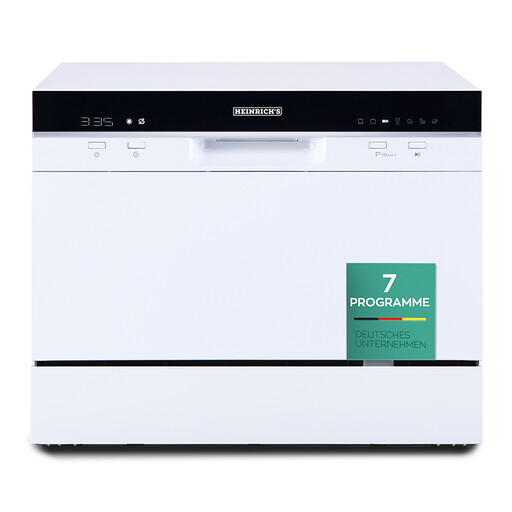
Heinrich's HTG 8840 tabletop dishwasher
The stated capacity of six place settings suits a standard load; check whether your bowls will fit with cups and cutlery.
Seven programmes and a cutlery basket. The product description lists water supply and drainage hoses.
Joybuy
 No image available
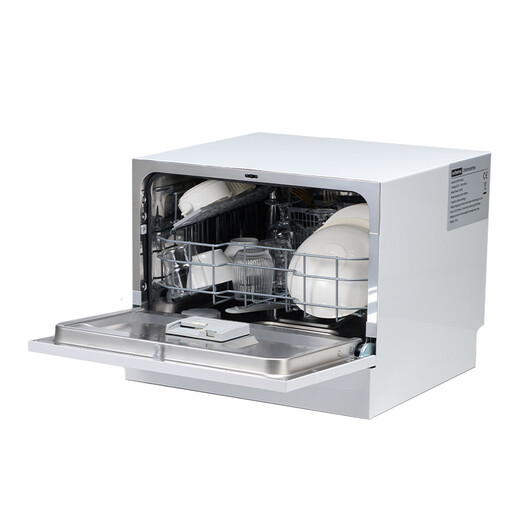
Ochama countertop dishwasher, six standard place settings
The stated capacity is six standard place settings; compare the basket with the bowls and other crockery you want to wash at the same time.
Eight functions, a 30-minute quick-wash programme and a delay start of up to 24 hours, according to the product name.
Joybuy
 No image available
Comfee CDWMTO201D(W) tabletop dishwasher
The built-in tank may be useful if a fixed water supply isn’t practical in your kitchen; check how the wastewater is drained too.
5-litre built-in water tank and 6+3 programmes, according to the product name. The product description says you can fill it manually or connect it to a tap.
Joybuy
 No image available
AIRMSEN tabletop dishwasher, up to four place settings
The stated capacity is up to four place settings, so check whether your chosen combination of bowls, cups and cutlery will fit in the smaller load.
5-litre built-in water tank and 5+1 wash cycles, according to the product name. The product description also mentions a choice between using the tank and connecting to a tap.
Joybuy
 No image available
AIRMSEN tabletop dishwasher, four place settings
The stated capacity of four place settings suits a smaller load; check whether your bowls and other crockery will fit in the basket together.
5-litre built-in water tank, nine programmes and dimensions of 37 × 50 cm, according to the product name. The product description also lists a drainage hose and tap connection.
Joybuy
Frequently asked questions
Does a capacity of six place settings mean six deep breakfast bowls will fit at once?
No, not necessarily. A place setting refers to standard tableware for one person; the shape and depth of your bowls and the rest of the load determine whether everything will fit at once. Compare the basket with the crockery you actually want to wash.
Can every tabletop model work without a fixed water connection?
No, connections vary by model. Tomado lists a fixed water supply and drainage for the TDW5501B; Klarstein describes the Aquatica as a model that connects to a tap. Check both the water supply and drainage for each specific model; a tap connection doesn’t prove that it has a built-in water tank.
Is washing up by hand a good alternative for a one-off celebratory meal?
It can be, particularly if it’s a one-off load and you use only a little hot water. Milieu Centraal says that washing up by hand is usually better for the environment, provided you use only a little hot water. A tabletop model may be more practical if you’ll use it regularly after meals too.
Which consumption figures can I compare?
Compare models using the same information from the EU energy label, such as energy use per 100 eco cycles and water use per eco cycle. The European Commission describes the A to G scale used on the energy label for household dishwashers; consider these figures alongside the capacity and how often you expect to use the appliance.
Does an electric tabletop dishwasher sold in the Netherlands need a CE marking?
Electrical products must carry a CE marking, as stated by the Netherlands Food and Consumer Product Safety Authority. A CE marking alone doesn’t prove that a specific appliance has been independently inspected or performance-tested.


