
Lunch host with large dinner plates
Wants to check the largest plate diameter before buying; Tomado specifies a limit of Ø 25 cm for the TDW5501B.


First, measure your largest dinner plate and compare its diameter with the limit for the specific model: a capacity of six place settings doesn’t automatically mean your crockery will fit. Then consider how much of the lunch washing-up needs to fit in the rack and whether the water supply, drainage and worktop space are suitable. If there’s room for a larger machine that you can fill properly, or you’re only dealing with a small load, compare those options with washing up by hand in a bowl using a small amount of hot water; Milieu Centraal advises against compact mini dishwashers based on their energy and water use and test results.
Wants to check the largest plate diameter before buying; Tomado specifies a limit of Ø 25 cm for the TDW5501B.
Weighs up whether all the lunch washing-up will fit in one load against the space taken up by the tabletop model; a stated place-setting capacity doesn’t guarantee that every combination of crockery will fit.
Needs a suitable water-supply solution and must also check drainage and safe positioning; Daan Tech specifies a water tank for Bob, while Tomado’s manual highlights the need for a safe electrical installation.
First check that your plates will fit, then decide how much washing-up needs to go in the machine at once, and finally consider where it will go and how much energy and water it is expected to use.
| Concern | What to look for | Who should consider this? |
|---|---|---|
| Will the dinner plates fit? | Measure the largest plate diameter and compare it with the limit for the exact model. Tomado specifies a maximum of Ø 25 cm for the TDW5501B. | If I use large dinner plates, I want to know first whether they’ll fit in the rack; around 36% of consumers say plate fit is their main buying concern. |
| Will all the washing-up from lunch fit in one load? | Compare the full combination of plates, glasses, bowls and cutlery with the rack layout; the place-setting capacity alone doesn’t guarantee a fit. | Anyone wanting to wash up after several lunch guests in as few loads as possible should focus on usable rack space; around 29% of consumers say the amount of washing-up per load is their main concern. |
| Will the machine fit the space and connections? | Check the external dimensions, clearance for the open door, water supply, drainage and electrical connection. | If I don’t have a fixed water supply or have limited worktop space, I want to know in advance what connections and drainage options are available; around 21% of consumers say positioning and connections are their main concern. |
| Is the energy and water use right for the load? | Compare water and electricity use on the same eco-programme basis, and take into account how many cycles your washing-up will need. | Anyone wanting to assess the energy and water use for a full load after lunch should consider both the energy label figures and the number of cycles needed; around 14% of consumers say energy and water use per usable load is their main concern. |
The number of place settings doesn’t tell you what size plates will fit in the rack. Alongside its capacity of six place settings, Tomado specifies a separate limit of Ø 25 cm for the TDW5501B.
Measure your largest plate and check the plate-size limit for the exact version you’re considering.
If your plates don’t fit, you may still have to wash some of the dishes by hand.
A tank supplies water; the machine also needs to drain used water safely. You’ll also need to check the space available and the electrical connection.
Read the manual for the model you’re considering and check before buying where the water supply, drain hose and power connection can go.
You may need a suitable place to drain the water or installation work.
Milieu Centraal advises against compact mini dishwashers based on their energy and water use and test results. How they compare with a standard-size model also depends on the space available and whether you can fill the larger machine properly.
Compare the energy label figures on the same eco-programme basis, and take into account how many cycles your crockery will need.
The TDW5501B is a freestanding tabletop model with a capacity of six place settings.
The VVW5520 is a freestanding model with a capacity of six place settings.
The SKS62E38EU is a freestanding compact model with a capacity of six place settings.
Bob is an extra-compact dishwasher with a water tank and a stated full-rack capacity of three place settings.
This selection includes compact tabletop models with a water tank and a model for six place settings. Check the plate size, rack layout and drainage for each version.
 No image available
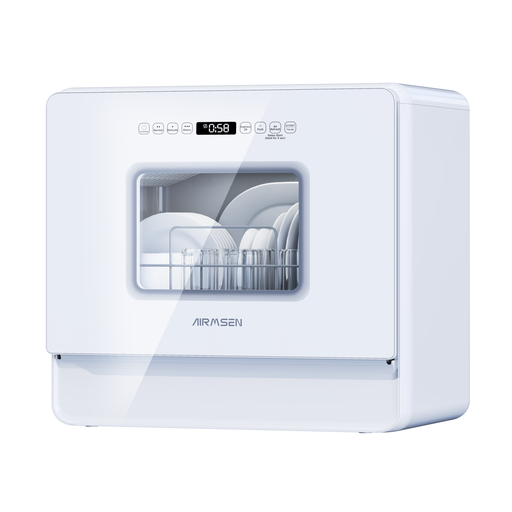
Worth considering if you’re looking for a more spacious tabletop dishwasher rack and more than one water-supply option.
The product description says it can hold more than 40 items and plates up to 300 mm when the upper rack is removed.
The machine has a built-in 5-litre tank and, according to the description, an alternative option for connecting it to a tap.
 No image available
Worth considering if you don’t have a fixed water supply and a smaller load per cycle will be enough.
The product description specifies four place settings and plates up to 26 cm, as well as a built-in 5-litre tank.
When using the tank, the drain hose empties into a container.
 No image available
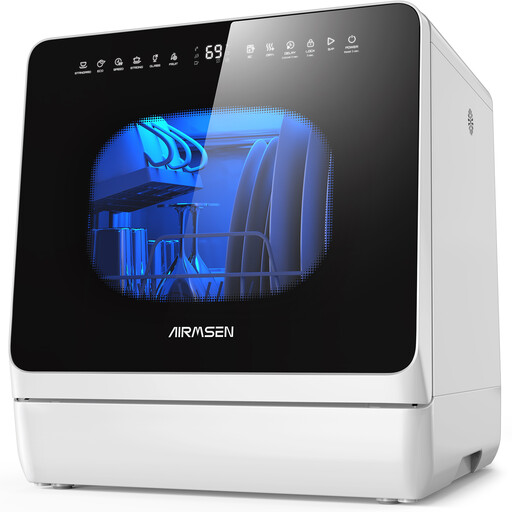
Worth considering if you’re looking for a compact rack for a smaller combination of dishes.
The product description specifies four place settings, 31 items and plates up to 26 cm.
The product title specifies eight wash programmes.
 No image available
Worth considering if you want to compare a tabletop model with a water tank against the worktop space available.
The product title specifies a width of 37 cm and a depth of 50 cm; the product description gives a capacity of four place settings and a 5-litre tank.
The description mentions both a tap connection and use of the tank; an adapter may be needed for the tap connection.
 No image available
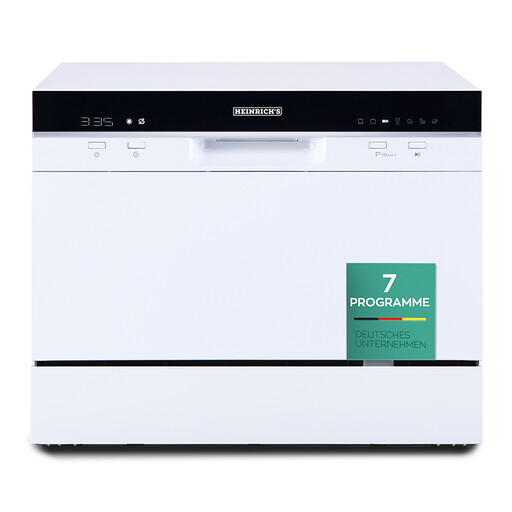
Worth considering if you’re looking for a model with a stated capacity of six place settings for a larger load after lunch.
The product title specifies seven programmes, energy class D and 47 dB.
The product description mentions a water connection and inlet and drain hoses.
No, the number of place settings doesn’t guarantee that your plates will fit. Measure your largest plate and check the limit for the exact model; Tomado specifies a maximum of Ø 25 cm for the TDW5501B.
Don’t assume so: a tank supplies water, but the used water also needs to drain away. Check the manual to see where the drain hose should go and whether the machine can be positioned there safely.
That depends on the combination and quantity of crockery, not just the stated number of place settings. Compare your plates, glasses, bowls and cutlery with the rack layout, and allow for extra cycles if everything won’t fit at once.
Remove food scraps and, where suitable for your dishes, use the eco programme; Milieu Centraal says pre-rinsing by hand is generally unnecessary. Follow the manual for the model you’ve chosen when cleaning the filter and carrying out other maintenance.
The label helps you compare water and electricity use, but check the figures on the same eco-programme basis and factor in how many cycles your crockery will need. The Dutch government says the energy label for household dishwashers also includes information about water use.