
Organiser with lots of dinner plates
Wants to work out in advance how many cycles will be needed and check whether their own plates will actually fit in the rack.


A tabletop model is only suitable for a community meal if your dinner plates fit in the rack and you allow for multiple cycles: a capacity of six place settings does not mean it can hold six large plates plus all your other crockery. Choose a model with a fixed water supply if the connections are available where you plan to use it; a tank model gives you more flexibility with the water supply, but you’ll still need a safe way to drain the wastewater. If you need to get through a lot of washing-up at once, also compare a larger dishwasher or plan an additional way to wash up. Milieu Centraal advises against compact mini dishwashers because of their water and energy use.
Wants to work out in advance how many cycles will be needed and check whether their own plates will actually fit in the rack.
Needs to find a spot for the appliance and, if choosing a tank model, work out how to drain the wastewater too.
Wants to keep using the appliance after the community meal and weigh up the worktop space it needs against its consumption and capacity.
First, measure your largest plates and decide how much washing-up you want to do per cycle. Then check whether the required water supply and drainage are possible where you plan to put the appliance.
| Buying concern | What should you check? | Who is this important for? |
|---|---|---|
| Number of wash cycles | Count plates, glasses and cutlery separately; check the rack layout and the number of place settings. A place setting means the tableware for one person at one meal, not one plate. | If I have a lot of washing-up after the community meal, I want to know how many cycles I’ll need and where to keep the dirty dishes in between. Around 34% of consumers mainly need capacity per cycle. |
| Fit of dinner plates | Measure your largest plates and check the permitted diameter and usable rack layout for the exact model. | If my dinner plates don’t fit in the rack, the stated capacity is of little use to me. That’s why around 33% of consumers put plate fit first. |
| Water supply and drainage | Check the type of water supply, the route for the drain hose, the available space and the model’s installation instructions. | A fixed water supply isn’t a given in my kitchen, so I want to know in advance how both the water supply and drainage will work. This is the top priority for around 20% of consumers. |
| Space and consumption | Compare the energy label figures for kWh per 100 eco cycles, litres per eco cycle, place settings and programme duration; consider how you’ll use it after the event. | If I want to keep using the appliance afterwards, the worktop space it needs must be worth the energy and water it uses and suit the loads I usually wash. Around 13% of consumers look at this first. |
A place setting includes more than just a plate, and the rack also has limits on plate size and layout. This means the actual load for a meal with several guests may be different from what you expect.
Count the items you expect to wash and measure your largest plates before choosing a model.
A tank can remove the need for a fixed water supply, but the wastewater still needs to be drained. Daan Tech says Bob drains through a hose into a sink or suitable container.
Plan how you’ll fill and drain the appliance where you intend to use it, and follow the instructions for your chosen model.
Milieu Centraal advises against compact mini dishwashers measuring 45 cm high and holding 4 to 6 place settings because of their water and energy use, and suggests a standard dishwasher run with a full load as an alternative. How it compares with washing up by hand also depends on how much hot water you use.
Check the energy label figures and consider how often you’ll use the appliance with a full load after the community meal.
The VVW5520 is a freestanding tabletop model with capacity for six place settings and programmes including eco and hygiene. It could suit a spot with suitable connections, provided your plates and load fit in the rack.
The TDW5501W is a tabletop model for six place settings, with fixed water inlet and drainage.
The SKS2ITW00E is a freestanding compact model for six place settings, with programmes including eco, intensive and quick.
Bob is a compact tank model for situations where a fixed water supply isn’t available.
This selection includes compact dishwashers for use on or near the worktop, with differences in capacity, plate size and water supply.
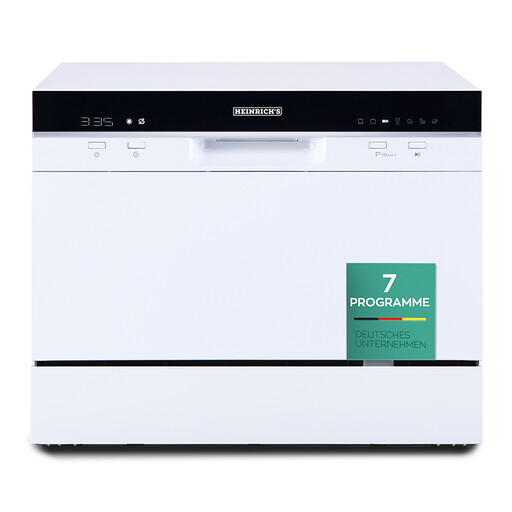 No image available
The stated capacity of six place settings could suit anyone wanting to wash up for several people per cycle; separately check how many of your dinner plates will fit in the rack.
The description lists seven programmes, 6.5 litres per wash, a 30-minute quick programme and a water connection included.
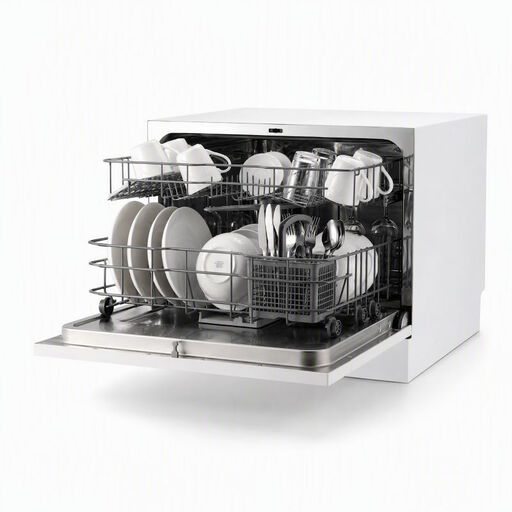 No image available
The stated capacity of six standard place settings could be useful in a compact kitchen; measure your dinner plates and check the rack layout separately.
The product name lists a 30-minute quick programme and eight functions.
 No image available
The built-in 5-litre tank is useful if a fixed water supply isn’t available; also check how you’ll drain the wastewater where you plan to use it.
The product information lists 6+3 programmes and a maximum plate diameter of 250 mm.
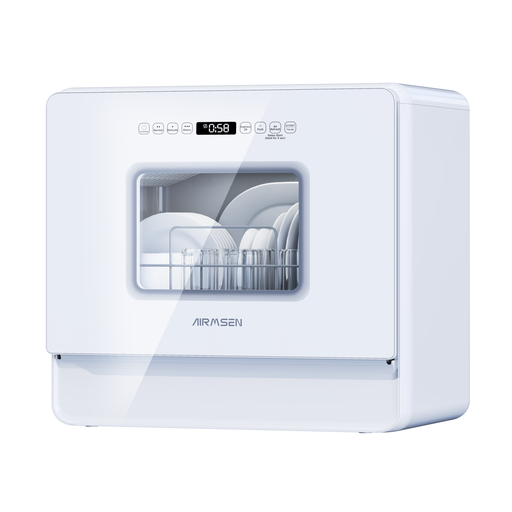 No image available
The 5-litre tank and stated tap connection give you options for the water supply. The description lists five place settings, which could mean several cycles for a community meal.
According to the description, plates up to 300 mm fit only when the upper rack is removed.
 No image available
The built-in 5-litre tank is an option if there’s no fixed water supply where you plan to use it. The stated capacity is four place settings.
The product information lists nine programmes and a maximum plate diameter of 26 cm.
No. A place setting includes the tableware for one person at one meal, such as a plate, cutlery and a glass. Measure your plates and check separately whether dishes and pans will fit in the rack.
It may not need a fixed water supply, but the wastewater must still be drained according to the instructions for your chosen model. For Bob, Daan Tech specifies a drain hose leading to a sink or a collection container with a capacity of more than 3 litres.
Milieu Centraal advises removing food scraps to prevent the filter from getting blocked; according to the organisation, pre-rinsing isn’t necessary. Follow your appliance’s manual for cleaning the filter and choosing dishwasher detergent too.
The Dutch government states that household appliances must have an energy label. Dishwasher label information includes energy and water consumption, place settings, noise and the duration of the eco programme.
No. According to ACM ConsuWijzer, a product should work properly for as long as you could reasonably expect it to. If it breaks sooner during normal use, the seller must offer an appropriate remedy free of charge; a manufacturer’s guarantee is separate.