Who is this guide for?

Tracing with a tablet you already own

You want to trace a scan on a separate layer and are first looking for a stylus that works with your current tablet. Apple, Samsung and STAEDTLER publish compatibility information for their respective devices and styluses.

Artists who want to vary their lines

You want to adjust line thickness or opacity using pen pressure, so you check whether both your stylus and drawing app support this feature. The Procreate Help Center explains that Apple Pencil pressure can affect the opacity of many brushes.

For longer drawing sessions at a sit-stand desk

You draw while standing for longer periods and, as well as finding a comfortable grip, want to be able to change your posture. Arboportaal discusses the strain of prolonged standing and the importance of varying screen-based work.

What should you look for when choosing?

Pressure-sensitive Apple Pencil

Choose this if: you have a compatible iPad and want to control line thickness or brush opacity using pen pressure.

Bear in mind: check the exact Pencil generation and iPad model; extra gestures aren’t necessary just for tracing outlines.

Apple Pencil (USB-C) or Logitech Crayon

Choose this if: you mainly want to draw even outlines on a compatible iPad and tilt control matters to you.

Bear in mind: tilt is different from pen pressure; check compatibility with your iPad and software too.

S Pen for Galaxy Tab

Choose this if: you have a supported Galaxy Tab and are looking for a stylus designed for that model.

Bear in mind: features vary by version, so check the full stylus variant and manufacturer code.

STAEDTLER Noris digital jumbo

Choose this if: your screen supports EMR and you want a thicker, triangular stylus that doesn’t need charging or pairing.

Bear in mind: a touchscreen alone doesn’t confirm EMR compatibility; the eraser function depends on the app.

Capacitive stylus

Choose this if: broad touchscreen compatibility matters more to you than the features of an active stylus designed for a specific device.

Bear in mind: an analogue stylus such as the Adonit Pro 3 doesn’t, by itself, tell you whether it offers pressure sensitivity or palm rejection.

What to consider What should you check? Who is this important for?
Compatibility Compare your exact tablet model and stylus variant with the manufacturer’s compatibility information. If you want to keep using your current tablet, you’ll want to make sure the stylus works with it; around 29% of consumers make compatibility their top priority.
Scan and layers workflow Try importing one of your own scans to see whether the app supports importing, layer order and opacity adjustment. If you want to keep the original scan visible while drawing on a separate layer, the app needs to support these steps; around 23% of consumers put this workflow first.
Line control and palm rejection Check separately whether the stylus and app support pen pressure, tilt and palm rejection. If you want to vary line thickness or brush opacity with pressure while tracing, consider how the stylus and app work together; around 18% of consumers prioritise this kind of line control.
Working posture Consider the position of your tablet and hand, and whether you can change your posture during longer sessions. If you draw for longer periods at a sit-stand desk, your grip and workspace need to work comfortably together; around 18% of consumers give working posture the greatest importance.
Charging and maintenance Check how the stylus charges and whether its nibs can be replaced; make sure you choose the right stylus technology for your tablet. If you want to minimise charging and maintenance, consider these practicalities alongside compatibility; around 12% of consumers put them at the top of their list.

Common buying mistakes

  • Choosing a stylus just because it’s “for tablets”

    Support can depend on the exact tablet model or screen technology, such as EMR. A stylus that isn’t compatible with your device may not offer the drawing features you want.

    Look up your exact tablet model and compare it with the stylus manufacturer’s compatibility list before you choose.

  • Confusing tilt with pressure sensitivity

    Tilt and pen pressure are different features. Logitech describes the Crayon as tilt-sensitive and states in its manual that the stylus isn’t pressure-sensitive.

    Choose based on the line control you use, and check that your drawing app supports the feature too.

  • Assuming the stylus handles your scan workflow

    Importing a scan and drawing on a separate layer are app features, not stylus features.

    Try one of your own scans to check whether your app can import it, organise layers and adjust the opacity of the source layer.

  • Relying only on a retailer’s product description

    Samsung states that the S Pen for devices including the Galaxy Tab S9 FE and S10 FE doesn’t support Bluetooth; S Pen features vary by model.

    Compare the stylus’s full manufacturer code and the features you want with Samsung’s information.

Brands to compare

Apple

Apple Pencil models are designed for specific supported iPads; the right generation depends on your device and the features you need.

  • Apple lists features for Pencil Pro including squeeze, rotation and magnetic charging.
  • Apple describes the USB-C version as tilt-sensitive and rechargeable via USB-C; check compatibility for each Pencil generation.

Samsung

S Pen variants are designed for supported Galaxy devices; check which version is right for your Galaxy Tab.

  • Samsung lists the EJ-PX510BJEGEU as compatible with, among others, the Tab S9 FE series.
  • Samsung states that the S Pen for devices including the Tab S9 FE and S10 FE doesn’t support Bluetooth; this doesn’t automatically apply to all S Pens.

Logitech

The Crayon (USB-C) is an iPad stylus for anyone looking for tilt control and a different stylus shape.

  • Logitech describes USB-C charging, tilt control and palm rejection.
  • According to the manual, the Crayon isn’t pressure-sensitive; check compatibility with your iPad too.

STAEDTLER

The Noris digital jumbo is a thicker drawing stylus for screens confirmed to support EMR.

  • STAEDTLER lists a triangular shape, replaceable nib and use without charging or pairing.
  • The compatibility information limits the stylus to EMR screens; the eraser function depends on the app.

Adonit

Adonit describes several types of stylus, including an active pen and an analogue touchscreen stylus.

  • According to Adonit, the Note⁺ 2 is pressure-sensitive.
  • Adonit excludes Android and Microsoft devices from compatibility with the Note⁺ 2; features of this model don’t automatically apply to the Pro 3.

Joybuy product picks

This selection includes styluses for various compatible tablets; check your exact device and drawing app before choosing a model.
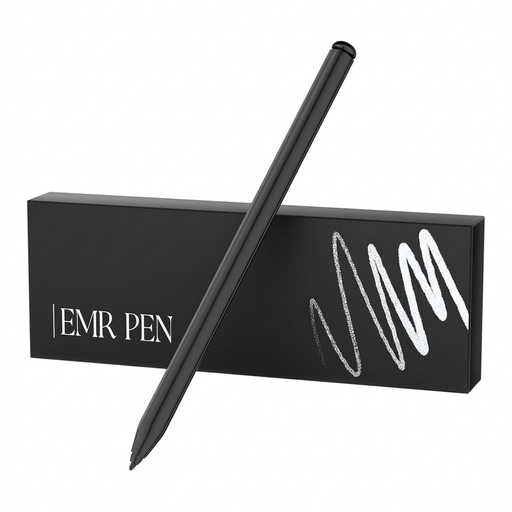
Zspeed EMR stylus pen SP-18 with eraser

Zspeed EMR stylus pen SP-18 with eraser

Worth considering for a compatible reMarkable or Kindle Scribe device; also check whether your drawing app supports your scan workflow.

The product name lists 4096 pressure levels. The specified devices are reMarkable 1, reMarkable 2 and Kindle Scribe.

View at Joybuy
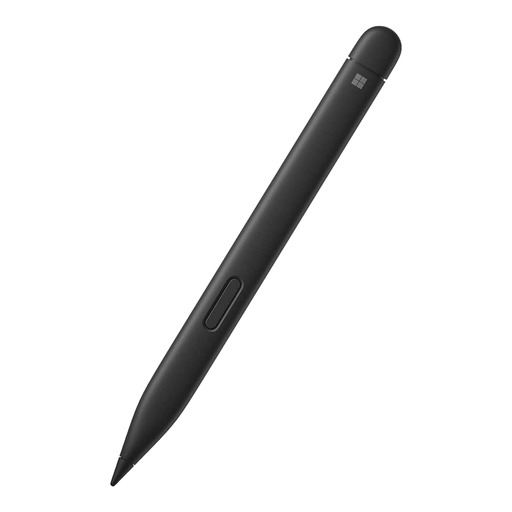
Microsoft Surface Slim Pen 2, black, model 8WV-00002

Microsoft Surface Slim Pen 2, 8WV-00002

An option if you use a compatible Surface device; check that your specific model and drawing app are supported.

The specified compatible devices are Surface models.

View at Joybuy

Apple Pencil Pro 2024 for compatible iPad models

Apple Pencil Pro 2024

A good match for the pressure-sensitive Apple Pencil option if you have a compatible iPad; check your tablet’s exact generation.

Apple lists features for Pencil Pro including pressure sensitivity, squeeze, rotation and magnetic charging. The product name mentions iPad Air and iPad Pro; check the compatibility list for your exact model.

View at Joybuy

Apple Pencil (USB-C), white

Apple Pencil (USB-C), white

Worth considering for drawing even outlines on a compatible iPad if tilt control suits the way you draw.

Apple describes this Pencil as tilt-sensitive and states that it charges via USB-C. Check compatibility with your exact iPad model.

View at Joybuy
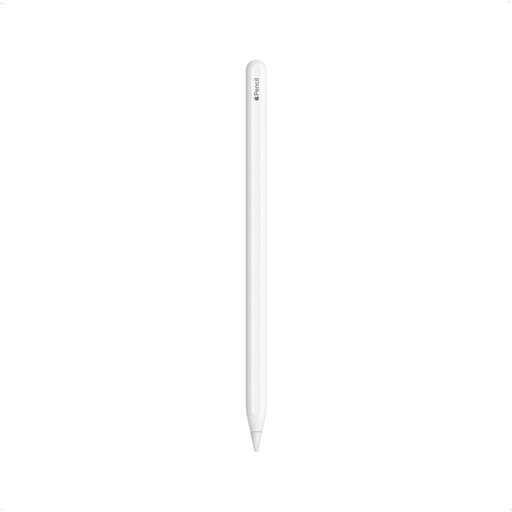
Apple Pencil (2nd generation) for specific iPad Pro, iPad Air and iPad mini models

Apple Pencil (2nd generation)

An option if you use one of the specifically supported iPads; check your tablet’s generation and screen size before choosing.

The product name lists compatibility with iPad Pro 12.9-inch (3rd, 4th, 5th and 6th generation), iPad Pro 11-inch, iPad Air (4th and 5th generation) and iPad mini (6th generation).

View at Joybuy

Frequently asked questions

How can I trace a scan without drawing on the original?

Import the scan into a supported drawing app as a separate layer, then draw on a new layer above it. In Procreate, you can insert a supported file as a new layer and adjust the opacity of the source layer; in other apps, check for the same import and layer features.

Does a stylus need to be pressure-sensitive for tracing outlines?

Not if you want to draw even lines. If you want to vary line thickness or opacity using pen pressure, check that both the stylus and the brush or app you choose respond to it; tilt control is a separate feature.

Is standing for long periods while drawing automatically healthier?

No, standing for long periods isn’t automatically healthier. Arboportaal highlights the potential problems of prolonged standing and recommends alternating screen-based work with other tasks or a break. Specific obligations apply to employers for employees; owning a sit-stand desk doesn’t mean there’s a set amount of time that everyone should stand.

What cooling-off period and warranty apply to an online purchase in the Netherlands?

According to ACM ConsuWijzer, online consumer purchases often come with a cooling-off period of up to 14 days after delivery, with some exceptions. Dutch statutory warranty doesn’t have a fixed two-year term: what you can reasonably expect from the product is what matters, and the retailer is your point of contact.
