
You want a stylus for your existing tablet
You want to avoid buying a stylus that won’t work with your exact iPad, Galaxy Tab or Surface model. Apple, Samsung and Microsoft list compatibility by model; check for any software requirements too.


Start by checking your exact tablet model, then choose a stylus with features supported by your drawing app. For neat diagram lines, a compatible stylus with tilt support may be all you need. Pressure sensitivity or shortcuts are mainly useful if your app supports these features with that stylus. Also check how it charges, and see how the nib sounds on your own screen: product specifications don’t provide comparable sound measurements.
You want to avoid buying a stylus that won’t work with your exact iPad, Galaxy Tab or Surface model. Apple, Samsung and Microsoft list compatibility by model; check for any software requirements too.
When you’re adding arrows, small labels and lines with different emphasis, you’ll want to know whether both the stylus and drawing app support the line control you need. For example, Adonit says that the Note⁺ 2’s pressure sensitivity and buttons require connection to specific apps.
You’ll want to know in advance how the stylus sounds on your screen and how to charge it during a study session. Manufacturers’ specifications don’t provide comparable measurements of nib noise.
First, check your exact tablet model and drawing app. Then consider line control, how the stylus sounds on your screen and how it charges.
| What to consider | What should you check? | Who is this important for? |
|---|---|---|
| Compatibility | Compare your full tablet model and any software requirements with the stylus manufacturer’s compatibility list. | If you’re buying a stylus for a tablet you already own, you’ll want to make sure they work together. Around 36% of consumers put compatibility first. |
| Line control | Check whether tilt support is enough, and whether pressure sensitivity or shortcuts work with both your stylus and drawing app. | If you create small labels and clearly differentiated diagram lines, you’ll want suitable control over your strokes. Around 29% of consumers prioritise line control. |
| A quiet workspace | See how the nib sounds on your screen and any screen protector you use. | If you draw at a quiet study desk, you’ll want to know whether contact with your screen feels comfortable. Around 21% of consumers focus mainly on their working environment. |
| Charging and accessories | Check how the exact stylus charges, which cable or accessories it needs and what’s included. | If you don’t want to run out of charge or find you’re missing a charging accessory during a study session, check the charging set-up in advance. Around 14% of consumers prioritise charging and accessories. |
Apple lists compatibility by Pencil generation and iPad model. Some combinations with the first generation also require an adapter.
Note down your exact iPad model and compare it with the compatibility list for the stylus’s full product name.
Some combinations with a first-generation Apple Pencil may require an adapter.
Samsung says that the S Pen supplied with models including the Galaxy Tab S9 FE and S10 FE doesn’t support Bluetooth. So features found in other S Pen versions aren’t automatically available with these FE pens.
Check the full pen and tablet model names, and consult Samsung’s information for that exact combination.
Apple Pencil (USB-C) and Logitech Crayon (USB-C) charge via a USB-C cable. Microsoft lists compatible devices or charging accessories for the Surface Slim Pen.
Check how the exact stylus charges, and whether your tablet, cable or accessory is suitable.
A separate charging accessory may be needed for a Surface set-up.
Apple Pencil models are designed for compatible iPads. The right choice depends on your iPad model and the features you want.
Samsung S Pens are model-specific. A replacement FE pen is an option for the Galaxy Tab models it’s designed for.
The Logitech Crayon (USB-C) is designed for supported iPads and drawing and annotation tasks.
Adonit Note⁺ 2 is designed for iPads on Adonit’s compatibility list if you want extra controls supported by your apps.
The Surface Slim Pen is designed for supported Surface devices, not as a general-purpose stylus for every tablet.
These Joybuy product picks are for drawing and creating diagrams on compatible screens, including iPad, Surface and e-ink devices. Check the exact device type and model for each stylus.
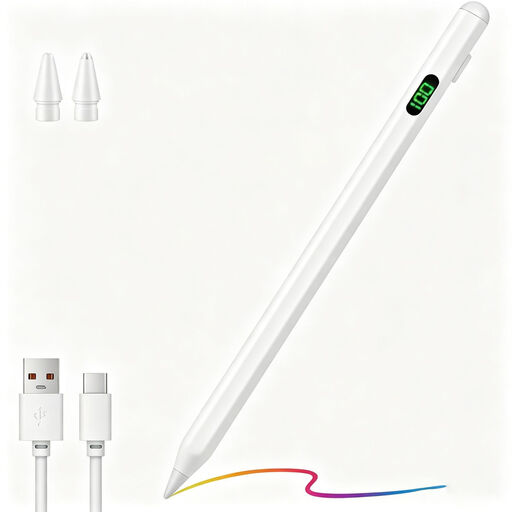 No image available
A general-purpose stylus for drawing on a compatible touchscreen. Check that your screen is capacitive and that the stylus works with your exact device.
The product name mentions fast charging, an LED indicator and magnetic attachment.
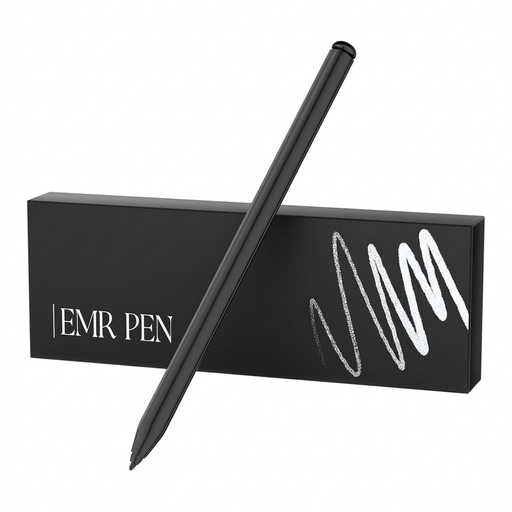 No image available
An option for drawing on the devices listed for this EMR stylus. Check that your exact model is included.
The product name mentions reMarkable 1 and 2, Kindle Scribe and 4096 pressure levels.
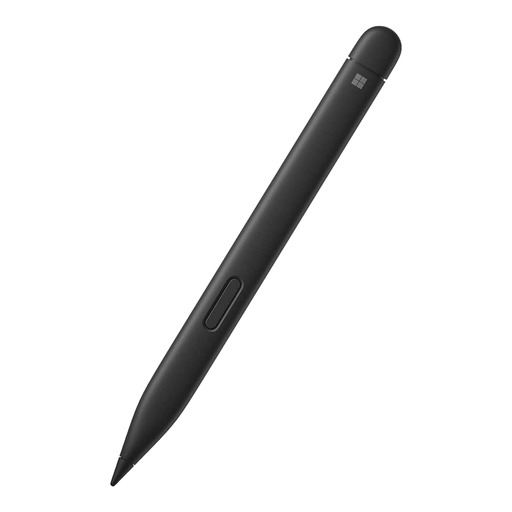 No image available
A stylus for drawing on a supported Surface device. Microsoft lists pen features by Surface model, so check your model and its charging options.
 No image available
For drawing and annotation on a supported iPad. Logitech lists iPad models from 2018 onwards and iOS 12.2 or later as requirements.
Logitech describes tilt control and USB-C charging; check your iPad’s compatibility.
 No image available
For drawing on a compatible iPad model. Apple lists compatible iPad models and iPadOS 17.5 or later; check both before choosing.
Apple describes magnetic pairing and charging, as well as extra controls using squeeze and rotate gestures.
Look up your full tablet model in the compatibility list from the manufacturer of the specific stylus. Check any listed software requirements too; having the same brand or a compatible connector isn’t enough.
No. Adonit says that pressure sensitivity and programmable buttons require connection to specific apps. Check whether your drawing app is supported.
Microsoft lists compatible Surface devices and charging accessories. Check your Surface model and charging set-up; a standalone charger is sold separately.
No. According to the Dutch government, statutory warranty in the Netherlands has no fixed duration: the product must do what you can reasonably expect of it. If there’s a fault, contact the seller. Normal wear and tear or damage caused by your own actions isn’t automatically covered by free repairs.
For distance purchases from a business, the Dutch government says you’ll generally have 14 days to change your mind. There are exceptions, and different rules apply when buying from a private seller. Check the information for your specific order.