
Lettering artist with an existing tablet
Wants to check whether a stylus works with their exact tablet model before comparing drawing features.


Start by checking your exact tablet model: a stylus for an iPad won’t automatically work with a Galaxy Tab or Windows device. Then choose one to suit your lettering style. Pressure sensitivity is different from controlling line thickness by tilting, and some stylus features also depend on the app. If you’re printing a card, you’ll also need to check the size, margins and export settings; changing your stylus won’t fix a layout problem.
Wants to check whether a stylus works with their exact tablet model before comparing drawing features.
Wants variety in strokes and letterforms, so is looking at the differences between pressure, tilt and support in the drawing app.
Creates a design at a small desk and wants to avoid losing text or details when exporting and trimming it.
First check that the stylus works with your device, then decide what kind of line control you need, and finally set up your print settings.
| What to consider | What should you check? | Who should prioritise this? |
|---|---|---|
| Compatibility | Note your device model and generation. Check these against the exact stylus version and any software requirements. | I want to check that my existing tablet and stylus work together first, so I don’t end up with a combination I can’t use. Around 36% of consumers prioritise compatibility. |
| Line control | Check pressure sensitivity separately from tilt, and see whether your drawing app supports the feature you want. | If I want to create letters with varying line thickness, I need to know how the stylus controls that variation and whether my app supports it. Around 29% of consumers prioritise expressive line control. |
| Use and power | Check how the stylus is charged or powered, and whether pairing or a specific app is required. | At a small desk, I want to know what I need to have ready before I start, such as a charging cable or battery. Around 21% of consumers prioritise ease of use and clarity about what’s needed. |
| Print settings | Choose your card size in advance and check the margins, bleed and export settings. Procreate recommends at least 300 DPI for work you intend to print. | If the card is going to be printed, I want to keep the text within the safe margins and set the export size accordingly. Around 14% of consumers prioritise a design that’s ready to print. |
Apple specifies which iPad models are compatible with each Pencil version. So a general claim of iPad compatibility won’t tell you whether your model is supported.
Find your exact iPad model and generation, then compare them with Apple’s compatibility list for the stylus. Check any software requirements too.
Tilt and pressure sensitivity are different ways of varying your lines. Logitech says the Crayon isn’t pressure-sensitive; according to Adonit, pressure sensitivity and shortcut buttons on the Adonit Note⁺ 2 depend on pairing it with specific apps.
Decide what kind of line control you need, then check both the stylus and the support available in your drawing app.
Samsung says that some S Pens, including those for the Galaxy Tab S9 FE and S10 FE, don’t support Bluetooth. So features listed for another S Pen version won’t necessarily apply to these models.
Check the full model number, and don’t assume it supports Bluetooth Air Actions or charging unless these features are confirmed for that exact version.
Margins, trim area and print settings are part of your design workflow; a stylus won’t correct text that sits outside the safe area.
Check the card size, safe area and export settings in your design app. If needed, print a test copy first.
Apple Pencil versions offer different features for specific iPad models.
S Pen versions are worth considering for Galaxy Tab models that Samsung lists as compatible with the particular stylus.
The Crayon (USB-C) is an option for writing or drawing on a compatible iPad, with tilt affecting the line.
The Note⁺ 2 is an alternative for iPads listed in Adonit’s compatibility guide.
The Digital Pen 2 is designed for a compatible Windows device, not as a general replacement for an iPad or Galaxy Tab stylus.
This selection includes styluses for the reMarkable and Kindle Scribe models mentioned, as well as certain iPads. Check whether your exact device is supported by each stylus.
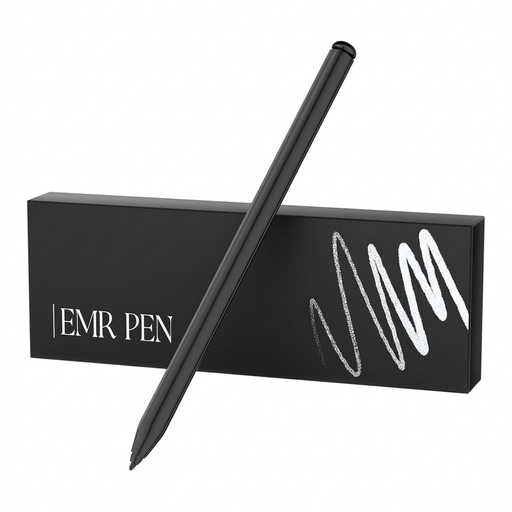 No image available
Designed for the reMarkable and Kindle Scribe models named in the product title; check that your exact device version is compatible.
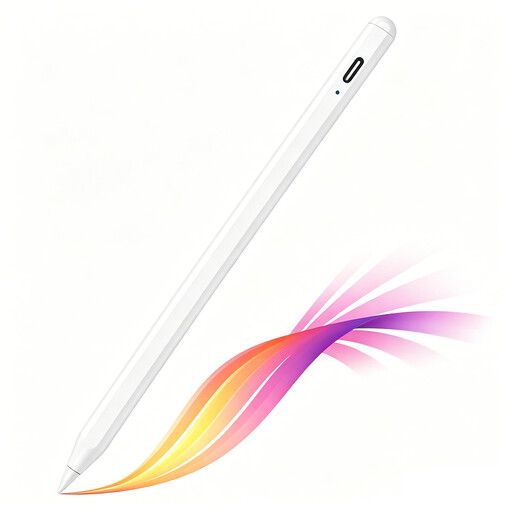 No image available
The product title lists selected iPad models. Before buying, check that your exact iPad is among the supported models.
 No image available
For writing or drawing on a compatible iPad. Logitech describes line variation through tilt and says the Crayon isn’t pressure-sensitive; check that it suits your lettering style.
 No image available
Apple lists pressure and tilt sensitivity, along with creative controls such as barrel roll and squeeze, for Pencil Pro. It only works with supported iPad models; Apple lists iPadOS 17.5 or later as a requirement, so check both for your device.
 No image available
Apple lists tilt sensitivity for this version; pairing and charging are done with a USB-C cable. Check that your iPad model is supported.
Find your exact iPad model and compare it with Apple’s compatibility list for the specific Pencil. Apple lists different models and software requirements for each version, so a general ‘for iPad’ label isn’t enough.
Samsung says that the S Pens for the Tab S9 FE and S10 FE, among others, don’t need charging and don’t support Bluetooth. So don’t assume they support Bluetooth Air Actions based on a general description of an S Pen.
Create your design at the intended card size, keep important lettering within the safe margins, and check the export or print a test copy. Canva explains margins and bleed; Procreate recommends at least 300 DPI for work you intend to print. The settings available depend on the app you use.
According to ACM ConsuWijzer, online purchases generally come with a statutory cooling-off period of up to 14 days after delivery, with some exceptions. This is separate from your rights if a product is faulty: Business.gov.nl says that in the Netherlands you’re entitled to a product that does what you could reasonably expect, and that the seller must offer an appropriate solution for a fault under the rules on the statutory guarantee.
If the stylus needs power or a battery, the Dutch government outlines ways to dispose of such devices, including a collection point, recycling centre or the old-for-new scheme when buying a similar device.