
The quick sketcher
You take notes and sketch on a tablet that’s already available in the office during meetings. A compatible pen that feels comfortable to write with is more important than extra creative features.


Choose a tablet pen that’s compatible with the exact tablet model you already use; pens for iPad, Galaxy Tab and Surface aren’t automatically interchangeable. For a quick sketch, the way the pen writes matters. But to create an editable circuit diagram, you’ll also need a diagram app with suitable symbols and clearly defined connection points. In a shared workspace, check how the pen is charged and stored, and agree how files will be shared.
You take notes and sketch on a tablet that’s already available in the office during meetings. A compatible pen that feels comfortable to write with is more important than extra creative features.
You want to turn a sketch into a clear, editable diagram. As well as a pen, you’ll need an app that supports electrical symbols and clearly defined connection points; draw.io describes these types of diagrams and connections.
You move between workspaces or devices and want to know where the pen is stored, how to charge it and how files are shared in line with your organisation’s policies.
Choose this option: if you use an iPad that’s compatible with the specific pen and mainly want to sketch or annotate.
Consider: Check both compatibility and whether your drawing app has the diagram features you need; pen support alone doesn’t guarantee this.
Choose this option: if Samsung lists your exact Galaxy Tab model as compatible with the S Pen in question.
Consider: Features vary by version. For example, Samsung says the S Pen for Tab S9 FE doesn’t support Bluetooth.
Choose this option: if your Windows tablet supports pen input and the pen is compatible with your device and software.
Consider: Microsoft specifies pen support for each Surface model. Wacom lists AES or MPP support for Bamboo Ink Plus and cautions that performance varies by device and software.
First check that your pen, tablet and drawing app work together. Then consider writing comfort and day-to-day storage and charging in your workspace.
| What to consider | What to look for | Who this matters to |
|---|---|---|
| Compatibility | Compare your tablet’s full model name with the pen’s compatibility information; for Windows, also check which pen protocol is supported. | If I want to keep using my existing tablet, I need to know whether the pen will work with it before I buy. Around 36% of consumers say compatibility is their top priority. |
| Precise sketching | Try drawing small labels and closely spaced lines in your drawing app; check which pen features the app supports. | When I draw small elements in a diagram, I want to position lines and annotations accurately. Around 29% of consumers put precise sketching first. |
| Editable diagrams | Check whether the app supports electrical symbols, connections and clearly defined connection points, and whether your colleagues can open the file. | If colleagues need to edit my diagram later, I want to produce a diagram they can work with, rather than just an image of handwritten notes. Around 21% of consumers say this is their main consideration. |
| Charging and storage | Check which charger or holder you need and where you’ll keep the pen in the shared workspace. | When I move between workspaces, I want to know how to charge and find my pen. Around 14% of consumers put workspace organisation first. |
Apple, Samsung, Microsoft and Wacom provide compatibility information for specific pens, tablets or protocols, so check the details for your exact combination. Apple lists precise input and tilt sensitivity for Apple Pencil (USB-C). Logitech lists tilt and palm rejection for Crayon; in both cases, check which features your drawing app supports. Your organisation’s policies may also apply when sharing files.
Pen support can depend on the exact tablet model and the version of the pen. A pen and tablet that aren’t compatible won’t work for the task you have in mind.
Before ordering, compare your tablet’s full model number with the manufacturer’s compatibility information.
An electrical diagram needs to make it clear which wires are connected. A hand-drawn sketch isn’t automatically a clear, editable diagram.
Before deciding which pen features matter most, test your chosen app with electrical symbols, crossing lines and connection points.
You may need extra time to develop a sketch if you later have to turn it into an editable diagram.
Samsung says that some versions, including the S Pen for Tab S9 FE, don’t support Bluetooth.
Check the features of the specific S Pen, and assess writing and any remote controls separately.
The charging options for Surface Slim Pen depend on the device and the accessories available.
Check what’s available in your workspace before choosing a pen.
Some Surface Slim Pen set-ups may require a separate charging accessory.
Apple Pencil models are designed for iPads that support the specific version.
S Pen versions are designed for specific Galaxy Tab models; Samsung lists the EJ-PX510BJEGEU for the Tab S9 FE series.
Surface Slim Pen is an option for Surface devices that Microsoft confirms support pen input.
Bamboo Ink Plus may suit certain Windows devices with Wacom AES or Microsoft Pen Protocol.
Crayon (USB-C) is designed for compatible iPads when you want to write or annotate without a complicated Bluetooth pairing process.
These product options are suited to sketching and annotating on selected iPad and Surface devices. Before buying, check that the pen is compatible with your exact tablet model and the features of your drawing app.
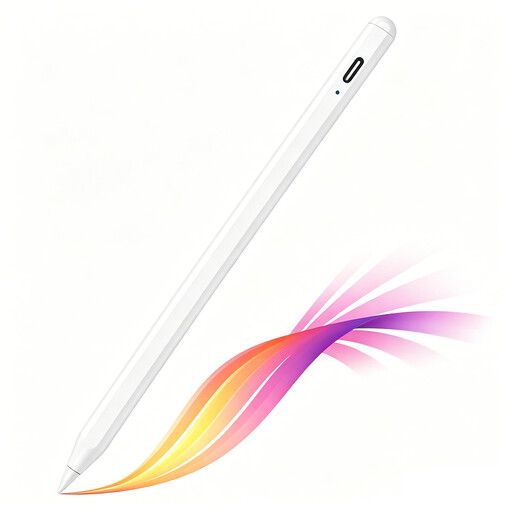 No image available
May suit you if you sketch or take notes on a selected iPad model; check compatibility with your tablet.
The product description lists tilt detection and palm rejection.
USB-C charging, an LED battery indicator and magnetic attachment for storage are listed. Magnetic attachment here does not mean the pen charges wirelessly.
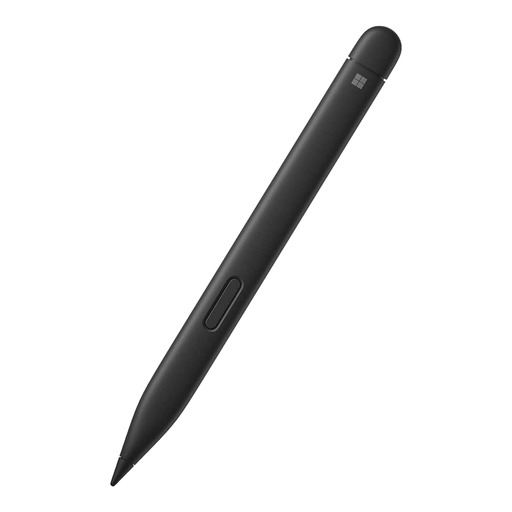 No image available
May suit you if you write or draw on a compatible Surface device; check pen input and charging options for your model and accessories.
The product description lists a sharper tip, pressure sensitivity, haptic feedback and 4,096 pressure levels.
Compatibility with Surface Pro 8 and Surface Pro X Type Covers is listed.
 No image available
May suit you if you want to sketch quickly on a compatible iPad; the product description says it can be used without Bluetooth pairing.
Tilt for variable line thickness and palm rejection are listed.
The description lists compatibility with iPad models from 2018 onwards and iOS 12.2 or later. It charges via USB-C.
 No image available
May suit you if you use one of the listed compatible iPad Air or iPad Pro models; check your exact model.
The product description lists tilt and pressure sensitivity, gestures and haptic feedback.
Magnetic pairing and charging, and locating the pen with the Find My app, are listed in the description.
 No image available
May suit you if you want to write, draw or take notes on a compatible iPad; compatibility and hover functionality depend on the iPad model.
The product description lists tilt sensitivity and hover on supported iPads.
It charges via USB-C. Magnetic attachment is not the same as wireless charging.
No. The pen alone won’t determine whether you can create an editable circuit diagram. Check that your diagram app supports electrical shapes and clearly defined connections; draw.io describes electrical diagram types and waypoint shapes for connection points.
First check whether your Surface model supports pen input, then, as Microsoft recommends, test the pen in another app. If it writes there, the original app may be the cause.
That depends on your Surface model and the accessories available in your workspace. Microsoft lists compatible charging options; you may need a separate charger.
For an ordinary online consumer purchase, ACM ConsuWijzer says you generally have up to 14 days from delivery to change your mind, with some exceptions. You’re also covered by the legal guarantee if a product doesn’t meet what you could reasonably expect when used normally. If you’re buying on behalf of your employer, don’t automatically assume that consumer rights apply.
This depends, among other things, on the file’s contents and your organisation’s policies. If a file contains personal data, storing or sharing it may fall under the GDPR; check which storage and access arrangements are permitted. A technical drawing that contains no personal data isn’t covered by the GDPR simply because of the type of drawing it is.