
Map researcher at a desk
Studies details in historical maps and compares them with written sources. Screen space matters more than keeping the tablet as small as possible.


A larger screen gives you more room to compare large map scans, but according to the Consumers’ Association, extra-large tablets are less convenient to carry around. For offline study, you’ll need to be able to download the specific map or document file and save it locally. Being able to view historical maps online doesn’t automatically mean you can open them offline. If you want to make notes, check the stylus support, included accessories and capabilities of your chosen app separately.
Studies details in historical maps and compares them with written sources. Screen space matters more than keeping the tablet as small as possible.
Wants to take previously downloaded maps and documents to places where there may be no connection. Local availability and portability both matter.
Regularly marks up map scans and writes notes. That makes precise stylus support, what’s included in the bundle and the files you use all relevant.
Start with the way you’ll use your tablet most: comparing map details, opening files offline, annotating or taking it with you.
| What to consider | What to look for | Who is this important for? |
|---|---|---|
| Reading map details | Compare the screen size and resolution of the exact model; if possible, try viewing one of your own map scans. | If I study large scans alongside written sources, I want to be able to read small labels. Around 36% of consumers prioritise map readability. |
| Opening files offline | Check whether the source lets you download the file, how much local storage is available and whether the file opens without Wi-Fi. | When I have no connection at a research site, I want to be able to open files saved in advance. Around 29% of consumers prioritise offline access. |
| Annotating | Check that the stylus and app are compatible, and whether the stylus is included with that exact model. | If I annotate map scans, I want to be able to use the stylus and app together. Around 21% of consumers prioritise annotating. |
| Taking it with you | Compare the dimensions and weight of the model you’ve chosen with the space you need to view your map. | If I take my tablet to research sites, I want its size and weight to remain manageable. Around 14% of consumers prioritise portability. |
A map you can view online isn’t necessarily saved as a file. Not all archive scans are freely available to download either.
Check whether downloads are available from each source and what rights apply. Save the file locally and test it without a connection.
A specific Lenovo Idea Tab bundle includes a stylus; for the iPad (A16), Apple specifies compatible Pencil versions. These are different things to check when buying.
Check the full contents of the bundle you’ve chosen and make sure the stylus works with your tablet and the app you plan to use.
A memory card for the Redmi Pad 2 is sold separately.
Some of the stated storage is used by software. A battery capacity in mAh doesn’t tell you how long it will last for your particular study routine.
Check the available storage on the model you’ve chosen and compare battery life using a relevant usage test.
The Redmi Pad 2 is worth comparing if you’re looking for a tablet with local storage and the option to expand it.
The Idea Tab and Idea Tab Pro offer different screen sizes, whether you want a more compact study set-up or extra room for maps.
The Galaxy Tab S10 FE is worth looking into if using a stylus is important for your studies.
The iPad (A16) is worth considering if you want to use iPadOS to read locally saved PDFs, among other things.
These models offer a range of screen sizes and storage options for studying maps and locally saved documents. Check which accessories are included with each model.
 Image unavailable
An 11-inch model to consider if you want to read study materials stored locally on a tablet that’s smaller than the larger-screen options.
11 inch; 8 GB; 256 GB; Wi-Fi 5 (802.11ac); Android 15.
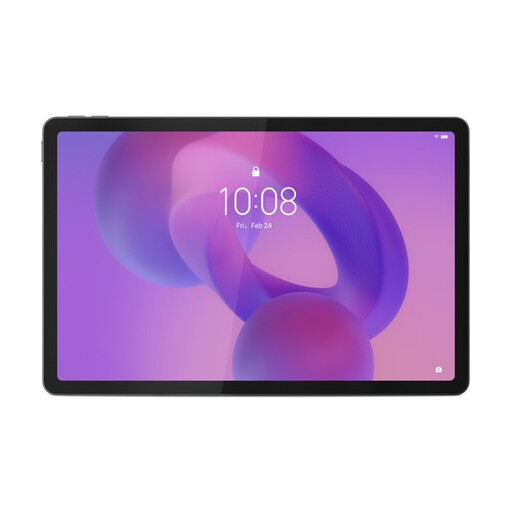 Image unavailable
The larger-screen model is an option for comparing map scans at a desk, but bear in mind that larger tablets are less convenient to carry around.
12.7 inch; 3K; 8 GB RAM; 256 GB storage; Wi-Fi 6E.
 Image unavailable
This model is an option if you want a larger screen for study materials and plan to make notes. Check that the included stylus suits the way you work.
12.1 inch; 2.5K; 8 GB RAM; 256 GB storage; with stylus.
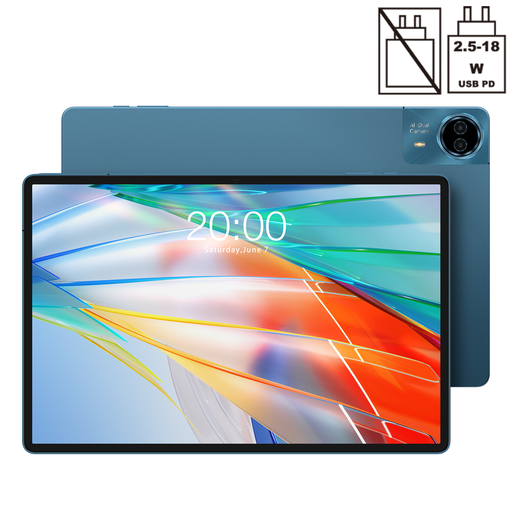 Image unavailable
The 14-inch screen is an option if having plenty of room for maps matters more than a compact size that’s easy to carry.
14 inch; 2.2K (2240 × 1400); 128 GB storage.
 Image unavailable
An option for viewing maps on a larger screen and making notes with the included stylus pen.
12.7 inch; 2K; 256 GB storage; stylus pen included.
Don’t assume maps are available offline just because you can view them on the website. Check whether you can download the specific material and save a usable file locally before setting off without a connection.
Save the file on your device and open it once without Wi-Fi before you leave. Apple explains how to save a PDF on an iPad. If a file is in the cloud, also check that a local copy is available.
No, it varies from scan to scan. The National Archives allows scans to be reused freely when a download button is available and the scan is marked ‘Public domain’ or ‘CC0’. Check the rights for each individual scan; this condition doesn’t automatically apply to other map materials.
No. According to the Dutch government, the Netherlands has no fixed statutory warranty period. ACM ConsuWijzer says that if a product is faulty despite normal use, the seller is responsible for providing an appropriate solution free of charge. The circumstances of the fault matter.
Not for files that have actually been saved locally. You will need a connection to access new online sources while you’re out and about. Check what connectivity the model you’ve chosen offers and whether you’ll need a plan.