
Map and PDF reader
You want to view maps, captions and illustrated pages without constantly zooming in. The Dutch Consumers’ Association recommends a tablet for anyone who reads a lot of PDFs.


For geography books with maps and fixed-layout PDF pages, a larger colour screen is often more practical. If you’ll be holding the tablet for a long time, a more compact, lightweight model may be a better choice. Open a page from your own book in the reading app you plan to use and weigh the viewing experience against the tablet’s size and weight. A tablet won’t solve sleep problems caused by using screens in the evening.
You want to view maps, captions and illustrated pages without constantly zooming in. The Dutch Consumers’ Association recommends a tablet for anyone who reads a lot of PDFs.
You read for extended periods in bed without a stand, so you need to weigh screen space against size and weight. The Dutch Consumers’ Association discusses this trade-off when comparing small and large tablets.
You read around bedtime and want to be able to adjust the screen settings, without assuming that they replace advice about sleep.
Best for: mainly reading flowing text and holding the tablet in bed.
Trade-off: you’ll see fewer details at once on a fixed-layout PDF page or map, so you may need to zoom in more often.
Best for: regularly viewing maps, images and PDF pages.
Trade-off: more screen space means a larger device; consider the weight for the way you like to read.
Best for: books made up mostly of flowing text, if long reading sessions matter more to you than colour and PDF viewing.
Trade-off: the Dutch Consumers’ Association says e-readers are less suitable for books with lots of images and fixed-layout PDF pages.
| What to consider | What to look for | Who is this most important for? |
|---|---|---|
| Maps and PDF pages | Open a page from a book you own in the app you plan to use; check the map details, zooming and screen resolution. | If I want to view maps and legends clearly, how the page looks on screen is my first consideration. Around 33% of consumers prioritise map and PDF viewing. |
| Holding it in bed | Compare the weight of the exact model and try holding the tablet in your usual reading position. | If I read without a stand, I want to weigh screen space against how comfortable the device is to hold. Around 27% of consumers prioritise how easy it is to hold. |
| Reading around bedtime | Check whether the reading app has a dark mode and lets you adjust the brightness; consider your reading time separately. | If I read around bedtime, I want to be able to adjust the screen without treating it as a guarantee of better sleep. Around 20% of consumers prioritise reading around bedtime. |
| Access to books | Try a file or title of your own in the relevant app and check that your book service is available on the platform you’ve chosen. | If I want to use my existing books or library service, I’ll first check that they’re accessible on the tablet. Around 20% of consumers make access to books their main priority. |
A large screen can still show small map labels, while a larger device may be harder to hold.
Open a real page from a book you own, including its legend, in the app you plan to use.
According to the Dutch Consumers’ Association, fixed-layout PDF pages and books with lots of images are less suited to many e-readers. An e-reader may still suit your needs if your books are mostly made up of flowing text.
Choose based on the layout of your books, not just the type of device.
Changing the screen settings doesn’t alter Thuisarts’ advice about using screens just before going to bed.
Use the settings to adjust the display, and consider your reading time separately if sleep is a concern.
The iPad mini is a compact colour tablet for anyone who values portability.
The Galaxy Tab A11 is a compact Android option; the Galaxy Tab A11+ is a larger alternative.
The Redmi Pad 2 is an 11-inch option for anyone who wants more screen space for maps and images.
The Idea Tab is a larger Android tablet for anyone who wants to combine reading with other tasks.
These tablets have screen sizes and specifications worth considering when viewing maps and illustrated pages. Always weigh the available screen space against how easy the tablet is to hold in bed.
 No image available
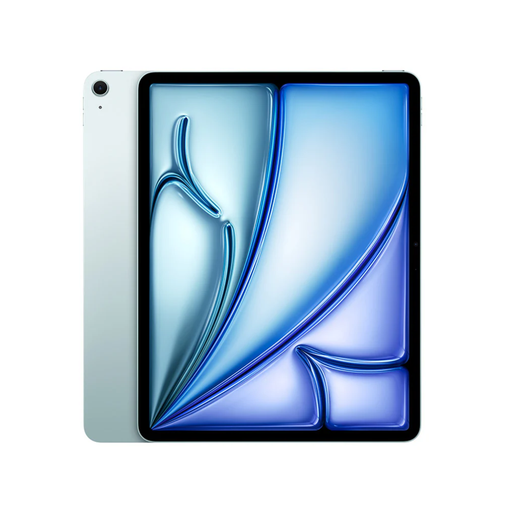
The 11-inch screen may suit anyone who wants to view maps and illustrated pages on a tablet.
Model: Wi-Fi, 256 GB, blue. The product information lists iPadOS.
 No image available
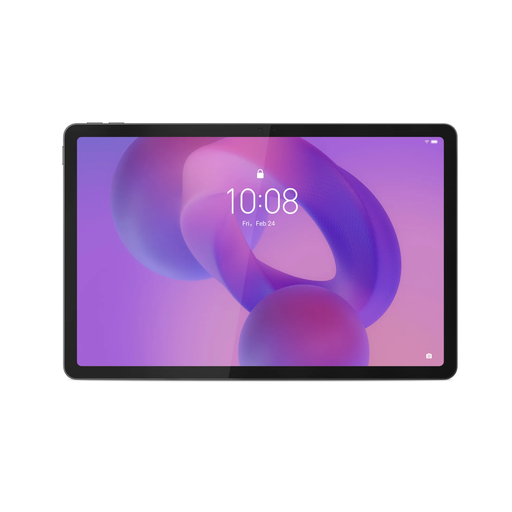
The 11-inch model is worth comparing if you’re looking for screen space for maps and fixed-layout pages.
The product name lists an IPS screen, 90 Hz, 500 nits and Android 15. According to the product description, the charger isn’t included.
 No image available
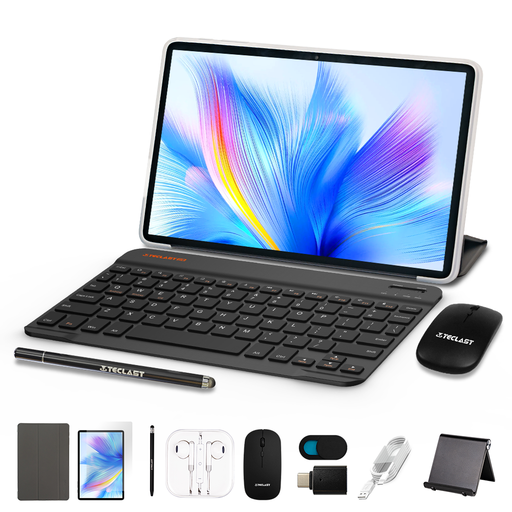
The 11-inch size may be worth considering if you’re weighing screen space for book pages against portability.
The product name lists a 90 Hz IPS screen, 128 GB of storage and Android 16.
No image available
The 13-inch size gives you more screen space for maps and illustrated pages, but it’s less convenient to hold in bed without a stand.
Model: Wi-Fi, 128 GB, blue. The product information lists iPadOS.
 No image available
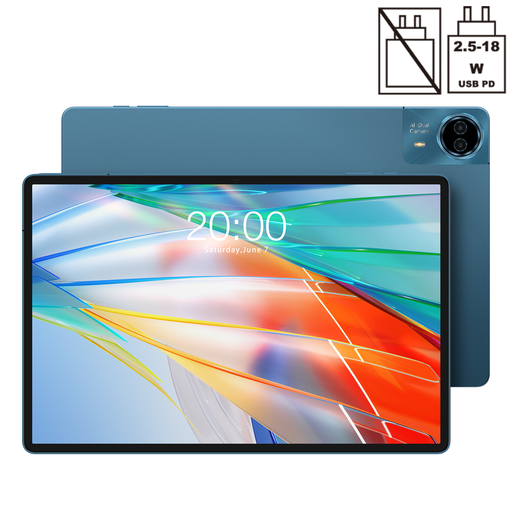
The 14-inch screen gives you plenty of room to view pages, but the size makes it less convenient to hold in bed without a stand.
The product name lists 2240 × 1400 pixels, 128 GB of storage and Android 15.
No. A larger screen may show more of a map or fixed-layout PDF page, but it’s less portable. Open a page from a book you own and compare how much you need to zoom in with how comfortable the tablet is to hold.
KB, the national library, says you can read using the app on a phone or tablet, or in a browser. Check that the title and reading method you want are available for your account; not every book or file will necessarily be accessible in the same way.
You can adjust the brightness and use a dark reading mode, but this doesn’t replace sleep advice. Thuisarts advises anyone who has trouble sleeping to put away their phone, tablet or computer 1 to 2 hours before going to bed.
When used normally, a product must meet the expectations you could reasonably have of it. ACM ConsuWijzer says the seller must offer an appropriate free solution if there’s a fault. Online purchases often come with a 14-day cancellation period from the date of delivery. The European Commission describes energy labelling rules for slate tablets covered by the regulations; these don’t necessarily apply to every older device or one classified differently.