
Reader of scans and articles
You mainly read pages with a fixed layout and want to view footnotes and passages without awkwardly zooming in and out. The Consumers’ Association points out that PDFs can be difficult to read on small e-reader screens.


If you often read philosophical texts as scans or PDFs with a fixed page layout, a standard tablet is usually better suited to the task; the Consumers’ Association recommends a tablet for many PDFs. If you mainly read continuous text and want a calm reading experience, a large e-ink device could work well. Before choosing, check that your library books are available and that their files allow annotations.
You mainly read pages with a fixed layout and want to view footnotes and passages without awkwardly zooming in and out. The Consumers’ Association points out that PDFs can be difficult to read on small e-reader screens.
You want to highlight arguments and keep your own notes. Check not only whether the device supports a stylus, but also what changes the file allows; Kobo does not allow stylus annotations on certain protected PDFs.
You mainly read e-books and want to know whether the title you want is available in the app or for an e-reader. The Online Library lists tablets among the devices you can use to read borrowed e-books.
Choose this option: if you often read scans, PDFs with a fixed layout or use several reading apps.
Bear in mind: a larger screen usually needs more space on your reading table and in your bag.
Consider this option: if you mainly read continuous text and value a calm reading experience.
Bear in mind: being able to open a PDF doesn’t automatically mean you can read or annotate it comfortably.
| What to consider | What to check before buying | Who it’s for |
|---|---|---|
| PDFs and scans | Open one of your own files and check how text, footnotes and navigation appear on screen. | If I read scans or texts with a fixed page layout, I want to view passages and footnotes without constantly zooming in and out. Around 40% of consumers prioritise the readability of PDFs and scans. |
| Notes | Check which stylus is compatible with the exact version, what’s included and whether your files allow annotations. | If I want to highlight arguments or keep my own thoughts alongside a text, I check both the stylus and the file permissions. Around 31% of consumers give annotating and finding arguments again top priority. |
| Borrowed e-books | Look up a few titles you want and check whether they’re available in the app or on the e-reader you plan to use. | If I mainly want to read books from the library, I first check that my chosen titles are available on the device I’m considering. Around 15% of consumers prioritise access to borrowed e-books. |
| Comfort and portability | Compare one of your own reading texts on the screen type you’re considering, and check the size and weight of the complete device. | If I read in the library for long periods, I look for a screen and device that suit my reading table and the way I read. Around 14% of consumers give comfortable reading and portability top priority. |
A scanned page may require a lot of zooming on a small screen. Reflowing text isn’t always suitable for a document with a fixed layout.
Test one of your own scans with footnotes on the screen size you’re considering.
Stylus support, included accessories and file permissions are separate considerations. Kobo says you can’t write with the stylus on DRM-protected PDFs or PDFs where annotations have been disabled.
Check the exact stylus version, what’s in the box and the annotation permissions for a sample file.
A compatible stylus may be sold separately, depending on the version; check before you choose.
A title won’t necessarily be available in every reading format. If you want to transfer it to an e-reader, the file format and DRM support may also matter.
Look up a few titles first and check which reading formats and transfer steps apply to them.
Models in the same product range can differ in specification, screen details or included accessories.
Before buying, compare the full model number, version, screen specifications and box contents.
The 11-inch iPad (A16) is a standard-screen tablet for readers who want to combine PDFs with tablet apps.
The Galaxy Tab S10 Lite is an Android tablet for readers who also want to write with a stylus.
The Idea Tab Pro range is worth considering if space for large pages matters more to you than compactness.
The Elipsa 2E is a large e-ink device for reading and taking notes.
According to BOOX, the Note Air5 C combines a 10.3-inch colour e-paper screen with Android app capabilities.
These tablets have relatively large screens and are aimed at readers who mainly want space for PDFs and scans when reading philosophical texts. Compare the exact version and check separately whether the files you use allow annotations.
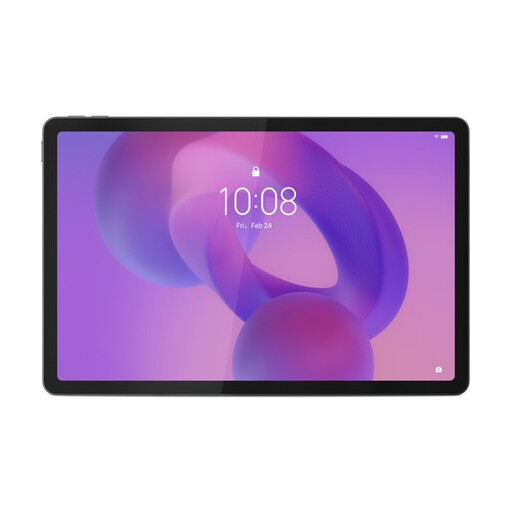 No image available
The listed 12.7-inch screen could suit you if you’re looking for more screen space when reading scans.
The product name lists 3K, 144Hz, 8GB RAM and 256GB storage.
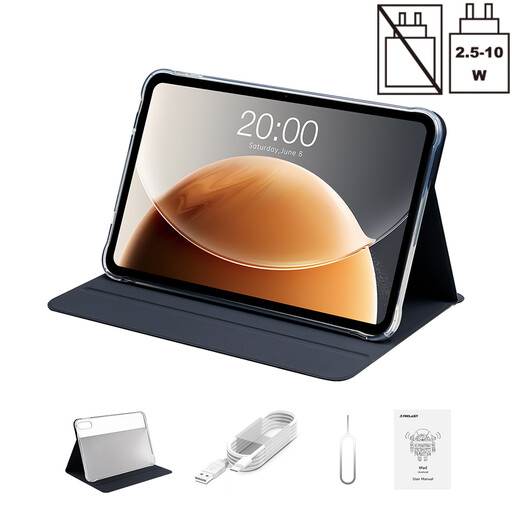 No image available
The listed screen size may be relevant if you want a larger surface for pages with a fixed layout.
The product name lists Android 16 and 128GB storage. The stated 20GB RAM consists of 6GB RAM and 14GB virtual RAM.
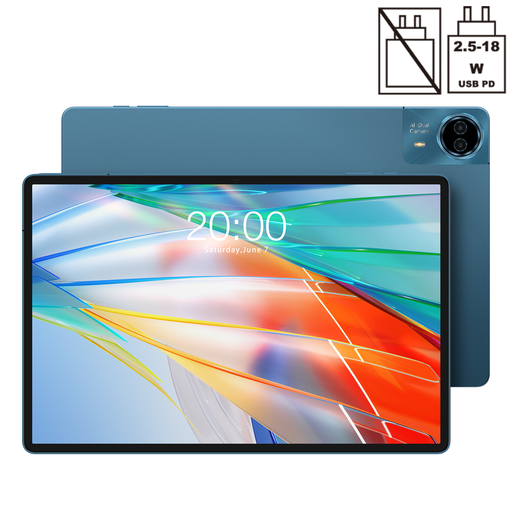 No image available
The product name lists a 14-inch screen, which could suit you if you want plenty of screen space for philosophical PDFs.
The listed specifications are 2.2K resolution at 2240 × 1400, 128GB storage and 8GB RAM plus 12GB virtual RAM.
 No image available
The listed 12.7-inch screen could suit you if you want room for texts and notes.
The product name lists compatibility with a T-Pen, 256GB storage and 8GB RAM plus 12GB virtual RAM. Check which accessories are included.
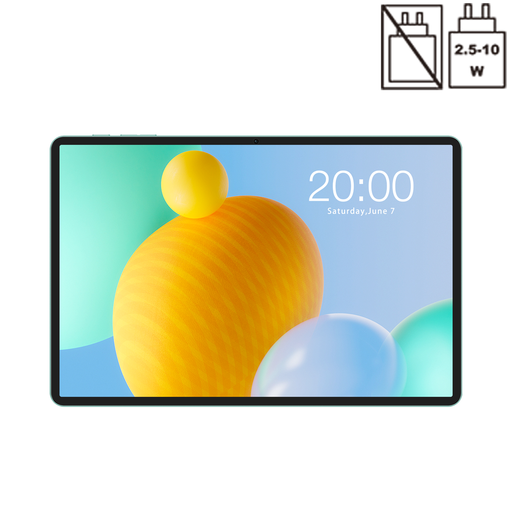 No image available
The listed 11-inch screen could suit you if you’re looking for a tablet for PDFs and want to take the space available on your table and in your bag into account too.
The product name lists an IPS screen, 90Hz and 128GB storage.
Start with a representative PDF. For lots of pages in a fixed A4 layout, the Consumers’ Association recommends a tablet, as small e-reader screens and reflowing PDFs can cause problems. A large e-ink device could be an alternative if you mainly read continuous text.
No. Don’t assume you can just because the device supports a stylus. First check the reading format and the title’s permissions; Kobo says its stylus can’t be used to write on DRM-protected PDFs or PDFs where annotations have been disabled.
Check whether the title has an e-reader version and whether your e-reader supports the file format and Adobe DRM. The Online Library recommends using Adobe Digital Editions for the transfer. On 21 October 2026, the Online Library reported that downloads for e-readers were temporarily unavailable. Check its latest service update before relying on this method.
For a typical online purchase, ACM ConsuWijzer says you generally have up to 14 days after delivery to change your mind, subject to legal exceptions. Statutory consumer rights also apply: in the Netherlands, there’s no fixed statutory guarantee period of exactly two years. If a product is faulty, contact the seller.