
Researchers who often move between desks
You take your tablet and any accessories with you to another room. A compact size can make this easier, while a larger screen gives you more room to view scans.


If you often move between rooms, a compact tablet is a natural choice. If you regularly view scans and maps on a larger screen, a model around 11 inches may suit you better. Choose a pen-compatible model if you want to annotate documents digitally, and check whether the pen is actually included. Also weigh up local storage and Wi-Fi against mobile connectivity. Whether you’re allowed to photograph archive material depends on the archive’s rules and the material itself.
You take your tablet and any accessories with you to another room. A compact size can make this easier, while a larger screen gives you more room to view scans.
You view scans, text pages or maps and want to work out how much screen space you need to examine your sources properly.
You want to make notes on digital reproductions. Check which pen is compatible with the exact tablet model and whether it’s included with the version you’ve chosen.
Start with the size and weight you’ll find comfortable when moving between rooms. Then decide whether annotation and online access without Wi-Fi are important to you.
| What to consider | What to look for when buying | Who is this important for? |
|---|---|---|
| Portability when moving between rooms | Compare the tablet’s dimensions and stated weight, and factor in a case and other accessories. | If I often move between desks, I want to carry my tablet easily without giving up more screen space than necessary. Around 33% of consumers prioritise portability above all else. |
| Room to read scans and maps | View a representative scan on the screen size you’re considering, and check the resolution and brightness of the exact version. | For small text or detailed maps, I want enough room to view my sources. Around 27% of consumers put screen space for reading scans first. |
| Annotating with a pen | Check which type of pen is compatible and whether it’s included with the tablet version you’ve chosen. | If I want to write directly on digital reproductions, pen compatibility and what’s included in the box are key. Around 20% of consumers make annotation their top priority. |
| Access without a connection | Check whether the files you need are available offline, and compare the storage and connectivity options of the exact version. | If I want to access research files even when reliable Wi-Fi isn’t available, I want to know in advance what I can store locally. Around 20% of consumers prioritise offline access above all else. |
Rules vary by institution and material. The National Archives distinguishes between publicly accessible and restricted material; Noord-Hollands Archief requires you to ask a member of staff for permission before taking photographs.
Before your visit, check the rules of the archive and the collection you want to consult.
A tablet may support a particular pen without including it in the box. The Dutch product information for the Lenovo Idea Tab we looked at contains conflicting details about the pen.
For the exact version, check which type of pen works with it and what the offer actually includes.
You may need to buy a compatible pen separately, so factor that into your choice too.
Manufacturers state the weight of the tablet itself, but accessories affect what you’ll actually carry during a day of research.
Compare the complete setup you plan to take with you, and view representative scans on the screen.
A case or keyboard can add to the total weight, so you’ll need to choose accessories separately.
The 11-inch iPad (A16) we looked at is an option if you want to view scans on a mid-sized screen and use iPadOS.
The Galaxy Tab S10 FE 5G with a 10.9-inch screen that we looked at is worth considering if S Pen support and mobile connectivity matter to you.
The 11-inch Idea Tab with 8 GB RAM and 256 GB of storage is an Android option if you want to keep research files on your device.
The REDMI Pad 2 9.7 we looked at is a more compact option; the REDMI Pad 2 has an 11-inch screen.
These Joybuy tablets are suited to archive research where local storage, a screen for viewing scans, mobile access or digital note-taking matter.
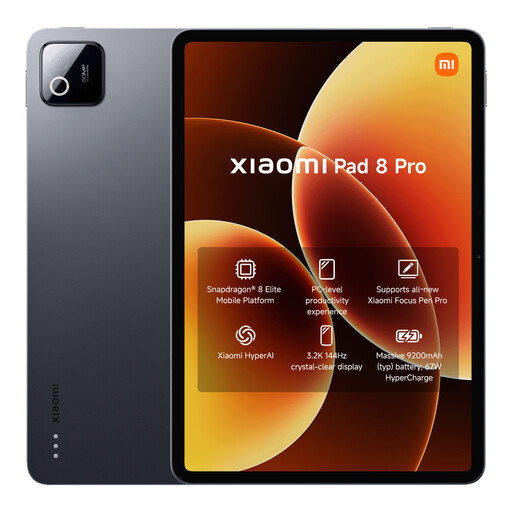 Image unavailable
The 256 GB version is a good fit if you want to keep research files on your device.
8 GB RAM and 256 GB of storage.
Image unavailable
The 512 GB version is an option if you want to keep lots of research files on your device.
12 GB RAM and 512 GB of storage.
 Image unavailable
The 11-inch screen and mobile connectivity are a good fit if you want to view scans and need online access away from Wi-Fi.
The title lists 128 GB of storage, 4G LTE and Dual SIM. The stated RAM configuration is 6 GB RAM plus 26 GB virtual RAM.
 Image unavailable
This version could suit you if you’re looking for a screen for viewing scans and mobile access without Wi-Fi.
The title lists an 11-inch FHD+ screen, 90 Hz, 5G and dual SIM slots.
 Image unavailable
The title mentions note-taking and handwriting-to-text. Check whether these features suit the way you make notes.
The title also lists speech-to-text and transcription in 16 languages.
That depends on the archive and the material. The National Archives allows photographs of publicly accessible material under certain conditions, but not of restricted material; Noord-Hollands Archief requires permission from a reading room staff member. Check the institution’s rules and the collection before taking photographs.
Permission to take photographs in a reading room doesn’t automatically mean you can publish the material online. The Dutch Government says that a private copy for personal use must not be distributed or made public. For protected material, check what permission you need.
Make sure any files you need are available offline in case you can’t rely on Wi-Fi, check the battery and read the archive’s rules. The National Archives lists Wi-Fi in its own reading room, but facilities and rules may vary between institutions.
For online consumer purchases in the Netherlands, there’s usually a statutory 14-day cooling-off period after delivery, with some exceptions. You’re also covered by the statutory guarantee if a product, when used normally, doesn’t do what you could reasonably expect; the seller is responsible for this. ACM ConsuWijzer explains these rights. Also check the returns policy and what’s included in the bundle you choose.