
Student without a fixed tap connection
You’re looking for a compact appliance that can work without a permanent water supply, but you’ll still need to arrange safe drainage and find a suitable spot for it.


A table-top dishwasher is a good fit if you have a suitable spot for it and can arrange the water supply and drainage in line with the instructions. Then choose a model to suit your own crockery and daily load: a water tank may mean you don’t need a permanent water supply, but you’ll still need a way to drain the water. If you share the washing-up, a larger model may be more practical. Milieu Centraal also suggests washing a small amount of crockery by hand in a bowl with a little hot water.
You’re looking for a compact appliance that can work without a permanent water supply, but you’ll still need to arrange safe drainage and find a suitable spot for it.
Before deciding how much washing-up will fit in a compact machine, you’ll want to check the space available and measure your own plates.
You’ll want to know whether everyone’s daily washing-up will fit in one load, or whether a larger model with a suitable load capacity would be more practical.
First, decide where the appliance can stand safely and how you’ll arrange the water supply and drainage. Then compare its capacity with your own plates and the amount of washing-up you typically accumulate.
| What to consider | What should you check? | Who is this important for? |
|---|---|---|
| Space and fit | Measure the space and check that you can still open the door properly. Also compare your largest plates with the maximum plate size for the exact model. | If you have a small kitchen, you’ll want to know whether the appliance will fit safely and whether your crockery will fit inside. Around 29% of consumers say space and fit are their main concern. |
| Water supply and drainage | Check the permitted water supply, the drain hose and the installation instructions for the exact model. | If there’s no fixed connection, you’ll want to know whether a model with a tank will work in your kitchen and where the waste water can go. Around 29% of consumers prioritise connections and drainage. |
| Capacity for everyday washing-up | Check the number of place settings, the basket layout, the cutlery basket and any maximum crockery sizes. | If you share a home, you’ll want to work out whether everyone’s daily plates and cutlery will fit at the same time. Around 24% of consumers prioritise having enough loading space. |
| Consumption and running costs | Compare the EU energy label, electricity consumption per 100 eco cycles and water consumption per eco cycle. | If you want to factor in ongoing consumption, comparable label information and the loads you usually wash are both relevant. Around 18% of consumers say consumption and running costs are their main concern. |
The number of place settings won’t necessarily tell you whether your plates, cups and cutlery will all fit in the basket. The maximum plate size and layout vary between models.
Measure your own plates and think about how much washing-up you normally want to fit in each load.
If you can’t fit everyone’s daily washing-up in the machine, you may need to run extra cycles.
A model with a tank can work without a permanent water supply, but the used water still needs to be drained safely.
Before buying, check where the drain hose can go and follow the instructions for the exact model.
Arranging suitable drainage may require extra installation work or equipment.
Milieu Centraal warns that a mini dishwasher can use relatively more electricity for the amount of washing-up it handles. The result also depends on the machine and how full you load it.
Compare the EU label with the loads you expect to wash. If you have just a few items, you could also wash them by hand in a bowl with a little hot water; Milieu Centraal suggests this as an alternative.
The VVW5520 is an example of a compact table-top model that Inventum says is suitable for six place settings.
Tomado describes the TDW5501W as a table-top model with a fixed water supply and drainage.
Bosch lists the SKS62E32EU as a 55 cm freestanding compact dishwasher.
MEDION describes the MD 37217 as a mini dishwasher for two place settings that can work with or without a permanent water supply.
This selection includes table-top dishwashers for smaller loads, including models with a water tank or a water supply connection. Compare the stated capacity and connection options with your kitchen and daily washing-up.
 No image available
The tank and tap options make this model worth considering if a permanent water supply is difficult to arrange. Remember to check how you’ll drain the waste water too.
The product title lists a built-in 5 l tank, nine programmes and energy class D.
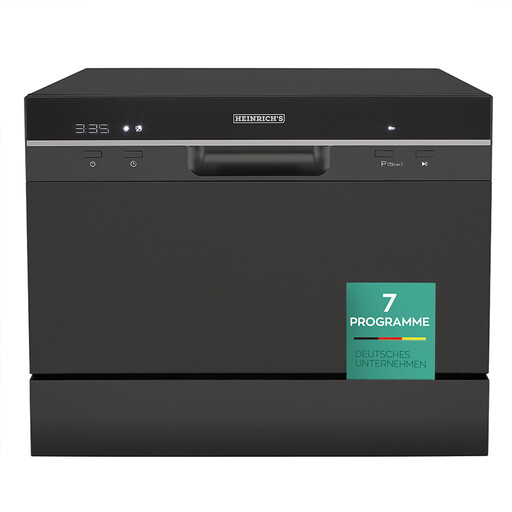 No image available
The stated capacity of six place settings may suit a compact everyday load. Compare it with what you and your housemates actually use.
The product title lists seven programmes, a digital display and energy class D.
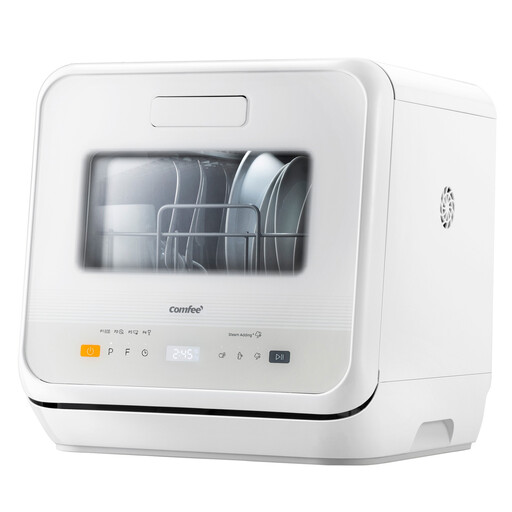 No image available
The water tank and the stated option to connect it to a tap make this model worth considering if you want flexibility over the water supply. Check that the drainage will work in your kitchen.
The product title lists a built-in 5 l tank and 6+3 programmes.
 No image available
The title mentions both a water tank and a water connection, which may be useful when weighing up the supply options for your kitchen. The stated capacity of three place settings may be limited for the shared daily washing-up.
The product title lists seven programmes and energy class C.
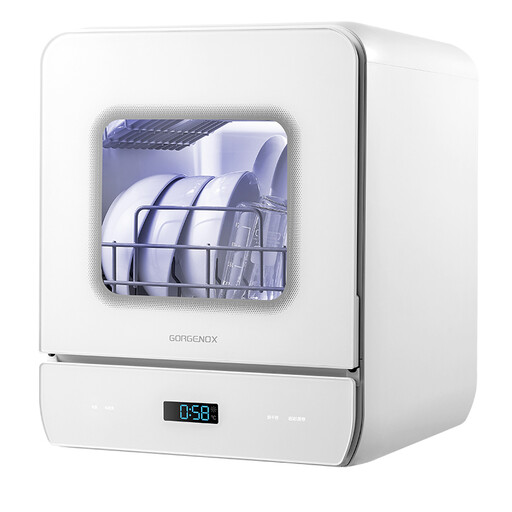 No image available
The stated capacity of three sets is most relevant if you usually wash a small load. Compare it with the washing-up from everyone in your household.
The product title lists a capacity of three sets.
It depends on the model. MEDION describes the MD 37217 as suitable for use with or without a permanent water supply, but the waste water must still be drained in line with the relevant installation instructions. Check the version and make sure your kitchen has a suitable drainage option.
Scrape off food scraps, generally skip a hot pre-rinse and, where suitable, use the eco programme with a full load. Milieu Centraal recommends this approach, although consumption depends on the model and how you use it.
The EU energy label gives you a consistent basis for comparing dishwashers. It includes information such as the efficiency class, electricity consumption per 100 eco cycles and water consumption per eco cycle. The European Commission explains that the A to G scale has been used for dishwashers since 1 March 2021.
No. According to ACM ConsuWijzer, your statutory rights apply alongside any manufacturer’s or retailer’s guarantee. If a product breaks under normal use sooner than you could reasonably expect, contact the retailer for an appropriate solution. There isn’t one fixed statutory guarantee period for every dishwasher.