
Vandaag of morgen in huis

Kwaliteit gegarandeerd

Welkomstaanbiedingen ontgrendelen: GRATIS bezorging | Tot 80% korting | Gratis 30 dagen JoyPlus-proefperiode
Download de app
Buying a new table tennis bat seems straightforward until you have to choose between different star ratings, rubbers, ABS balls and complete sets. Marketing copy often focuses on speed, explosive power or professional performance. That does not always indicate whether a product suits your playing style.
The right choice mainly depends on your level, how you plan to use it and which components you actually need. A family needs different table tennis equipment from a sports club with daily training sessions.
A 7- or 8-star racket may sound appealing, but a stiff carbon blade with high speed can be difficult for a beginner to control. If you are mainly learning technique, you will often benefit more from a predictable wooden blade and forgiving rubber.
Use star ratings only as an initial indication. Also check the material, type of rubber, handle and recommended user level.
Not every ball is suitable for the same activity. For training sessions with several players, dozens or hundreds of table tennis balls are practical. For an official match, certification may be more important than the number of balls in the pack.
Pay attention to the difference between:
A standard table tennis table is approximately 2.74 metres long and 1.525 metres wide. You will also need playing space around it. In a flat, student room or garage, a compact table may be a better fit.
As well as the dimensions, check the weight, storage method, frame stability and whether the net is included. A compact table is intended for recreational use and does not automatically replace a competition table.
A wooden blade generally provides a direct and manageable feel. Carbon layers can make the blade stiffer and enlarge the effective sweet spot. This may appeal to attacking players, but it usually requires good basic technique.
When choosing a table tennis racket or table tennis bat, look at:
A professional table tennis racket is not automatically suitable for every player. For beginners and families, a control-focused model or a complete table tennis set is often more practical.
For daily practice, 40+ ABS balls are a sensible choice. Check the pack size according to how you intend to use them. A club with a ball machine will need far more than someone who plays occasionally at home.
For competition use, it is sensible to check the stated certification. For the Double Fish WTT Match 3-Star V40+, the product information lists ITTF and WTT certification. Use this as a reference point, but always check the current product page and your association’s competition rules when buying.
According to JOOLA’s own information, certain Tournament*** balls are intended for training and matches. The product specifications state that they are made from hard ABS plastic and have a diameter of 40.0 to 40.6 millimetres. The certification information remains the deciding factor when you are looking for equipment for official competition.
Store rackets and balls in a dry place, away from direct sunlight and high temperatures. Wipe the rubber clean after use with a soft, slightly damp cloth, and do not use solvents or abrasive products. Replace balls as soon as they are cracked, dented or visibly deformed.
Allow a table to dry thoroughly after cleaning. With a folding model, regularly check the hinges and locking mechanisms. Do not use a compact table as a seat or work surface.

Why it suits this profile: The set contains two rackets and three balls, so two people can start playing straight away. The wooden blade and elastic rubber layers are designed for everyday recreational use.
The set removes the need to make complicated choices between separate blades and rubbers. The product information describes an all-wood construction and an entertainment-focused application.
Two rackets, three balls and a wooden blade for two players.
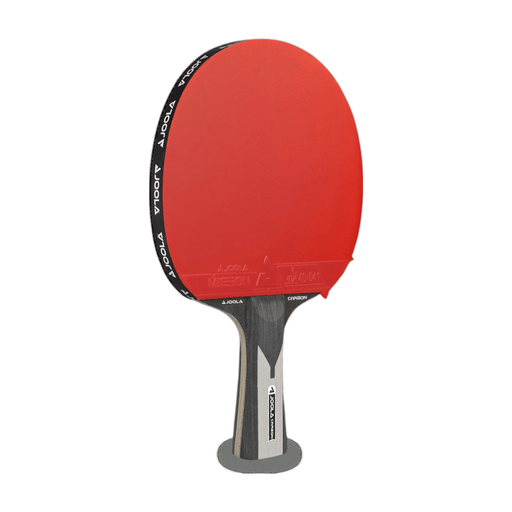
Why it suits this profile: This racket is intended for attacking players, and the product specifications list MICRON B rubbers with ITTF approval.
The product information specifies the materials: a 5-ply composite blade with carbon weave and MICRON B rubber. This provides more useful guidance than a general claim about speed alone.
Carbon weave, concave handle and stated ITTF-approved MICRON B rubbers.
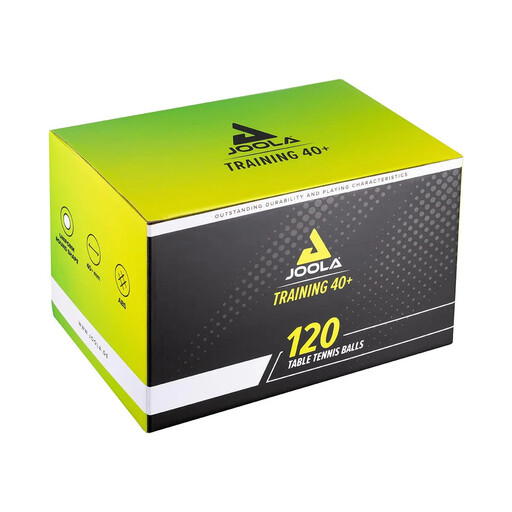
Why it suits this profile: The pack of 120 white training balls is designed for clubs, schools, ball machines and group sessions involving plenty of repetition.
The number of balls is clearly stated. According to the product information, the ball is made from ABS plastic with a traditional seamed construction for training.
120 balls, 40+ size and ABS material for intensive practice sessions.
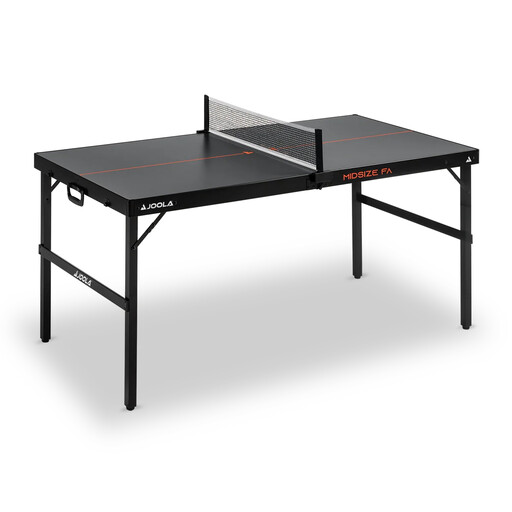
Why it suits this profile: The table measures 152 x 76 x 71.5 centimetres, weighs 11.9 kilograms per half according to the product information, and comes with a net and holder.
The compact dimensions and separately foldable halves make storage easier than with a full-size table. According to the product information, this model is for recreational use, not professional use.
Compact size, tool-free set-up and included net.
We have put together a complete, up-to-date list of products that fully meet these strict selection criteria and the applicable European safety regulations.
For a simple home set-up, you will usually need:
For a school, club or training centre, larger packs are more convenient. Consider 100, 120 or 144 table tennis training balls. A carry case helps you store sets with several bats and balls neatly.
If you play competitively, you may want to look for ITTF-approved table tennis equipment, but always check that the certification applies to the exact model you have chosen. The product name alone is not sufficient.
This depends on the intensity of training, the playing surface and the impact they receive. According to the product information, ABS balls are designed for regular use, but damaged or deformed balls should be replaced immediately. Store them in a dry place away from sunlight.
A set with two control-focused rackets and a few 40+ balls is usually sufficient. If you are still working on your basic technique, choose a wooden or lightweight composite blade rather than a very stiff carbon model.
A full-size table requires additional room to move around the playing surface. So do not just measure the width of the room; also check the free space behind and beside the players. A midsize table is more practical for small homes, but it offers a smaller playing surface than a competition model.
