
Reader with a regular seat
You mainly want an adjustable breeze close to your chair, without a large fan for the whole room.


Choose a directional fan if you usually sit in one spot; oscillation is better if you want to spread the airflow across different areas. Compare the noise and airflow at the setting you’ll actually use, and remember that a fan isn’t a substitute for ventilation in your home. Electrical fans sold in the Netherlands must carry a CE marking, so check the marking on the model you’re buying.
You mainly want an adjustable breeze close to your chair, without a large fan for the whole room.
You read, take calls or relax beside the fan, and want to balance airflow against noise at the setting you use.
You need to place the fan on a small, stable surface and want to decide whether a fixed direction or oscillation is more practical.
| What to consider | What should you check? | Who is this important for? |
|---|---|---|
| Airflow for one chair | Compare the settings, adjustability and airflow at the distance you sit from the fan. | I want to direct the breeze at my seat without a large appliance for the room; around 36% of consumers prioritise targeted airflow. |
| Noise at a useful setting | Compare both noise and airflow at each setting and at the distance you’ll use the appliance. | When I read, take calls or relax, I want an acceptable noise level without the breeze becoming too weak; around 29% of consumers prioritise quiet operation. |
| Placement and coverage | Measure the available surface, check the fan’s stability and choose between a fixed direction and oscillation. | I have little space beside my chair or want to direct air towards several seats; around 21% of consumers prioritise placement and coverage. |
| Power consumption | Check the power consumption for the exact model. For a calculation, also consider how long you’ll use it and your electricity tariff. | I want to assess power consumption based on how I use the fan, rather than relying on wattage alone; around 14% of consumers prioritise running costs. |
A fan moves air around your chair, but it doesn’t by itself bring in fresh outdoor air or remove stale indoor air. Milieu Centraal describes bringing in and removing air as part of ventilation.
Use a table fan to circulate air around your seat, and keep your home’s ventilation running as a separate system.
Airflow and noise can vary between speed settings. A quiet low setting might not provide the breeze you want at your usual sitting distance.
Compare airflow and noise at the setting and distance at which you plan to use the appliance.
The NVWA states that a CE marking is mandatory for electrical products. A declaration for a model family doesn’t automatically confirm the marking on every individual unit offered for sale.
Check the relevant CE marking and model information for the version you’re buying.
The CX2050/00 is an example of a table fan with an adjustable head for use beside one seat.
The Essential+ VU2330 is an example of a table fan with oscillation and an adjustable direction.
The Globe is an example where the stated noise levels for each setting are worth considering.
The VE-5923 is an example of a straightforward, portable table fan with a swing function that can be locked in place.
The products below range from a clip-on and handheld fan to desktop and standing air circulation models. So check whether you’re looking for an appliance to sit on a table or have room for a taller model beside your chair.
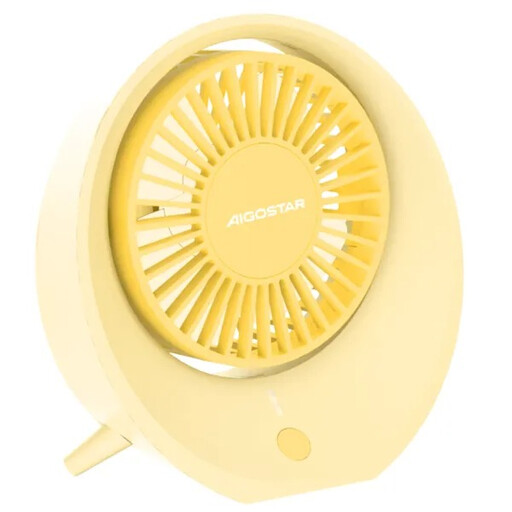 No image available
Suitable for a regular seat if you have a suitable edge to clip the fan onto.
The product description lists a built-in battery, three speeds, a coverage area of 2 m² and a weight of 260 g.
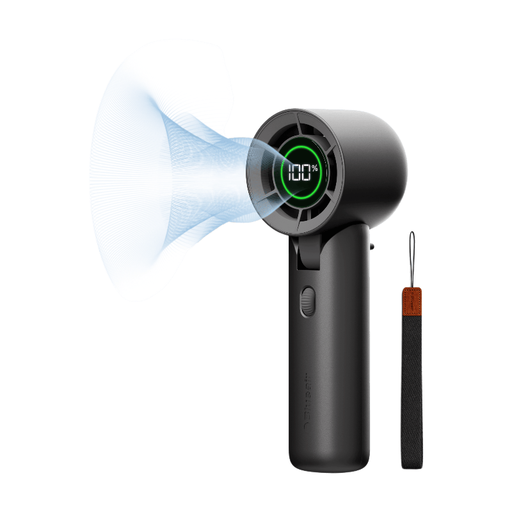 No image available
Suitable for personal use beside a desk if you’re looking for a portable model that you can also direct where you need it.
The product description lists USB-C charging, a weight of 0.3 kg and up to 32 hours of use on the low setting. The head tilts up to 75°.
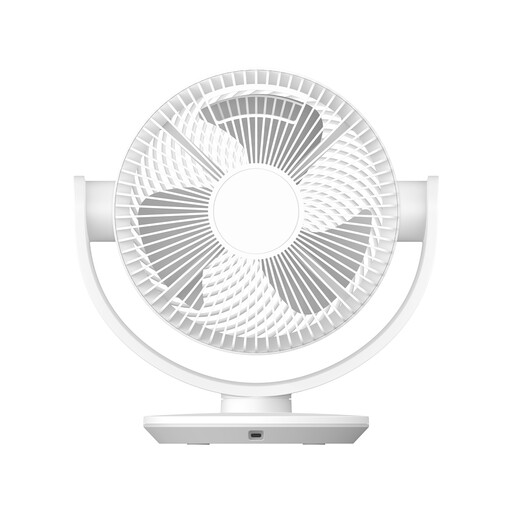 No image available
Suitable if you’re looking for a desktop air circulation model and have enough space on your table.
The product description lists dimensions of 324 × 200 × 334 mm, a power consumption of 18 W, a maximum noise level of 60 dB(A) and a weight of 2.0 kg.
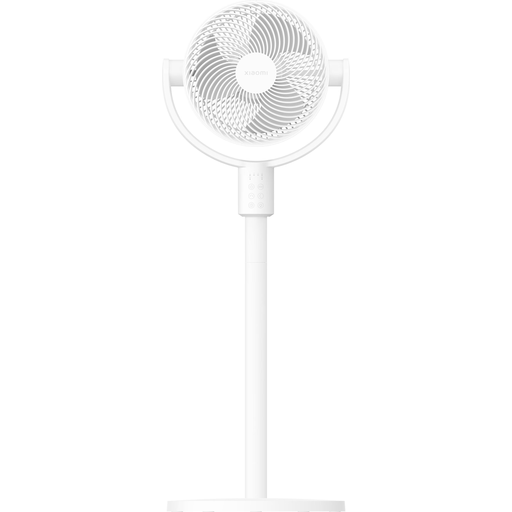 No image available
Suitable if you want to spread air across more than one seat and have space for a standing fan.
The product title lists 3D automatic oscillation, app control and 100 speeds. The stated dimensions are 32.6 × 31 × 88.6 cm; consider the height beside a chair.
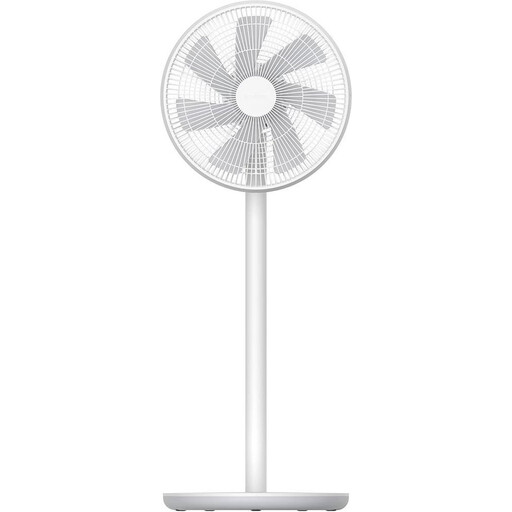 No image available
Suitable if you want to spread air across different areas and have room for a taller model.
The product description lists use on a table or floor, control via the Mi Home app, 100 speed levels, a maximum airflow of 20 m³/min and two oscillation angles. The dimensions are 343 × 330 × 1000 mm.
Not simply by moving indoor air around. Fresh air requires outdoor air to be brought in and stale indoor air to be removed, so keep your home’s ventilation running as a separate system.
Place it on a stable surface where it’s unlikely to fall over, and follow the instructions for your model. Switch off the appliance and unplug it before cleaning; then follow the model-specific instructions for the grille and blades.
Divide the verified power in watts by 1,000, then multiply it by the number of hours you use the fan to calculate consumption in kWh. Multiply that figure by your own rate per kWh; you’ll need an unambiguous power rating for the exact model.
When you buy online from a business, you’re often entitled to a 14-day cooling-off period, according to the information from the Rijksoverheid. The Rijksoverheid also states that you’re entitled to a product that works properly; if there’s a fault, ask the seller to put it right.
Yes. The NVWA states that electrical products must carry a CE marking. Check the marking and model information for the version you’re buying; a declaration for a model family doesn’t automatically confirm the marking on every individual unit.