
On the sofa by yourself
You want a noticeable breeze at one seat, from a small table beside the sofa. Direction, positioning and stability all play a part in your choice.


For one seat, choose a stable table fan that can direct air from the available side table towards seated height. Check its footprint, adjustability and airflow at your distance. If you watch television, consider the noise on the setting you’ll actually use. Choose oscillation that can be switched off if you want to direct airflow to different seats in turn. A fan moves air, but doesn’t make it cooler or replace ventilation in your home.
You want a noticeable breeze at one seat, from a small table beside the sofa. Direction, positioning and stability all play a part in your choice.
You want moving air without distracting noise, so you’re looking at the airflow and noise level on the setting you’ll use while watching.
You want to spread the airflow across several seats, so you’re mainly looking for an adjustable direction or horizontal oscillation.
First measure the available table space, then decide whether you mainly need a focused breeze, quiet operation or airflow across several seats.
| What to consider | What should you check? | Who is this important for? |
|---|---|---|
| Noticeable airflow | Compare the useful settings at the distance between the fan and your seat. Check that you can angle the head towards seated height. | If I sit in one place, I want a noticeable breeze at my usual distance. Around 28% of consumers put this focused airflow first. |
| Noise while watching | Compare the noise and airflow on the same useful setting. Rowenta quotes 46 dB(A) for the VU2330 at minimum speed; this is the manufacturer’s figure for that setting. | When I’m watching television or reading, I don’t want the fan noise to drown everything out. Around 22% of consumers prioritise quiet operation. |
| Space on the side table | Measure the clear tabletop area and the fan’s footprint. Allow room for the cable and any oscillation. | In a small flat, I want the fan to fit securely without getting in the way on the table or taking up awkward amounts of floor space. Around 22% of consumers make limited space the main consideration. |
| Distributing the airflow | Check whether horizontal oscillation is available and can be switched off, and whether its range covers the different seats. | If there are several of us on the sofa, I want the breeze to reach different seats in turn. Around 17% of consumers prioritise this kind of airflow distribution. |
| Power consumption and features | Compare the stated wattage for a similar length of use. Only consider a timer or remote control if you need to use it from the sofa. | I don’t want features I won’t use, and I want to keep an eye on power consumption during extended use. Around 11% of consumers say ease of use and suitable power consumption are their main concerns. |
Consumentenbond points out that the number of settings alone says little about maximum airflow or the difference between the lowest and highest settings.
Compare the airflow on the settings you plan to use, taking into account the distance to the sofa.
The airflow may pass too low to feel comfortable when you’re sitting down.
Choose a stable spot on a side table and check that you can angle the head towards the height of your seat.
A noise figure may apply to a different setting from an airflow figure. Rowenta quotes 46 dB(A) for the VU2330 at minimum speed; this isn’t a measurement at maximum speed or an independent comparison.
Compare noise and useful airflow on the same setting, and check the measurement conditions when comparing figures for different models.
These brands and specific models offer some useful points to consider; the features listed apply to the versions described.
The VE-5721 is a table fan with adjustable horizontal oscillation, for anyone looking for either focused or alternating airflow.
The Essential+ VU2330 is a table fan with oscillation. The Turbo Silence Extreme+ VU2730 is a separate range, which Rowenta says has a quiet night mode.
The 2000 Series CX2050/00 is a table fan with a tilting head, for anyone who wants to adjust the direction of the airflow.
The Tafelventilator retro groen is a metal table fan to consider if you’re looking for a simple model.
This selection includes models designed for tables or desks, as well as clip-on and handheld versions. Check that the required attachment or setup will work in the space beside your sofa. For an electrical appliance, also check that the exact version has the required CE marking and documentation. The Dutch government outlines this requirement for electrical products placed on the EU market.
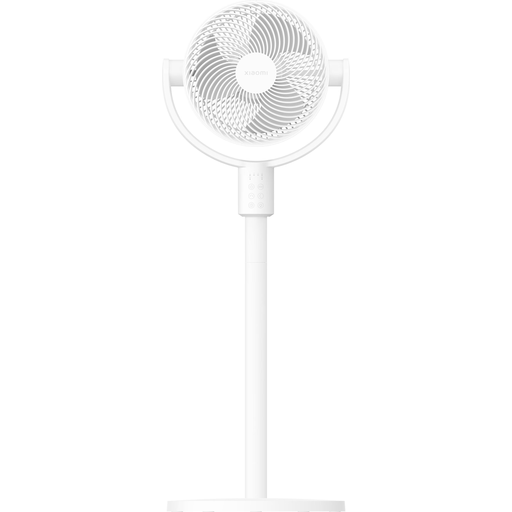 Image unavailable
The product information lists both tabletop and floor placement. Check that the tabletop setup will fit in the space beside your sofa.
The product title lists 3D auto-oscillation, 100 speeds and adjustable height.
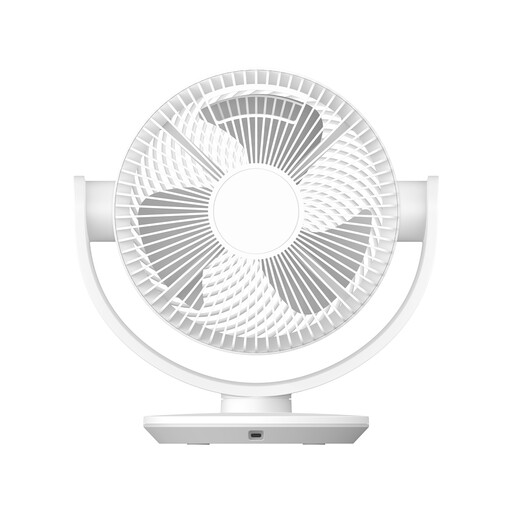 Image unavailable
This desktop version is designed to sit on a table. Measure the available tabletop space first to make sure the base will fit.
Dimensions: 324 × 200 × 334 mm; stated power: 18 W; cable length: 1.8 m.
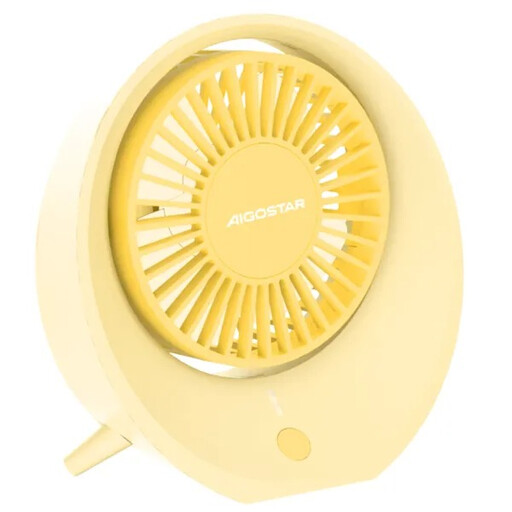 Image unavailable
This clip-on model could work if you have a suitable edge to attach it to; it doesn’t have a standard tabletop base.
Dimensions: 153 × 70 × 160 mm; three speeds and USB rechargeable. The product information lists a suitable area of 2 m².
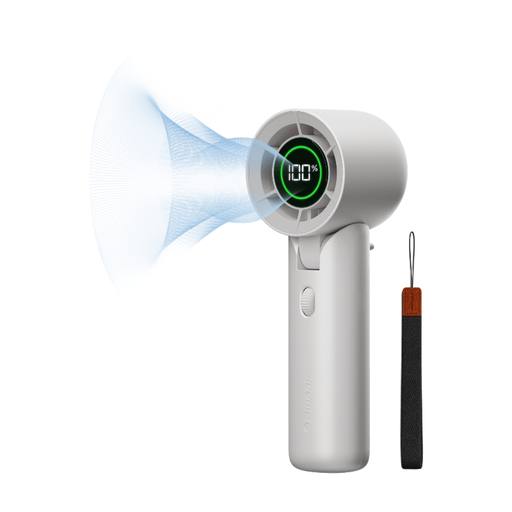 Image unavailable
The product name identifies this as a handheld model. Before buying, check how it can stand on a table if you want to use it beside the sofa.
Dimensions: 19 × 7 × 6.5 cm; weight: 0.3 kg; tilting head up to 75° and adjustable speeds from 0–100.
No. A table fan moves air, which can make you feel cooler, but it doesn’t make the air itself colder. Milieu Centraal recommends shading as one way to keep the heat out.
No. Ventilating your home means bringing in fresh air and removing stale air. A table fan that simply circulates indoor air doesn’t do this, according to Milieu Centraal.
Place the fan somewhere stable at a suitable height and keep it free of dust. Follow the instructions for the exact model when opening or cleaning it. Brandweer Nederland advises checking for dust and making sure heat can escape from electrical appliances.
When you buy as a consumer, the product must meet the standard you can reasonably expect. The Dutch government states that there is no fixed statutory two-year warranty period in the Netherlands. If something is wrong with the product, contact the seller to discuss a solution.
For an electrical appliance placed on the EU market, check that the required CE marking and documentation apply to the version on offer. The Dutch government outlines this requirement for electrical products; a CE marking alone doesn’t tell you anything about a fan’s noise or airflow.