What should you look for when choosing?
Start with the distance and direction between the fan and your seat. If you also use it at bedtime or want to distribute air across several spots, factor in noise, a timer and oscillation.
The Consumers' Association measures noise at different distances and speeds. Where possible, compare airflow and noise at the setting you want to use rather than comparing isolated minimum figures.
| What to consider |
What to look for |
Who is this most important for? |
| Directed airflow |
Measure the distance and height to your seat; look at the adjustable direction and airflow at different distances. |
If I want to feel a breeze from my usual seat on the sofa, I look at direction and distance, not just the number of settings. Around 36% of consumers prioritise directed airflow. |
| Quiet use around bedtime |
Compare noise and airflow at the same usable setting; check whether the exact model has a timer. |
When I use the fan as I'm going to sleep, I don't want to look only at a minimum figure; I want to know how it performs at the setting that reaches my seat or bed. Around 29% of consumers give quiet use at night top priority. |
| Distributing air across different spots |
Check whether the model oscillates horizontally automatically; tilting it by hand only changes the direction. |
If we're sitting in different spots, I want the airflow to move between us without having to keep repositioning the fan. Around 21% of consumers choose a fan primarily with shared airflow in mind. |
| Space and controls |
Measure the available space and check the base, power supply and whether you can operate it from the sofa. |
If I have little space beside the sofa, I want to know in advance whether the appliance will fit securely and be easy to operate. Around 14% of consumers prioritise compact, straightforward placement. |
Joybuy products for air circulation by your seat
These Joybuy products are designed to circulate air or distribute it around a seating area. The selection includes pedestal and desktop models; check that the set-up will fit in the available space beside your sofa.
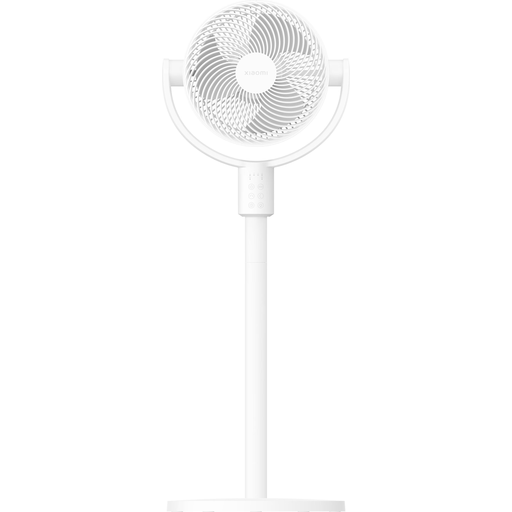 Image unavailable
Xiaomi Smart Standing Air Circulation Fan
Suited to anyone who wants to distribute air across several spots and values app control.
Listed features: DC inverter motor, app control, 3D automatic oscillation, 2 modes, 100 speeds, airflow of 1440 m³/h, a stated range of 13 m and a sleep mode at 28 dB.
View on Joybuy
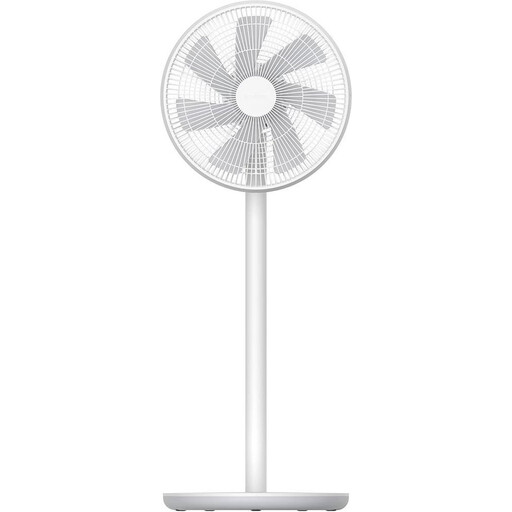 Image unavailable
Xiaomi Smart Standing Fan 2
Suited to anyone who wants the airflow to move between spots and is looking for app control.
Listed features: app control, 100 adjustable speeds and a DC inverter motor.
View on Joybuy
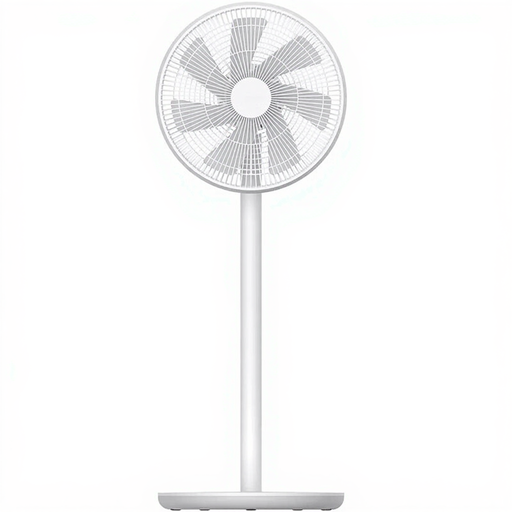 Image unavailable
Xiaomi Smart Standing Fan 2 Lite
Suited to anyone who wants to distribute air across a seating area and is looking for a model with adjustable height.
Listed features: app control, 7 blades, a stated range of 12 m and 90° oscillation.
View on Joybuy
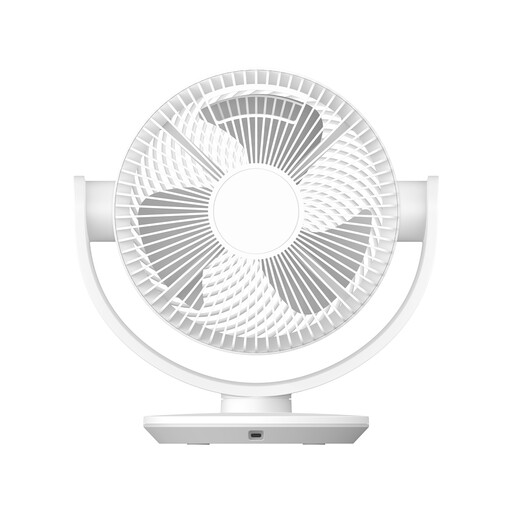 Image unavailable
Xiaomi Smart Desktop Air Circulation Fan EU
Suited to anyone looking for a desktop fan to circulate air from a table or desk.
View on Joybuy
Frequently asked questions
Can a table fan cool the whole bedroom?
No. A fan doesn't lower the air temperature, although its airflow can feel refreshing. The Consumers' Association describes a table fan as being intended mainly for one person, so choose one for the seat by the sofa rather than as a replacement for cooling the room.
Where should I put a table fan by the sofa?
Place it on a stable surface at a height that lets the airflow reach your seat. The Consumers' Association advises against putting a table fan on the floor, as you'll feel the airflow less effectively. The Netherlands Fire Service advises keeping electrical appliances free of dust and ensuring they can release heat.
Can I return a fan bought online?
For a standard online consumer purchase, you generally have 14 days from delivery to change your mind, according to ACM ConsuWijzer. Check the applicable terms and exceptions. This is separate from your rights if the product is faulty.
What does CE marking on an electric fan mean?
CE marking may be compulsory for electrical products covered by specific harmonised EU rules. According to Your Europe, the European Union's information service, the marking is a declaration by the manufacturer, not an approval from a central EU body. The rules that apply depend on the product and the relevant legislation.


