Don’t choose the standard taaitaai from Albert Heijn, Jumbo or PLUS if your office biscuit tin must meet a strict sugar-free requirement. The product information lists 39 g, 38.6 g and 38.594 g of sugars per 100 g, respectively. If sugar-free is essential, look for an alternative whose current packaging, nutritional information and ingredients meet your requirements. Baking it yourself gives you control over the recipe, but honey or syrup won’t automatically make a recipe sugar-free.
Who is this choice relevant to?
Buyer with a strict sugar-free requirement
If your office policy specifically requires sugar-free products, you need something whose labelling and nutritional information you can check. The standard taaitaai from Albert Heijn, Jumbo and PLUS lists sugars, so it doesn’t meet this requirement.
Office team looking to reduce added sugars
You may not need a sugar-free product, but you want to compare taaitaai and possible alternatives on a like-for-like basis. Check the nutritional information per 100 g and look for ingredients such as honey and syrup. Don’t assume a lower sugar value means a product is healthier.
Person in charge of a shared biscuit tin
You want colleagues to know what’s in the tin. Before transferring the biscuits, check the allergens and storage instructions on the packaging, and keep the product information with the tin.
What should you look for?
First, decide whether sugar-free is a firm requirement or whether you mainly want to compare products with less added sugar. Then check whether the option is suitable for sharing with colleagues.
| What to consider | What to check when buying | Who it matters to |
|---|
| Strictly sugar-free |
Read the labelling on the packaging, the sugars per 100 g and the full ingredients list. |
If our office policy specifically requires sugar-free products, I want to be able to check whether a product meets that requirement. For around 42% of consumers, this is the top priority. |
| Less added sugar |
Compare the nutritional information per 100 g and check whether ingredients such as sugar, honey or syrup have been added. |
I want to offer products with less added sugar, without calling an alternative sugar-free straight away. For around 33% of consumers, this is the highest priority. |
| Sharing and storage |
Check the allergens on the current packaging and follow the storage instructions after opening. |
For a shared tin, I want colleagues to be able to identify what’s inside and for the biscuits to be stored as instructed on the label. Around 25% of consumers put practical sharing first. |
Common mistakes
-
Assuming ‘no white sugar’ means ‘sugar-free’
Honey and syrups can also count as added sugars. The Voedingscentrum and Diabetes Fonds point out that a different name or source doesn’t make an ingredient sugar-free.
As well as the front of the pack, read the ingredients list and check the sugars per 100 g.
-
Comparing biscuits by the piece only
A smaller portion may list less sugar per biscuit, even if the products aren’t comparable by weight. The Voedingscentrum recommends using the values per 100 g when comparing products.
Compare products per 100 g first, then decide how many biscuits you want to put in the tin.
-
Forgetting about allergens in a shared biscuit tin
The product information for the varieties from Albert Heijn, Jumbo and PLUS that we looked at lists cereals containing gluten and milk or milk protein. In a shared tin, colleagues may not be able to see the packaging.
Check the current label, keep the allergen information with the tin and, where needed, offer a clearly separated alternative.
-
Relying on a label you checked previously
The ingredients and information for a seasonal product can change. An older product listing isn’t a reliable basis for a strict sugar or allergen policy.
Check the current packaging when you buy the product, before putting its contents in the office biscuit tin.
Brands to consider
Albert Heijn
Albert Heijn provides product information for AH Taai taai in a 500 g pack and also publishes a taaitaai recipe through Allerhande.
- For AH Taai taai, the ingredients, allergens, storage instructions and nutritional information are listed, including 39 g of sugars and 35 g of added sugars per 100 g.
- This variety doesn’t meet a strict sugar-free requirement; the Allerhande recipe contains honey and brown sugar.
Jumbo
Jumbo provides product information for its 500 g pack of Sint Taai Taai Figuurtjes and publishes its own taaitaai recipe.
- The product information lists allergens and 38.6 g of sugars per 100 g.
- These figures don’t meet a strict sugar-free requirement; the published recipe uses honey and brown sugar.
PLUS
PLUS provides product information for its 500 g pack of Taai taai sint en piet.
- The nutritional information lists 38.594 g of sugars and 37.613 g of added sugars per 100 g.
- This variety doesn’t meet a strict sugar-free requirement. When buying, also check the current label and the allergens.
Dirk
Dirk lists 1 de Beste Mini taai taai in a 500 g pack.
- The product name and pack size help you identify the right variety in store.
- Only assess whether it meets a strict sugar-free requirement by checking the ingredients and nutritional information on the packaging.
A possible alternative at Joybuy
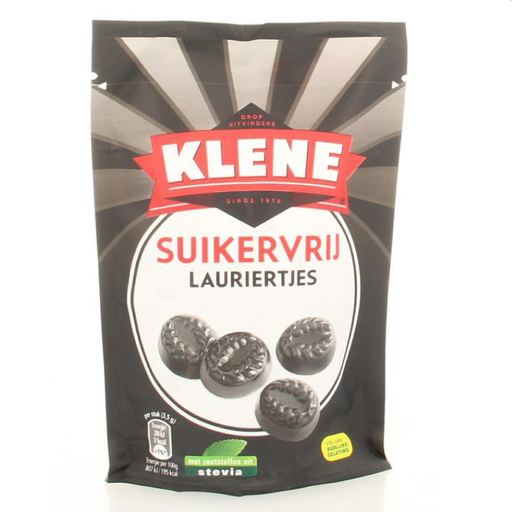
This Klene variety is a possible sweet alternative to taaitaai, not a confirmed taaitaai product. Before choosing it for the office biscuit tin, check exactly what the product is and look for the ‘sugar-free’ claim on the current packaging.
 No image available
Klene Lavender, 110 g
If you’re looking for something other than taaitaai for the office biscuit tin, first check exactly what this Klene variety is: the product title says biscuits, while the description refers to liquorice.
The pack is listed as 110 g. Before sharing, check the current sugar labelling, ingredients and allergens on the packaging.
View at Joybuy
Frequently asked questions
Does ‘no added sugar’ mean the same as ‘sugar-free’?
No, they’re different claims, and you can’t tell whether either applies from the taste or appearance. Read the exact wording on the packaging, the ingredients and the nutritional information, paying particular attention to honey and syrups.
Can standard taaitaai go in a sugar-free office biscuit tin?
The varieties from Albert Heijn, Jumbo and PLUS that we looked at don’t meet a strict sugar-free requirement. Their product information lists 39 g, 38.6 g and 38.594 g of sugars per 100 g, respectively. Always check the product’s own label if you’re considering a different variety.
Which allergens should I check before sharing taaitaai?
Read the allergen declaration on the packaging of the product you’re actually buying. The varieties from Albert Heijn, Jumbo and PLUS that we looked at list cereals containing gluten and milk or milk protein. Don’t rely on information for another brand or recipe.
How should I store taaitaai after opening?
Follow the storage instructions on the packaging you’ve bought. For the variety mentioned, Albert Heijn recommends storing it in a sealed tin after opening; PLUS says to store its variety in a cool, dry and dark place.


