
A host who wants to choose Fairtrade consciously
Wants to serve taaitaai with afternoon coffee, along with chocolate or coffee carrying a verifiable Fairtrade mark. The claim on that additional product should not be attributed to the biscuit.


Choose taaitaai for coffee with older guests only if they can eat the biscuit comfortably and its ingredients and allergens are suitable for them. If you’d also like to serve Fairtrade chocolate, choose it as a separate product and check the packaging to see what the certification applies to. Certification on the chocolate does not automatically apply to the taaitaai.
Wants to serve taaitaai with afternoon coffee, along with chocolate or coffee carrying a verifiable Fairtrade mark. The claim on that additional product should not be attributed to the biscuit.
Wants to know in advance whether their guest can eat a chewy biscuit comfortably. The Netherlands Nutrition Centre notes that chewing difficulties and reduced appetite can affect older people; if someone has swallowing difficulties, their choice needs individual consideration.
Wants to check the ingredients, allergens, nutritional information and portion size before serving. Product information from Albert Heijn, Jumbo and PLUS shows why it’s important to check each taaitaai product: the varieties they list contain ingredients including wheat, rye and milk.
First, check whether the guests will find the taaitaai comfortable to eat, and read the label. Only then choose a separate chocolate or coffee product if you’d also like to make a Fairtrade choice.
| What to consider | What to check when buying | Who it’s most relevant for |
|---|---|---|
| Fairtrade mark | Check the mark on the chocolate or coffee, as well as the related product claim. For chocolate with several ingredients, check what the certification applies to. | I want to choose cocoa consciously to serve with taaitaai, without calling the biscuit itself Fairtrade. For around 36% of consumers, this verifiable Fairtrade choice comes first. |
| Ease of chewing | Ask whether your guest can chew taaitaai comfortably. If they have swallowing difficulties, don’t rely on a general product description to make your choice. | If a guest has difficulty chewing, I don’t want to serve a chewy biscuit without checking first. Around 29% of consumers give individual eating comfort the highest priority. |
| Ingredients and nutritional information | Check the allergens and sugars per 100 g on each pack, and consider how much you plan to serve. Check the label on any chocolate too. | I want to know what my guests are eating, especially when ingredients or allergens matter. This is the main consideration for around 21% of consumers. |
| Packaging and availability | Choose a net weight that suits your group and check that the taaitaai and separate Fairtrade product you want are available. | For a small coffee gathering, I want to choose an amount that suits the group. This practical consideration carries the most weight for around 14% of consumers. |
A Fairtrade mark on a chocolate bar says nothing about whether the biscuit you serve with it is certified. A retailer’s policy on own-brand cocoa does not mean every individual product carries a Fairtrade mark either.
Describe it as taaitaai served with Fairtrade chocolate on the side, and check the claim on the chocolate’s own packaging.
The Netherlands Nutrition Centre lists chewing difficulties and reduced appetite as possible considerations in later life. Whether a chewy biscuit is suitable depends on the individual.
Ask your guest in advance whether they’re comfortable chewing it. If they have swallowing difficulties or other individual dietary needs, work with a healthcare professional to find a suitable option.
The taaitaai products listed by Albert Heijn, Jumbo and PLUS contain wheat, rye and milk. Warnings about the possible presence of other allergens can vary between products.
Check the current ingredients and allergen information on the packaging every time you buy, even if you’ve bought the product before.
The Fairtrade mark doesn’t tell you how much sugar is in a portion of taaitaai or chocolate, and it doesn’t tell you whether a biscuit is suitable for an individual guest.
Consider the Fairtrade claim and nutritional information separately. Compare the nutritional values per 100 g and decide how much you want to serve.
Taaitaai and Fairtrade chocolate are separate product choices. Check the packaging at each shop for the exact products you plan to serve together.
Albert Heijn provides ingredient, allergen and nutritional information for AH Taai taai. The company says that cocoa in its own-brand products is Rainforest Alliance or Fairtrade certified.
Jumbo provides ingredients, allergen information and nutritional values for Sint Taai Taai Figuurtjes, and also offers a separate Fairtrade range.
PLUS provides nutritional and allergen information for its artisan taai taai. According to PLUS, the cocoa in its own-brand products has been Fairtrade certified since 2020.
According to Lidl, the chocolate bars in its Way To Go range are fully Fairtrade certified. This is a separate chocolate option to serve with taaitaai.
ALDI lists Choceur Pure Chocolate, 200 g, among its Fairtrade chocolate products.
Dirk lists 1 de Beste Mini taai taai, 500 g, and describes Fairtrade products, including chocolate, as a separate range.
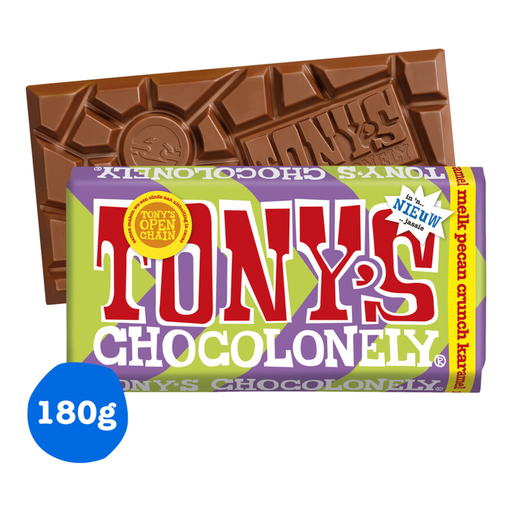
This chocolate bar is one possible addition to serve with taaitaai and afternoon coffee; it isn’t a type of taaitaai. Before choosing this combination, check the Fairtrade mark and ingredients on the packaging.
 No image available
For anyone who’d like to serve a separate chocolate bar with taaitaai and coffee.
The product description mentions Fairtrade; check the mark on the packaging and what the claim applies to.
According to the product description, the bar contains pecans, milk, soya and wheat, and may contain egg and peanuts. Check the current packaging and, if anyone has difficulty chewing, bear in mind that it contains pecans and biscuit pieces.
No. The mark on the chocolate only applies within the scope stated for that product. Check the taaitaai packaging separately if you also want to assess a Fairtrade claim for the biscuit.
Not without considering what they find comfortable to eat. If they have difficulty chewing, ask about a suitable alternative. For swallowing difficulties or individual dietary questions, seek professional advice.
Check the current packaging for the ingredients and allergens in the biscuit you’ve chosen. The varieties listed by Albert Heijn, Jumbo and PLUS contain wheat, rye and milk; additional warnings can vary between products.
Follow the storage instructions on your product’s packaging. For its taaitaai listed here, Albert Heijn recommends storing it in a sealed tin after opening. Also check the best-before date on the packaging.
Check which product or ingredient the packaging says is covered by the mark. Fairtrade explains that products with several ingredients use the mark with an arrow; according to the Keurmerkenwijzer from Milieu Centraal, a logo with a white background may apply only to a Fairtrade-certified ingredient.