
Stallholder selling loose biscuits or offering them as an extra
Needs a suitable pack size for their stock and must be able to give customers clear allergen information when selling products that aren’t pre-packed, as Ondernemersplein explains.


If you want to offer a familiar seasonal biscuit alongside oliebollen, taaitaai fits the bill. Choose a digestive if you’d prefer a separate, crunchy biscuit option. Then decide which pack size suits your stock, and check the current label for each product you choose, especially if you’re selling the biscuits loose.
Needs a suitable pack size for their stock and must be able to give customers clear allergen information when selling products that aren’t pre-packed, as Ondernemersplein explains.
Wants a seasonal biscuit with a different flavour profile from a digestive. ALDI describes its taaitaai as aniseed-flavoured biscuits shaped like figures.
Wants a digestive as a separate option. Albert Heijn describes its Digestive as a wheat biscuit and lists it as vegan and lactose-free; these features don’t automatically apply to other digestives.
Taaitaai and digestives play different roles alongside oliebollen. First choose the type of biscuit, then check the label and pack size of the exact product you’re considering.
Choose it when: you want a familiar seasonal biscuit to serve alongside oliebollen.
Consider: the taaitaai products described by Albert Heijn, Jumbo and PLUS list ingredients including cereals containing gluten and milk. Always check the chosen pack for allergen information.
Choose it when: you specifically want to offer a crunchy wheat biscuit as a separate option.
Consider: a digestive isn’t necessarily a direct replacement for traditional taaitaai; ingredients and nutritional values vary by product and variant.
| Consideration | What to check | Who should consider it? |
|---|---|---|
| Allergens and loose sales | Read the ingredients and allergen information on the current packaging, and make sure you can give customers this information when selling biscuits loose. | If I sell biscuits loose, I want to be able to answer allergen questions using the information on the correct packaging. Around 42% of consumers would consider this the most important factor. |
| Pack size and storage | Compare the pack weights and follow the storage instructions for the chosen product, including after opening. | When offering biscuits as an extra, I don’t want to open more than I can store appropriately; that’s why around 33% of consumers would prioritise pack size. |
| Flavour profile and product variant | Choose between taaitaai and a separate digestive option; compare nutritional information only for the exact products you’re considering. | I want to know in advance whether I’m offering a seasonal biscuit or a crunchy biscuit. Around 25% of consumers would weigh up this product choice first. |
These products have different flavour profiles. The nutritional values of two specific Albert Heijn products also differ: AH Taai taai lists 39 g of sugars and 0.8 g of fat per 100 g, compared with 16 g of sugars and 21 g of fat for AH Digestive. These figures don’t apply to every product in either category.
First decide which biscuit you want to offer, then compare the nutritional information for each exact product.
The taaitaai products described by Albert Heijn, Jumbo and PLUS list cereals containing gluten and milk. According to Ondernemersplein, customers must be given clear allergen information when food isn’t pre-packed.
Check the ingredients, allergens and any warnings on every pack you choose, and keep the relevant information available at your stall.
PLUS lists taaitaai in both a 250 g pack and a 500 g variant. A smaller pack only helps if it suits how much you expect to open and store.
Compare the weight with your planned extra sales, and follow the label’s storage instructions for opened packs.
Albert Heijn lists both AH Taai taai 500 g and AH Digestive 400 g, so you can compare the two product types within one range.
Jumbo lists Sint Taai Taai Figuurtjes in a 500 g pack.
ALDI describes a 500 g pack of taaitaai with aniseed flavour and figure shapes.
PLUS lists Taai taai sint en piet in a 500 g pack and Ambachtelijke taai taai koeken in a 250 g pack.
Dirk features 1 de Beste Mini taai taai 500 g in its search results.
Lidl mentions mini-taaitaai in a recipe; this isn’t a product listing for packaged taaitaai.
These products suit the digestive option: a plain biscuit and two chocolate variants to offer separately alongside oliebollen. They aren’t classic taaitaai products.
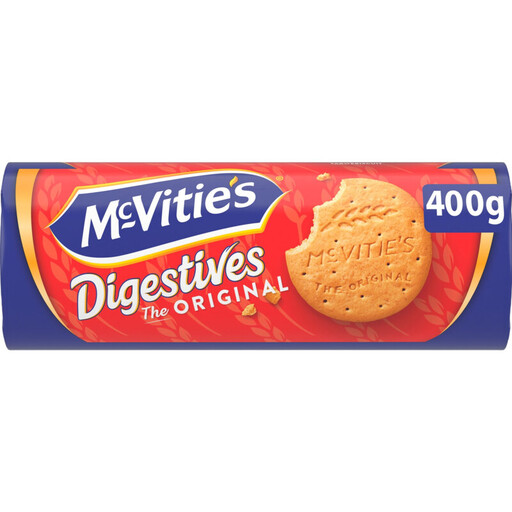 Image unavailable
For anyone looking for a plain digestive as a separate biscuit option. This is a wheat biscuit in a 400 g pack; the product description lists wheat and gluten and warns that it may contain milk. Check the current label, especially if selling it loose.
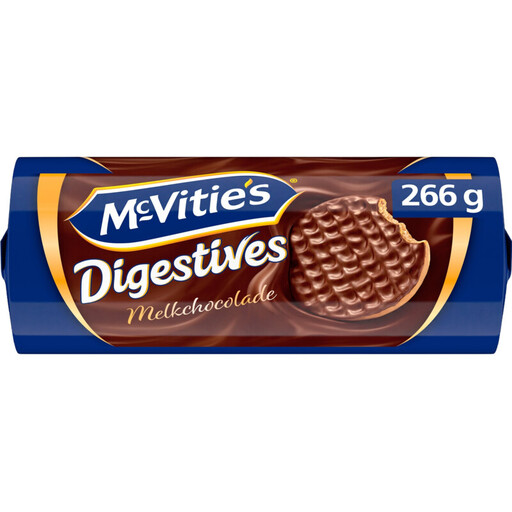 Image unavailable
For anyone considering a chocolate digestive as a separate option to sell alongside other products. The pack contains 266 g; the product information lists milk, soya, wheat and gluten. Also check the current label for the exact ingredients in the chocolate coating.
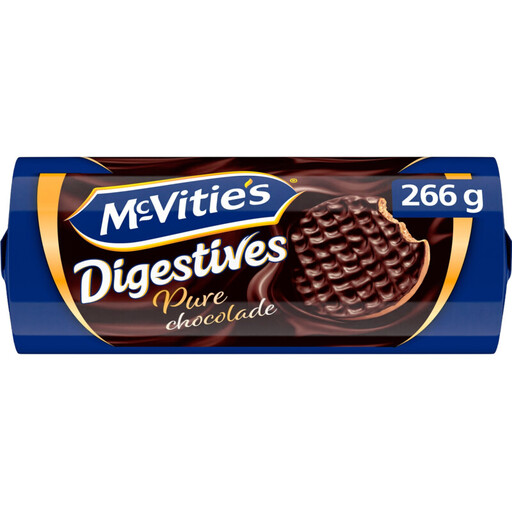 Image unavailable
For anyone wanting to compare the variant named Dark Chocolate with a plain digestive. The pack contains 266 g. Before serving, check the type of chocolate, ingredients and allergens on the current label.
Yes. According to Ondernemersplein, when selling food that isn’t pre-packed, such as biscuits sold loose from a stall, you must give customers clear information about the allergens present. So keep the information for the variant you’re selling to hand.
The taaitaai products described by Albert Heijn, Jumbo and PLUS list wheat, rye or other cereals containing gluten, as well as milk. Also check the exact packaging of the product you buy for any warnings about other allergens.
Not if you specifically want to offer classic taaitaai: a digestive is a different kind of biscuit. Choose one as a separate option if a crunchy wheat biscuit suits your range, and check the label of the variant you choose.
Follow the instructions on the packaging of the product you’ve chosen. The Albert Heijn and PLUS products described recommend storing them in a cool, dry and dark place, among other instructions. Keep the product packaging identifiable too, so you can provide allergen information.