For an everyday snack around a bike ride, you can compare taai-taai and digestives using their labels: per 100 g, AH Taai taai lists more carbohydrates and less fat than Jumbo Krokante Digestive. For a long, intensive ride, neither biscuit is automatically a substitute for fast-absorbing sports nutrition. Consider your portion, what you can tolerate while cycling and what you drink, too. If you need a gluten-free option, check the other allergens on the current packaging as well.
Who is this comparison for?
Cyclists doing long, intensive rides
If you’re planning food for a longer ride, the amount of carbohydrate in your actual portion matters more than the product name alone. The Netherlands Nutrition Centre discusses carbohydrate intake during endurance exercise, but that doesn’t automatically make an ordinary biscuit fast-absorbing sports nutrition.
Leisure cyclists comparing biscuits
For an everyday snack before or after a ride, you can compare taai-taai and digestives for carbohydrates, fat, sugars, fibre and salt. Product information from Albert Heijn and Jumbo shows why the label tells you more than the biscuit’s name.
Cyclists who need to check for gluten or other allergens
If you need to avoid certain ingredients, check the current ingredients list, allergen information and any cross-contamination warning. Other allergens may also be relevant in biscuits labelled gluten-free.
What should you look for when choosing?
First decide whether you want an everyday snack or are planning food for a longer ride. Then compare the nutritional values per 100 g, work out what they mean for your portion and check for allergens if you need to.
| What to consider |
What to check when buying |
Who is this important for? |
| Carbohydrates on a long ride |
Compare carbohydrates per 100 g and calculate how much is in your portion. Try your chosen biscuit before taking it on a ride. |
For a long, intensive ride, I want to know how many carbohydrates I’m taking with me, without assuming a biscuit will be rapidly absorbed. Around 37% of consumers prioritise carbohydrate planning. |
| Fat in an everyday biscuit |
Compare the nutritional values per 100 g: AH Taai taai lists 3 g of fat, while Jumbo Krokante Digestive lists 20,5 g of fat per 100 g. |
For an everyday snack, I’m mainly looking for the lower-fat option among these types of biscuit. This is the key consideration for around 27% of consumers. |
| Fibre for a snack |
Compare fibre and fat together per 100 g, rather than relying on the word ‘digestive’ alone. |
Outside a performance-focused ride, the fibre content of my biscuit matters to me, but I also want to see the other nutritional values. Around 18% of consumers prioritise this comparison. |
| Gluten and other allergens |
Read the current ingredients list, allergen information and any ‘may contain’ warning, including on products labelled gluten-free. |
If I need to avoid gluten or another allergen, the full label determines which option I can consider. Around 18% of consumers put this check first. |
Common mistakes
-
Assuming the name ‘digestive’ means it’s easier to digest
The name doesn’t tell you how well you’ll tolerate a biscuit while cycling. According to their product listings, Jumbo Krokante Digestive and McVitie’s Digestives Original also have different nutritional values.
Compare the current label per 100 g, and don’t try a new snack for the first time on an important long ride.
-
Assuming all the carbohydrates on the label are rapidly absorbed
For endurance exercise lasting 1 to 2.5 hours, the Netherlands Nutrition Centre recommends 30 to 60 g of rapidly absorbed carbohydrates per hour as an amount that can help improve performance. The total carbohydrate figure on a biscuit label doesn’t show how quickly your body absorbs it during exercise or how well you’ll tolerate the biscuit.
Work out how much carbohydrate is in your portion, try it beforehand and plan what you’ll drink on longer rides, too.
-
Assuming ‘gluten-free’ means ‘free from all allergens’
The product listing for Consenza Taai taai mentions oats and almonds or nuts; Schär Digestive Landtaler’s listing mentions soya and the possible presence of lupin and egg. A gluten-free label doesn’t remove the need to check for these separately.
Check the current packaging every time you buy, including the ingredients list and any warnings about possible cross-contamination.
-
Comparing nutritional values per portion only
Portion sizes can vary between packs. As a result, values for things such as sugars and salt per portion aren’t always a reliable basis for comparing two types of biscuit.
Compare per 100 g first, as the Netherlands Nutrition Centre advises, then work out the values for the amount you actually want to take with you.
Brands and product ranges compared
Albert Heijn
AH Taai taai is a classic taai-taai biscuit to compare with digestives.
- Albert Heijn’s product information lists 78 g of carbohydrates and 3 g of fat per 100 g for AH Taai taai.
- The version reviewed contains rye, wheat and milk, among other ingredients. Check the other allergen information on the packaging, too.
Jumbo
Jumbo Krokante Digestive is a wheat biscuit to compare as an everyday snack.
- Jumbo lists 66,2 g of carbohydrates and 3,1 g of fibre per 100 g for this variety.
- The same product listing gives 20,5 g of fat and 1,24 g of salt per 100 g; the product contains wheat.
McVitie’s
Digestives Original is a wheat digestive you can compare by its nutritional values and ingredients.
- The Dutch product listing at Jumbo gives 3,7 g of fibre per 100 g for Original.
- It also lists 21,3 g of fat per 100 g; check the current packaging if you have allergies.
Consenza
The Consenza Taai taai reviewed is labelled gluten-free.
- Albert Heijn’s product information lists 71 g of carbohydrates per 100 g for this variety.
- The ingredients include oats and almonds or nuts; gluten-free doesn’t mean free from other allergens.
Schär
Digestive Landtaler is a biscuit labelled gluten-free.
- The product listing at Jumbo gives 7,4 g of fibre per 100 g.
- The version reviewed lists 24 g of fat per 100 g, contains soya and may contain lupin and egg.
Digestives on Joybuy
These McVitie’s varieties are digestives you can compare as everyday biscuits for a leisurely ride. Their product names indicate the packaging and chocolate variety; when choosing food for an intensive ride, don’t rely on the name alone.
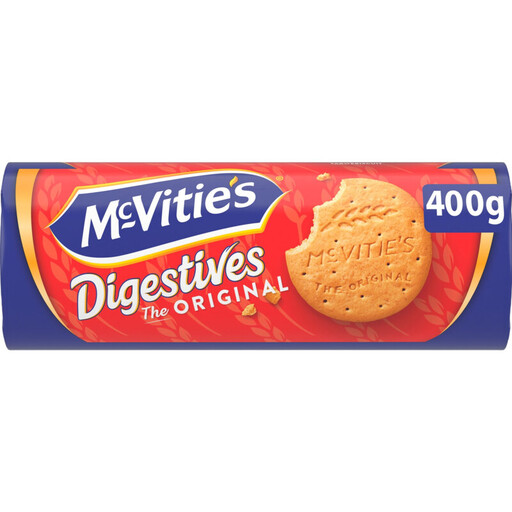 Image unavailable
McVities Digestive Original – 400 g
A digestive to compare with other biscuits for an everyday snack.
Pack size: 400 g. Check the nutritional information and allergens on the current packaging if they’re important to your choice.
View at Joybuy
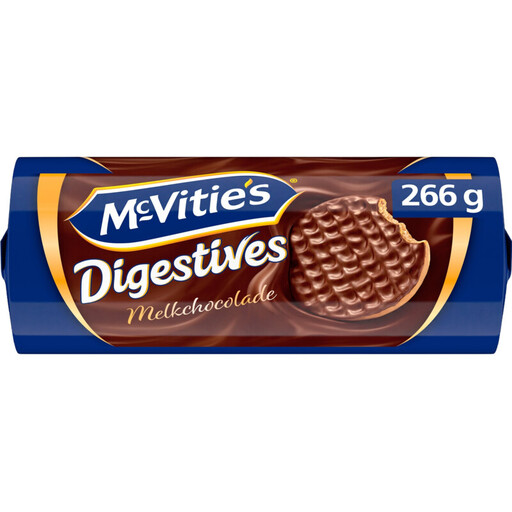 Image unavailable
McVitie’s Digestives Milk Chocolate – 266 g
A milk chocolate digestive for anyone comparing a chocolate variety as an everyday snack.
Pack size: 266 g. Compare the nutritional information and check the current ingredients list if you have allergies.
View at Joybuy
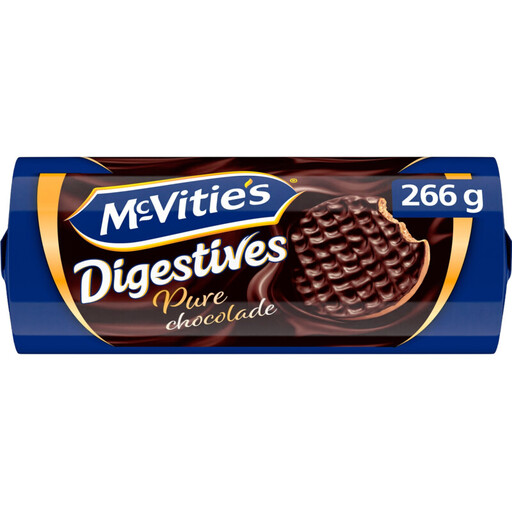 Image unavailable
McVitie’s Digestives with Dark Chocolate – 266 g
A dark chocolate digestive for an everyday snack around a bike ride.
Pack size: 266 g. Check the current packaging for nutritional values and allergens before comparing this variety with other biscuits.
View at Joybuy
Frequently asked questions
Do I need taai-taai or digestives on a bike ride?
No, you don’t automatically need a biscuit for a bike ride. Carbohydrate intake can become relevant during longer endurance exercise: for activity lasting 1 to 2 hours, the Netherlands Nutrition Centre recommends 30 to 60 g of rapidly absorbed carbohydrates per hour as an amount that can help improve performance. Don’t assume that just any biscuit will meet this requirement.
Does taai-taai contain more carbohydrates than a digestive?
It depends on the product. Among the varieties reviewed, AH Taai taai lists 78 g of carbohydrates and 3 g of fat per 100 g, compared with 66,2 g of carbohydrates and 20,5 g of fat for Jumbo Krokante Digestive. Comparing the labels doesn’t tell you how well you’ll tolerate either biscuit while cycling.
Is a digestive easier to digest on a bike ride?
The name ‘digestive’ doesn’t prove that it’s easier to digest while cycling. Compare the nutritional values per 100 g and try any biscuit you plan to eat on a ride beforehand, rather than relying on the product name alone.
What should I check if I need to avoid gluten or other allergens?
Read the ingredients list, allergen information and any ‘may contain’ warning on the current packaging. The Netherlands Food and Consumer Product Safety Authority explains allergen labelling; taai-taai or a digestive labelled gluten-free may still contain other ingredients that matter to you.
Should I take a drink as well as a biscuit?
For a longer ride, plan what you’ll drink as well: a biscuit isn’t a substitute for a drink. Take the duration and conditions of your ride into account, and try your food and drink beforehand.


