If the traditional aniseed flavour is what you’re after, a small piece of taai-taai makes a good accompaniment to afternoon coffee. If you’re mainly comparing fibre, consider a wholemeal digestive. Don’t choose on the word ‘digestive’ alone: compare the label per 100 g and take sugars, salt and portion size into account. If someone has difficulty chewing or swallowing, neither option is automatically suitable without individual advice on food texture.
Who might find this choice relevant?
Fibre-conscious coffee drinker
You fancy a biscuit with your coffee, but also keep an eye on fibre, sugars and salt per 100 g. The Netherlands Nutrition Centre highlights fibre and drinking enough as important considerations for people over 70. A product’s name won’t tell you how much fibre a biscuit contains.
Fan of a traditional coffee-time treat
For you, the choice is mainly about the familiar aniseed flavour of taai-taai and a small treat with your afternoon coffee. The nutritional information can help you weigh up the portion size and sugar content.
Older adult or carer with a question about chewing or swallowing
Before choosing a biscuit, you need to know what food texture has been recommended for the person concerned. Amsterdam UMC advises that food for people with chewing or swallowing difficulties should be matched to their individual recommendations. An ordinary biscuit or taai-taai won’t automatically be suitable.
What should you look for when choosing?
First decide whether flavour, nutritional information or suitability for eating is the main factor for this person. Then compare taai-taai and digestives per 100 g, as recommended by the Netherlands Nutrition Centre when comparing labels. You can assess a portion separately afterwards.
| What to consider |
What to check when buying |
Who is this important for? |
| Fibre |
Compare fibre, sugars and salt per 100 g. According to Albert Heijn’s product information, AH Wholemeal Digestive with wheat flour contains 6 g of fibre per 100 g, while AH Taai taai contains 2.5 g. |
If fibre is my main consideration, I also want to weigh up the other nutritional values rather than go by the word ‘digestive’. This fibre choice is the priority for around 40% of consumers. |
| Traditional treat |
Check the portion size and sugars per 100 g. Albert Heijn lists a 14 g portion of AH Taai taai and 39 g of sugars per 100 g. |
I choose taai-taai mainly for its aniseed flavour with coffee, and want to know what a small piece amounts to. Around 30% of consumers prioritise this traditional treat. |
| Ingredients and label |
Read the current ingredients list, allergens and any warnings; compare sugars and salt per 100 g. |
If I need to avoid an ingredient or limit sugars, the label should guide my choice. Checking the label is the main concern for around 20% of consumers. |
| Chewing and swallowing |
If you have difficulty chewing or swallowing, ask what individual advice applies to food texture before choosing ordinary taai-taai or biscuits. |
If I have difficulty chewing or swallowing, I first want to know whether the biscuit’s texture fits the individual advice. This is the most important consideration for around 10% of consumers. |
Common mistakes
-
Taking ‘digestive’ as a promise about digestion
A product’s name doesn’t tell you how much fibre, sugars or salt a biscuit contains, nor does it make the biscuit a treatment for digestive problems.
Compare the label per 100 g, and don’t choose a biscuit as a replacement for regular meals and fibre-rich staple foods.
-
Overlooking sweeteners in ‘0% sugar’ products
Albert Heijn’s product information lists 14 g of polyols per 100 g for AH Digestive 0% sugar, with a warning that excessive consumption may have a laxative effect.
Read the ingredients and warning on the packaging, and consider the portion size before choosing this option.
-
Relying on memory to check allergens
The taai-taai and digestive varieties mentioned have different ingredients and allergens. An online listing you looked at previously may not match the packaging you buy.
Check the current ingredients list and allergen information every time you buy, especially if someone needs to avoid an ingredient.
-
Judging suitability for eating by the name or appearance
A chewy biscuit isn’t automatically easier to eat than a crisp one. Amsterdam UMC explains that food texture for people with chewing or swallowing difficulties should match their individual advice.
Ask what food texture has been recommended, then make sure any choice of taai-taai or biscuit is in line with it.
Brands to consider
Albert Heijn
The AH varieties considered include taai-taai, a wholemeal digestive and a digestive with no added sugar. Compare them as individual products, not as if they shared the same nutritional profile.
- According to Albert Heijn’s product information, AH Wholemeal Digestive with wheat flour contains 6 g of fibre per 100 g; AH Taai taai lists 2.5 g of fibre and 39 g of sugars per 100 g.
- AH Digestive 0% sugar lists 0 g of added sugars, but contains polyols and carries a warning that excessive consumption may have a laxative effect.
Bolletje
Bolletje Taai Taai is a traditional taai-taai variety for anyone looking for this particular type of biscuit.
- Albert Heijn’s product information lists 2.5 g of fibre and 36 g of sugars per 100 g for Bolletje Taai Taai.
- The listed ingredients include wheat, rye and milk. Check the current packaging if you need to take allergens into account.
McVitie's
McVitie's Digestives Original is a classic digestive variety; the figures below apply specifically to Original.
- According to Albert Heijn’s product information, this variety contains 16% wholemeal wheat flour and 3.7 g of fibre per 100 g.
- The same listing gives 15 g of sugars and 1.3 g of salt per 100 g. The product contains wheat and may contain milk.
Verkade
Verkade Verk digestive puur is a digestive with dark chocolate for anyone considering a chocolate biscuit with their coffee.
- According to Albert Heijn’s product information, this variety contains 30% dark chocolate and 4.2 g of fibre per 100 g.
- The same variety lists 28 g of sugars and 13 g of saturated fat per 100 g, so don’t judge it on its fibre content alone.
Digestives to enjoy with coffee on Joybuy
These products are digestive biscuits for anyone choosing a plain or chocolate-coated variety to have with afternoon coffee. Taai-taai is a different option if the traditional aniseed flavour is what you’re after. If someone has difficulty chewing or swallowing, first check the food texture against their individual advice.
 No image available
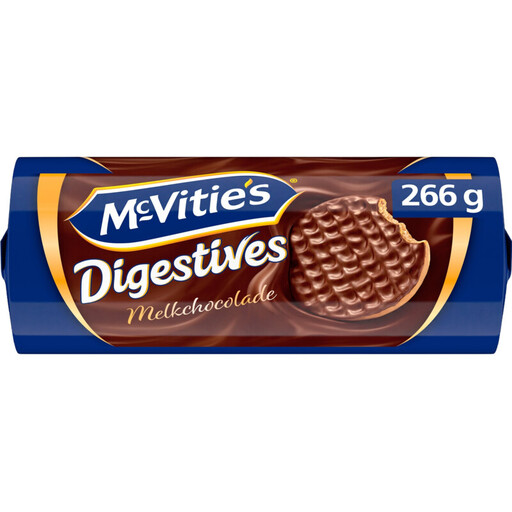
McVitie's Digestives Milk Chocolate, 266 g
A digestive with milk chocolate for anyone who fancies a chocolate biscuit with their coffee. Compare the nutritional information per 100 g on the packaging and check the allergens. If someone has difficulty chewing or swallowing, individual advice on food texture is what matters.
View on Joybuy
 No image available
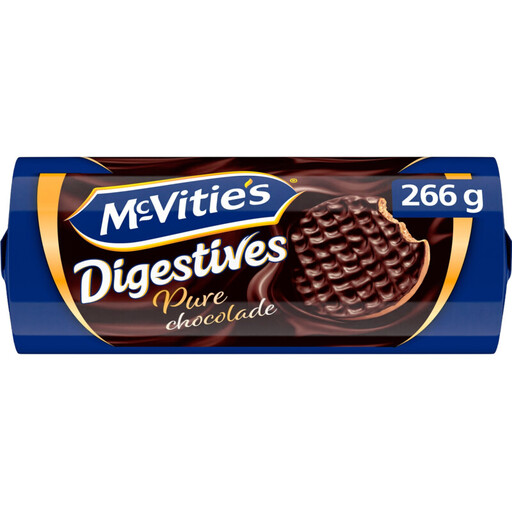
McVitie's Digestives with Dark Chocolate, 266 g
A digestive with dark chocolate for anyone looking for that flavour to enjoy with coffee. Check the nutritional information and allergens on the current packaging; if someone has difficulty chewing or swallowing, don’t rely on the product name alone.
View on Joybuy
 No image available
McVitie's Digestive Original, 400 g
A chocolate-free digestive for anyone looking for a plain biscuit to enjoy with coffee. Albert Heijn’s product information lists 3.7 g of fibre and 1.3 g of salt per 100 g for Digestives Original. Check the current label on this pack too, and follow individual advice if someone has difficulty chewing or swallowing.
View on Joybuy
Frequently asked questions
Is a digestive better for digestion than taai-taai?
You can’t tell from the name ‘digestive’. If fibre is a factor in your choice, compare the amount per 100 g: according to Albert Heijn, AH Wholemeal Digestive with wheat flour contains 6 g, while AH Taai taai contains 2.5 g. These product values don’t mean that a biscuit will solve a digestive problem.
What should I look for when comparing sugars?
Compare sugars per 100 g. For a variety with no added sugar, also read the ingredients and any warnings. Albert Heijn lists 39 g of sugars per 100 g for AH Taai taai. AH Digestive 0% sugar lists 0 g of added sugars, but contains 14 g of polyols per 100 g and warns that excessive consumption may have a laxative effect.
Can someone with chewing or swallowing difficulties eat taai-taai or a digestive?
The choice needs to match the individual advice on food texture; neither type of biscuit is automatically suitable. Amsterdam UMC explains that food and drink should be adjusted to the recommended texture for people with chewing or swallowing difficulties. Ask the healthcare professional involved whether a particular biscuit is suitable.
How do I check the allergens in these biscuits?
Read the allergen information on the current packaging before buying. The Netherlands Food and Consumer Product Safety Authority explains that allergens must be listed on labels. The taai-taai and digestive varieties mentioned differ in the information they give about wheat and milk, among other things. Don’t assume one variety has the same ingredients as another.


