Choose taai-taai if you’re looking for a soft, spiced biscuit; choose a plain digestive if you prefer a crunchy biscuit. According to product information from Albert Heijn and Jumbo, the AH Digestive reviewed contains less sugar per 100 g than the Bolletje and Jumbo taai-taai biscuits reviewed. But compare fat content and portion size too. If you need a gluten-free product, check that the option you choose is explicitly labelled gluten-free, and read the rest of the allergen information as well.
Who might prefer each biscuit?
Fans of soft, spiced taai-taai
If you’re after a chewy texture with aniseed and spices, traditional taai-taai may suit your taste. According to product information from Albert Heijn, the Bolletje product reviewed contains aniseed and a blend of spices.
Shoppers comparing crunchy biscuits
A plain digestive is a good fit if you prefer a crunchy biscuit. If you’d also like to compare nutritional values, don’t look at sugar alone: according to Albert Heijn, the AH Digestive reviewed contains less sugar but more fat per 100 g than the Bolletje taai-taai reviewed.
Shoppers looking for a gluten-free option
Look for an explicit gluten-free label and read the full ingredients and allergen information. According to Albert Heijn, the Consenza taai-taai reviewed is listed as gluten-free, but it also contains oats and almonds.
What should you look for when choosing?
First decide whether taste, nutritional information, allergens or practical considerations are most important to you. Then compare the products in question using their current packaging.
| What to consider | What to check when buying | Who is this most important to? |
|---|
| Taste and texture |
Choose between soft, spiced taai-taai and a crunchy plain digestive; check the product description. |
If you fancy aniseed and spices, you’ll want something different from a crunchy breakfast biscuit. Around 40% of consumers put this choice of taste and texture first. |
| Nutritional value |
Compare sugar, fibre and fat per 100 g, and consider how much you actually eat. |
If a biscuit is part of my breakfast, I want to know how the products’ nutritional values compare. For around 30% of consumers, this comparison is the deciding factor. |
| Allergens |
Read the current ingredients list and allergen information; check for a gluten-free label if needed. |
If you need to avoid a particular ingredient, first make sure the specific biscuit is suitable, whatever it tastes like. Around 20% of consumers put this check first. |
| Packaging and availability |
Check the pack size in grams and whether the specific product is currently available. |
If you only have a biscuit with breakfast now and then, you’ll want to be able to buy a suitable pack size. For around 10% of consumers, this practical consideration matters most. |
Common mistakes
-
Judging its place in your breakfast by the product name
The name taai-taai or digestive doesn’t tell you how the biscuit fits in with the rest of your breakfast. The Voedingscentrum lists 7.5 g of sugar and 0.4 g of fibre, among other values, for an average 20 g piece of taai-taai. Products and portion sizes may differ.
Check the nutritional information per 100 g and per portion, and consider what else you eat at breakfast.
-
Comparing sugar alone
According to the product information on Albert Heijn, AH Digestive contains 16 g of sugar and 21 g of fat per 100 g. Bolletje Taai Taai, by comparison, contains 36 g of sugar and 1.5 g of fat per 100 g. Comparing just one value therefore misses an important difference.
Consider sugar, fat, fibre and portion size together before choosing between these products.
-
Assuming gluten-free means free from all allergens
The gluten-free Consenza taai-taai listed by Albert Heijn also contains oats and almonds. A gluten-free label doesn’t tell you whether other ingredients are relevant to you.
Every time you buy it, check the full ingredients list and allergen information on the pack you’ve chosen.
-
Assuming a product page confirms current availability
The Albert Heijn and Jumbo pages consulted stated that some specific taai-taai products were no longer available online. This doesn’t tell you whether other varieties are available or in stock in a shop.
Just before buying, check that the exact pack you want is available.
Brands to consider
Albert Heijn
AH Digestive is a specific example of a plain digestive whose nutritional information you can compare with taai-taai.
- For the AH Digestive reviewed, Albert Heijn lists 16 g of sugar and 3.2 g of fibre per 100 g.
- The same product information lists 21 g of fat per 100 g and wheat as an ingredient.
Jumbo
Jumbo provides product information for both De Originele Taai Taai and Digestive Volkoren; assess them as separate products.
- For De Originele Taai Taai reviewed, Jumbo lists 38.8 g of sugar per 100 g.
- The page consulted stated that this specific product was no longer available online; check current availability.
Bolletje
The Bolletje Taai Taai reviewed is a good fit if you’re specifically looking for the soft, spiced taai-taai style.
- Albert Heijn lists aniseed and a blend of spices among the ingredients, and 36 g of sugar per 100 g.
- The variety reviewed contains wheat, rye and milk; check the packaging if these ingredients are relevant to you.
Consenza
The Taai taai poppetjes reviewed are a product-specific option if you’re looking for gluten-free taai-taai.
- Albert Heijn lists this variety as gluten-free, with 4.6 g of fibre per 100 g.
- The variety also contains oats and almonds and lists 29 g of sugar per 100 g; check the packaging for all relevant ingredients.
A digestive biscuit to consider
This plain digestive is an option if you’re looking for a biscuit to go with a sweet breakfast instead of soft, spiced taai-taai. Check the current packaging for nutritional values and allergen information.
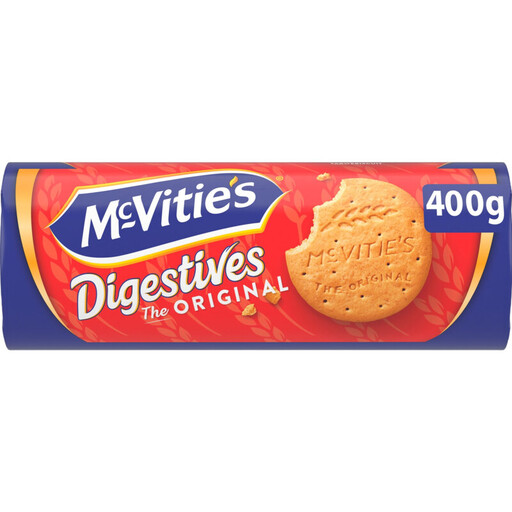 Image unavailable
McVities Digestive Original, 400 g
For anyone who prefers a plain digestive to spiced taai-taai. The pack contains 400 g; check the current nutritional information and allergen details before choosing.
View on Joybuy
Frequently asked questions
Is taai-taai or a digestive biscuit a complete breakfast on its own?
Don’t base your whole breakfast around a biscuit. The Diabetes Fonds also recommends choosing breakfast foods that contain protein and fibre-rich sources of carbohydrates, and describes biscuits as a high-sugar food to have in moderation.
Does taai-taai contain more sugar than digestive biscuits?
In this specific product comparison, it does: Albert Heijn lists 16 g of sugar per 100 g for AH Digestive and 36 g for Bolletje Taai Taai; Jumbo lists 38.8 g for De Originele Taai Taai. These values don’t necessarily apply to other recipes or varieties, so check their labels too.
Which taai-taai can I choose if I need a gluten-free option?
Only choose a variety that’s explicitly labelled gluten-free on the current packaging. According to Albert Heijn, the Consenza Taai taai poppetjes reviewed carries this label, but also contains oats and almonds; so be sure to read the rest of the allergen information.
How should I store taai-taai or digestive biscuits after opening?
Follow the storage instructions on the packaging of the product you buy. The product information for the AH Digestive and Bolletje Taai Taai reviewed recommends storing them in a sealed tin or resealable pack after opening.


