
Vandaag of morgen in huis

Kwaliteit gegarandeerd

Welkomstaanbiedingen ontgrendelen: GRATIS bezorging | Tot 80% korting | Gratis 30 dagen JoyPlus-proefperiode
Download de app
A T10 W5W LED car bulb may seem like a simple replacement for a halogen bulb, but choosing the right one involves more than just the colour of the light. The same fitting can be used in different vehicles for interior lighting, parking lights, sidelights or number plate lights. So, just because a bulb fits physically, that doesn’t mean it will work without triggering a warning or be suitable for every application.
Look out for these common pitfalls:
A W5W LED bulb, T10 LED car bulb, 194 LED bulb, 501 LED bulb and 168 LED bulb often refer to the same type of wedge fitting or closely related sizes. However, their length, diameter and contact shape can vary.
Before buying, check:
For LED interior car lighting, such as a reading light or door light, colour and light distribution are usually more important than official approval. For an LED parking light or LED number plate light, you should also check that the light colour and product are approved for that application.
Most compact T10 and W5W bulbs are designed for 12 volts. According to their product specifications, some models support 12–24 volts, offering extra flexibility for certain vehicles. Never choose a bulb based on the fitting alone; check the stated voltage too.
An aluminium housing can help dissipate heat. That doesn’t mean every LED bulb is suitable for a fully enclosed, very hot light housing. For example, KATUR’s product information advises against prolonged use in enclosed housings at high temperatures.
A Canbus LED car bulb typically contains electronics that attempt to compensate for the lower power consumption of LEDs. The product specifications for several KATUR and OUSHI models state that they have a built-in Canbus solution. After fitting, always check for:
Headlights commonly use different fitting types, such as an H4 LED car bulb or H11 LED car bulb. Road-legal use isn’t automatic. OSRAM NIGHT BREAKER LED products specify approvals and restrictions for each model. For vehicle-specific H4 variants, OSRAM advises checking the official compatibility list. According to the product information, the H11 ECE variant is approved for vehicles with an H11 fitting within the stated ECE applications. Even so, always check the fitting, installation and beam alignment.
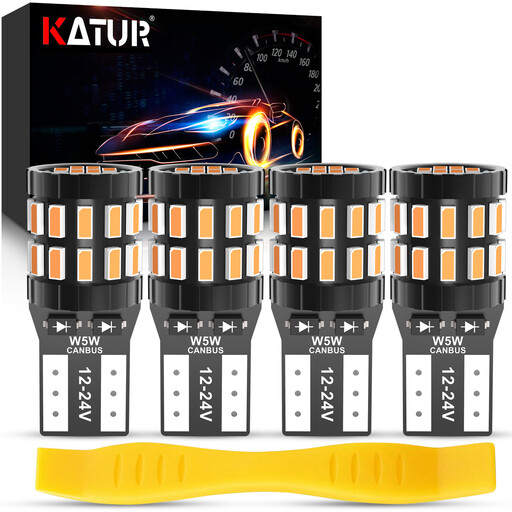
Why it suits this type of buyer: A set of four bulbs for anyone looking to replace several interior, parking or number plate lights without going straight for a premium headlight retrofit.
The fitting is clearly listed as T10/W5W/194/501/168, and the product information specifies 12–24 volts and Canbus support. Still, check the application and your vehicle before buying.
According to the product specifications: 30 SMD LEDs, 450 lumens, 3 watts, 360-degree light distribution and a set of four.
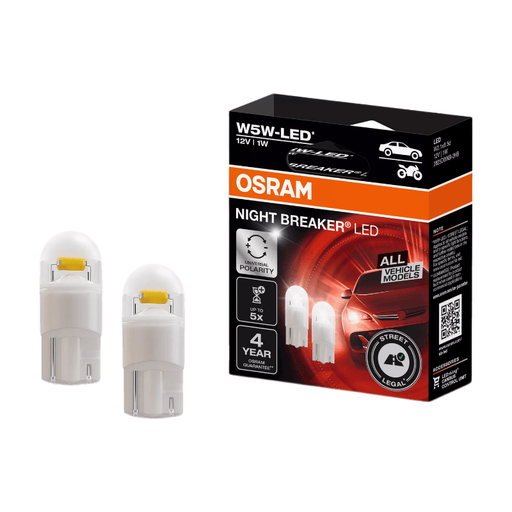
Why it suits this type of buyer: For drivers looking for a branded product with clearly stated applications and road approval for 12V parking lights, sidelights, number plate lights and interior lighting.
The product information limits its use to clear or white light housings and lists W5W/T10 for parking lights and sidelights. This helps prevent use behind red or yellow lenses.
According to OSRAM: 5700 kelvin, 50 lumens, 1 watt, universal polarity and up to five times the lifespan of a halogen bulb.
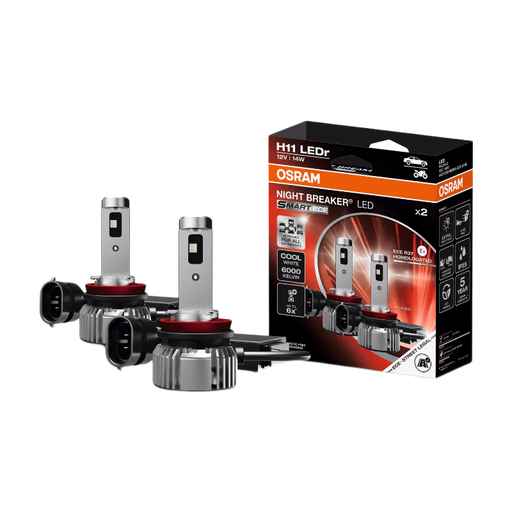
Why it suits this type of buyer: For anyone who doesn’t need a compact W5W bulb, but wants an H11 replacement for dipped beam, main beam or fog lights and plans to check the fitting first.
According to the product information, this variant has ECE R37 approval for vehicles with an H11 fitting. The fitting and correct installation are still essential; a W5W bulb is not an alternative to H11.
According to OSRAM: 6000 kelvin, 1350 lumens, 14 watts and a stated lifespan of up to six times that of a halogen bulb.
We’ve put together a complete, up-to-date list of products that meet these strict selection criteria and the applicable European safety regulations.
Switch off the relevant lights and let the old bulb cool down. Carefully pull the halogen bulb out of the fitting and insert the LED bulb as instructed. With some T10 bulbs, you may need to reverse the polarity if the bulb doesn’t light straight away; according to the product information, the OSRAM W5W has universal polarity.
After fitting, check:
With H4 or H11 bulbs, you should also check the beam pattern. If the LED chip is in the wrong position, it can cause scattered light. Have the alignment checked if the beam isn’t even.
Not always. 194, 501, 168 and W5W are often used as compatible designations, but check the original bulb, fitting, size and vehicle function. The fitting may be right, but the bulb could be too long for the housing.
It varies depending on the product, heat dissipation, how long it’s used and the vehicle. KATUR and OUSHI state a lifespan of up to around 60,000 hours for various models; OSRAM states that its NIGHT BREAKER LED W5W lasts up to five times longer than a halogen bulb. These are manufacturer product specifications, not a guarantee for every vehicle or use.
LED bulbs typically use less power than comparable halogen bulbs, according to their product specifications. The exact saving depends on the original wattage and the LED bulb you choose. A Canbus system may need extra electronics, which can reduce the difference in actual power consumption.
