
Vandaag of morgen in huis

Kwaliteit gegarandeerd

Welkomstaanbiedingen ontgrendelen: GRATIS bezorging | Tot 80% korting | Gratis 30 dagen JoyPlus-proefperiode
Download de app
A T-shirt may seem simple to choose, but small differences in fit, fabric and care determine whether you wear it often. If you only consider colour, brand or discount, you could end up with a shirt that quickly loses its shape, feels too warm or fits differently from what you expected.
The most common pitfalls when buying T-shirts are:
Do not just look at the letter size. Check the chest measurement, length and style:
For children’s T-shirts, height is often at least as important as chest size. For women’s and men’s T-shirts, shoulder width and differences in waist shape can have a significant effect on the fit. Compare the chart with a T-shirt you already find comfortable.
100% cotton generally feels soft and natural, making it a sensible choice for basic T-shirts, casual clothing and everyday wear. However, pay attention to the construction: a heavier jersey often holds its shape better, but may feel warmer.
One example is the Heavy Oversized Tee, made from 100% cotton with a 180 g/m² jersey. This specific fabric weight helps distinguish the style from lighter cotton T-shirts. The product description also lists sizes from S to 5XL.
For sports T-shirts, a blended or synthetic fabric can be practical. The product information for the Nike Dri-FIT Park 20 Tee states 57% cotton and 43% polyester. According to Nike’s product description, Dri-FIT is designed to draw moisture away from the skin. Treat this as a product specification for the intended use, not as a guarantee that every wearer will have the same experience.
Choose short-sleeved T-shirts for warm days, sport or as a base layer under a jumper. Long-sleeved T-shirts are more useful on cooler mornings, when travelling and for layered outfits.
Also check the care instructions:
A brand name such as Nike, Tommy Hilfiger, Calvin Klein, adidas, Levi’s or The North Face does not, by itself, tell you anything about the correct size, fabric weight or how long the garment will last. Base your choice on the verifiable details of the specific style.
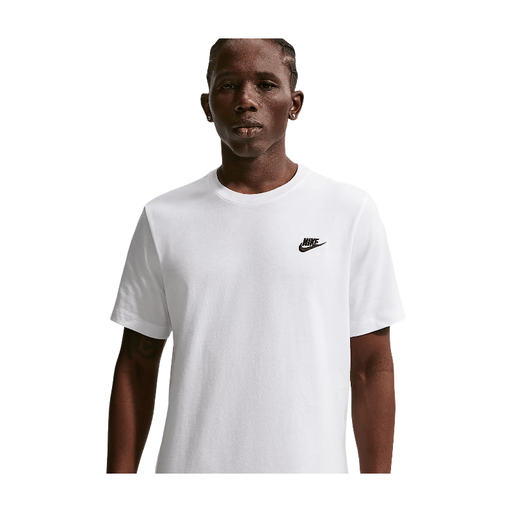
Why it suits this profile: A simple white short-sleeved T-shirt is easy to pair with jeans, shorts or a cardigan. The product information states that it has a regular, relaxed fit and is made from 100% cotton.
The listing provides specific material details and sizing advice. However, check the stated chest measurement of 104–112 cm for size L.
100% cotton; crew neck; short sleeves; suitable for everyday and casual wear.
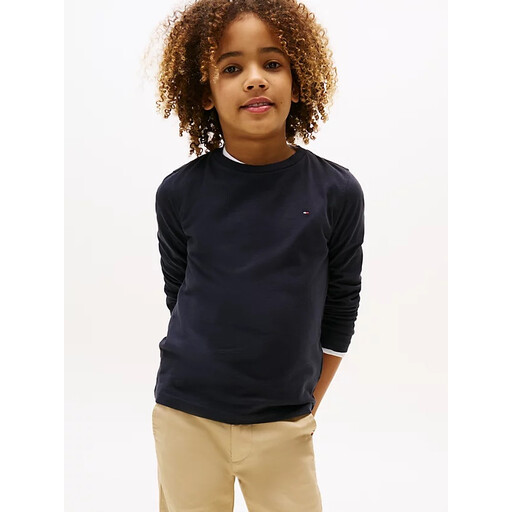
Why it suits this profile: This children’s long-sleeved T-shirt is designed to be worn on its own or under another shirt. The product information states that it is made from soft 100% organic cotton jersey and features subtle embroidery on the chest.
The fabric composition is clearly stated. For care, the label remains the most reliable guide, as washing temperatures and drying methods can vary from one garment to another.
100% organic cotton jersey according to the product information; long sleeves; suitable for layering.

Why it suits this profile: For football, training or active days, a sports T-shirt containing polyester is a sensible alternative to cotton T-shirts. The listing states that it has a regular fit and short sleeves.
The product description distinguishes between sports use and casual wear. According to the product information, the shirt is made from 57% cotton and 43% polyester.
Regular fit; short sleeves; polyester-blend fabric; according to Nike, designed to wick moisture through Dri-FIT.
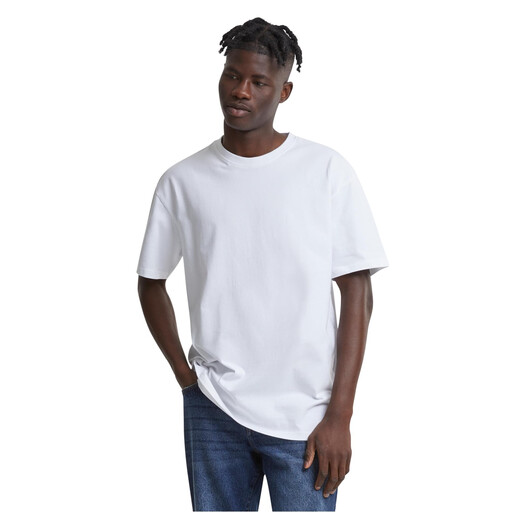
Why it suits this profile: This style is ideal if you deliberately prefer a wide cut, layering and a heavier fabric. The listing provides the chest width and garment length for each size, including 3XL.
The term oversized is supported by specific measurements and a fabric weight of 180 g/m². If you want a closer look, use the size chart to consider choosing a smaller size.
100% cotton; 180 g/m² jersey; sizes S to 5XL; crew neck and short sleeves.
With branded T-shirts, you often pay for the design, logo and collection as well. That is not necessarily a problem, as long as the features suit how you plan to wear the garment. For example, a Calvin Klein slim-fit T-shirt is designed differently from a relaxed style by The North Face. Check the following for every item:
We have put together a complete, up-to-date list of products that fully meet these strict selection criteria and the applicable European safety regulations.
Lay a well-fitting shirt flat on a table and compare its chest width and length with the product chart. Pay attention to the fit as well. Sizing an oversized T-shirt works differently from choosing a slim-fit style.
Its lifespan depends on the fabric, construction, how often it is worn and how it is washed. Cooler or gentler wash programmes, avoiding bleach and air-drying can help preserve its shape and colour for longer. Always follow the care label.
Cotton is a popular choice for basic T-shirts and casual clothing. According to the product description of a sports style, polyester or a blended fabric may be suitable for intense activity and may dry more quickly. Choose based on how you will use the garment, its fit and its care requirements, not just the name of the material.
