
Vandaag of morgen in huis

Kwaliteit gegarandeerd

Welkomstaanbiedingen ontgrendelen: GRATIS bezorging | Tot 80% korting | Gratis 30 dagen JoyPlus-proefperiode
Download de app
Mounting a new TV is a job you want to get right the first time. Yet, the search for the perfect TV mount often ends in frustration: a bracket that doesn't fit, an arm that starts to sag after a few months, or an installation process far more complicated than promised. The result? Unnecessary holes in your wall and a TV that just doesn't hang right.
Before making a purchase, it's wise to know what to look for. Much of the marketing focuses on screen size, but other specifications are more critical in determining whether a mount is truly suitable and safe for your situation. We'll outline the most common pitfalls and the key factors to consider.
TV mount with an arm might seem like a great deal, until your TV slowly but surely starts to droop after a few months. This is caused by a weak construction or low-quality materials that can't support the weight over time.wall mount for a TV can become unnecessarily complex if the manufacturer hasn't considered the user experience.To avoid a bad purchase, check three essential specifications. These determine the safety, fit, and usability of your swivel TV mount.
Don't just look at the screen size (in inches); focus on two more important numbers:
VESA 200x200 mount is therefore specifically made for TVs with that hole pattern.55-inch TV wall mount requires a higher weight capacity than a lighter model of the same size.A swivel and tilt TV mount offers the most flexibility.
full-motion wall mount combines tilt and swivel, and often allows you to extend the TV from the wall. This gives you the ultimate freedom to set the perfect viewing angle.Not every wall is suitable for every mount. A solid wall made of concrete or brick offers the most security. For hollow walls (like drywall), you'll need special anchors and sometimes extra reinforcement. Also, look for included tools like a drilling template and a small spirit level; these are signs that the manufacturer, such as Neomounts TV mount, wants to make the installation easier for you.
Based on these practical criteria, we have selected a few models that suit different user profiles.
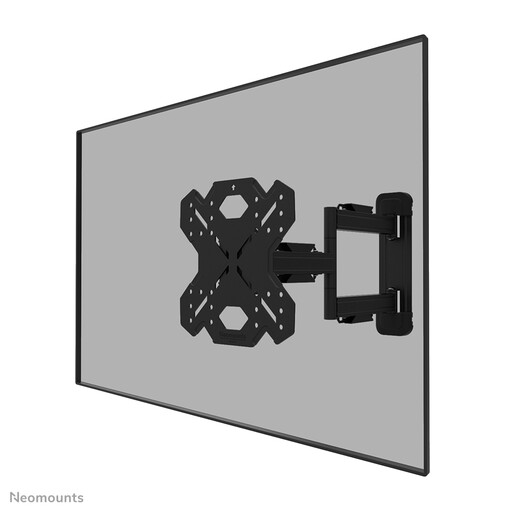
Why This Fits Their Persona: A solid and reliable choice for the most common TV sizes (32 to 55 inches) in a living room or bedroom. This mount offers a full range of motion without unnecessary frills.
With a clearly specified weight capacity of 40 kg and a VESA pattern up to 200x200 mm, you can prevent a mismatch. The sturdy construction counteracts sagging.
Comes with a drilling template and spirit level for easier installation. The easy-release system simplifies attaching the TV.
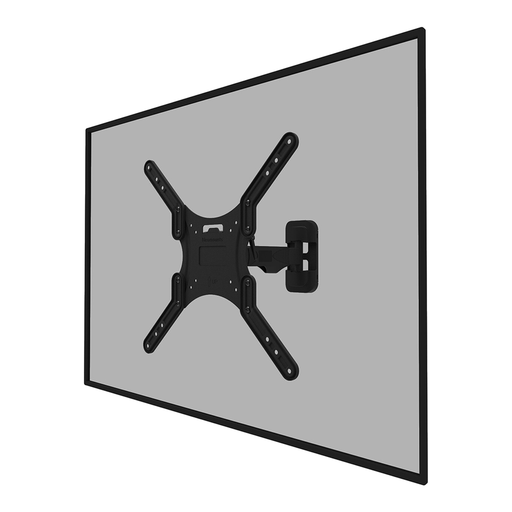
Why This Fits Their Persona: Ideal for those who want to mount their TV in a corner or frequently adjust the viewing position. Suitable for open-plan living rooms where you watch from different spots, like the sofa and the dining table.
This full-motion mount has a robust arm that holds its position, even after frequent adjustments. Its broad VESA compatibility (up to 400x400 mm) covers most 55-inch TVs.
Offers a great balance between range of motion (30° swivel, 14° tilt) and a relatively small distance from the wall (4.6 cm) when retracted. Includes cable management.
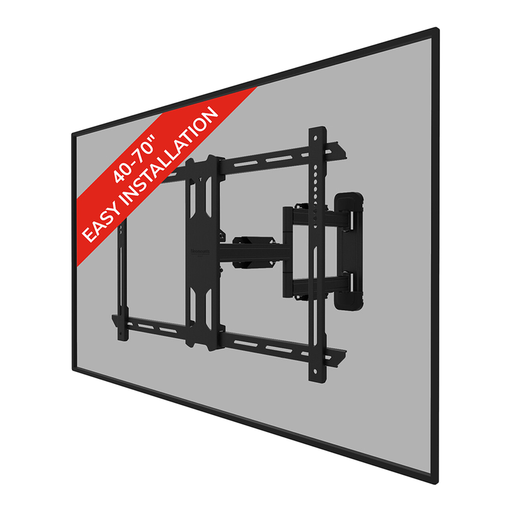
Why This Fits Their Persona: For those who want to safely and flexibly mount a larger, heavier TV (up to 70 inches). This mount is built for stability, even when the arm is fully extended.
The high weight capacity of 45 kg and robust steel construction prevent the mount from sagging under the weight of a large screen. Broad VESA support (up to 600x400) ensures a proper fit.
Offers a significant distance from the wall of up to 55.5 cm, providing great flexibility for corner mounting or accessing cables. Includes helpful installation tools.
We have compiled a complete, up-to-date list of products that fully meet these strict selection criteria and local safety regulations.
The VESA pattern is usually listed in the specifications in your TV's manual. You can also easily measure it yourself. Measure the horizontal and vertical distance (in millimetres) between the centre of the four mounting holes on the back of your TV. The result is your VESA pattern (e.g., 200 x 200 mm).
No, the wall type is very important for a secure installation. Solid walls made of concrete or brick are ideal. For hollow walls, such as drywall or plasterboard, you need special hollow-wall anchors, and it is advisable to mount the bracket onto the wooden or metal studs behind the wall. If in doubt, or with a heavy TV, it is wise to consult a professional.
A good rule of thumb is to hang the TV so that the centre of the screen is at eye level from your most common viewing position (usually the sofa). On average, this is between 100 and 110 cm from the floor. A tilting mount gives you more flexibility if you want or need to hang the TV a bit higher.
