
Cook who makes small portions
You want to blend cooked sweet potato soup straight in a small pan or jug, without creating extra washing-up. The Consumers’ Association says a stick blender is suitable for small portions and blending in the pan.


For small portions of cooked sweet potato soup, a stick blender is usually the most practical choice: you can blend the soup straight in a suitable pan or jug, without transferring it. A jug blender may be a good fit if a smooth texture is your priority and the jug is suitable for the quantity and temperature. Choose a soup maker only if your portion is within its fill markings and you also want it to cook automatically.
You want to blend cooked sweet potato soup straight in a small pan or jug, without creating extra washing-up. The Consumers’ Association says a stick blender is suitable for small portions and blending in the pan.
You care enough about a smooth soup to check whether a jug suits your portion and the temperature. The Consumers’ Association notes that a less smooth texture may be a trade-off when blending with a stick blender.
You want to cook and blend in one appliance, provided your usual quantity is within the fill markings. With a soup maker, check both the minimum and maximum fill levels.
Choose this option: if you want to blend a small portion of cooked soup straight away.
Trade-off: there’s no need to transfer the soup, but the Consumers’ Association says it may be less smooth than soup blended in a jug blender.
Choose this option: if a smooth texture is your priority and the jug is suitable for your portion.
Trade-off: you’ll need to transfer the soup, and check whether hot ingredients are suitable for the specific model.
Choose this option: if you want to cook and blend in one appliance and your portion is within the fill markings.
Trade-off: the separate jug takes up space, and the minimum fill level may be a deciding factor for a small portion.
For a small portion, focus on the minimum fill level and instructions for handling hot soup, not just the jug’s total capacity. The Consumers’ Association describes blending straight in the pan with a stick blender as suitable for small portions. For a jug blender or soup maker, check the instructions for the exact model.
| What to consider | What should you check? | Who is this most important for? |
|---|---|---|
| Blending a small quantity | Will the blending foot fit in your pan or jug? For a jug blender or soup maker, check the minimum fill level; the maximum capacity won’t tell you this. | If I’m only making a small quantity, I want to blend it straight away without transferring it. Around 40% of consumers say small portions are their top buying priority. |
| Desired texture | Decide whether you’re happy to accept a potentially less smooth texture. For a jug blender, also check the permitted contents and temperature. | I prioritise a smooth soup, even if I have to transfer it. Around 20% of consumers put texture first. |
| Handling hot soup | Read the instructions for the full model number and follow the temperature, lid and fill-level limits. | I want to blend the soup while it’s hot, so I’ll choose based on the model instructions. Around 20% of consumers say handling hot soup is their top priority. |
| Automatic cooking | Check the soup maker’s minimum and maximum fill levels, programmes and cleaning instructions. | I want to cook and blend in one appliance, as long as my portion is within the markings. Around 20% of consumers prioritise automatic cooking. |
The maximum amount for a recipe doesn’t tell you whether a small portion will be above the minimum fill level.
Before choosing, compare your usual quantity with the minimum and maximum markings on the exact model.
If your portion is below the minimum fill level, you may have to make more soup than you planned.
Instructions vary by model. Philips specifies cold or room-temperature liquids for models HR3756/00, HR3752/00 and HR3868/00. For the Pure Power 5KSB2071, KitchenAid specifies a vented lid and a maximum of 1.1 litres of hot liquid.
Before use, check the temperature, lid and fill-level instructions for the full model number.
Extra attachments mean more parts to store and clean, without guaranteeing a better result for a small portion of soup.
Choose accessories only if you’ll also use them to prepare other dishes.
Allow for extra storage space and parts to clean.
The MultiQuick 1 is a straightforward stick blender option if you’re not looking for an extensive set of accessories.
The ErgoMixx MSM66110 is a stick blender with a detachable metal blending foot.
The SoupMaker HR2203/80 combines automatic soup programmes with a separate jug.
The Pure Power 5KSB2071 is a jug blender for those who want to follow the instructions for hot ingredients.
The Quickchef+ HB67G8 is a stick blender set for those who’ll use the included accessories for things other than soup too.
These Joybuy products are stick blenders for blending small portions of cooked soup in a suitable pan or jug.
 No image available
A hand blender for blending soup in a suitable pan or jug.
The set includes two stainless steel blades, a 700 ml measuring jug and a turbo function.
For hot ingredients, use a heat-resistant container and blend in small portions to prevent overflow.
 No image available
A hand blender for blending soup straight in a suitable pan or jug.
The product description lists 1000 W, 21 speeds and a PowerBell VPlus blending foot.
It also mentions splash control and detachable parts that are dishwasher-safe.
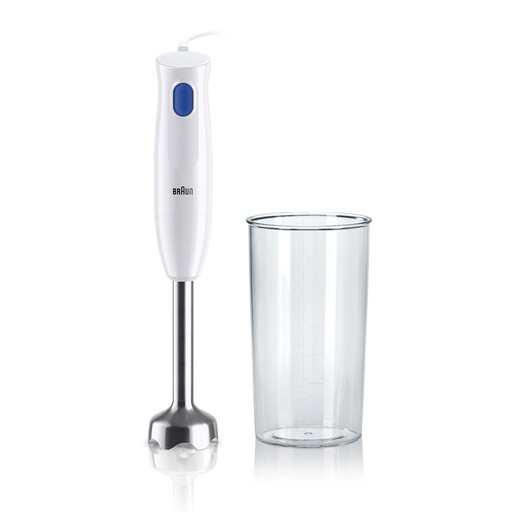 No image available
A hand blender for blending a small quantity in a suitable pan or jug.
The product description lists 450 W and a 600 ml measuring jug.
The set also includes a whisk and chopper; check whether you’ll use these accessories.
 No image available
The product description says this hand blender can be used to blend soup.
It lists 20 speeds, a turbo setting and splash protection.
The description says the detachable parts are dishwasher-safe.
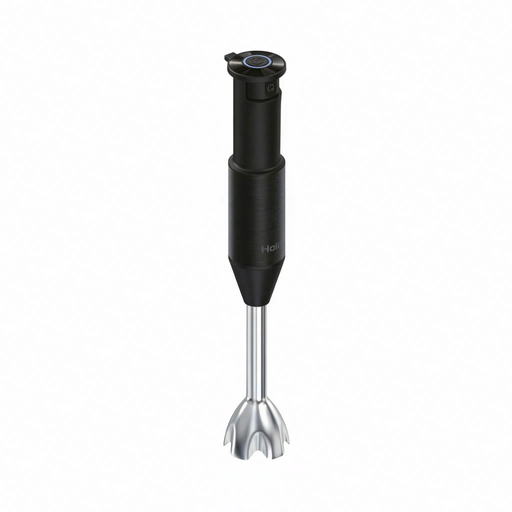 No image available
The product description lists soup and purée among the uses for this hand blender.
The model is listed with three blades and a 0.9-litre jug.
According to the product description, the blending parts can be detached.
Yes. With a stick blender, you can blend cooked soup straight in a suitable pan; the Consumers’ Association says this method is suitable for small portions. Add enough liquid if needed and follow your model’s instructions, especially when blending hot soup.
No, it depends on the model. Philips specifies cold or room-temperature liquids for models HR3756/00, HR3752/00 and HR3868/00. For the Pure Power 5KSB2071, KitchenAid specifies a vented lid and a maximum of 1.1 litres of hot liquid; don’t apply these instructions to other models.
Check that your usual quantity is between the minimum and maximum markings on the model you’re considering. Philips lists automatic soup programmes for the HR2203/80; the recipe booklet specifies a maximum of 1.2 litres for the recipes included. Knowing the maximum alone won’t tell you whether a small portion meets the minimum fill level.
Electrical appliances must meet the relevant European safety requirements; the Dutch Government explains the CE mark and EU declaration of conformity. Parts that come into contact with soup must meet the requirements for food contact materials, as explained by the Netherlands Food and Consumer Product Safety Authority. Check the information for the appliance you choose and the parts you use.