
Cook with limited worktop space
You cook soup in a pan and want to blend it without putting a blender jug or a large appliance on the worktop as well. Bosch describes its stick blenders as suitable for blending directly in the pan.


If you’re already cooking the soup in a pan and short on worktop space, a stick blender will usually suit your routine best: you can blend it in the pan without needing a separate blender jug. A standard jug blender is worth considering if you also prepare other ingredients in a jug. Choose a heated blender if you want to combine cooking and blending and have room for the appliance. For any model, check the instructions for hot ingredients and the maximum capacity for warm recipes.
You cook soup in a pan and want to blend it without putting a blender jug or a large appliance on the worktop as well. Bosch describes its stick blenders as suitable for blending directly in the pan.
You want to blend hot soup, so you check the instructions for the exact model and take care to control splashing. Philips gives different temperature instructions for different blender ranges.
You want to prepare and blend soup in one appliance, provided its warm capacity and the space it takes up on your worktop suit the way you use it. Tefal lists warm programmes and a separate capacity for warm recipes for the Blendforce Cook BL5768F0.
Choose this if: you cook the soup in a pan you already have and don’t want to transfer it to a blender jug.
Bear in mind: you hold the blender and work in an open pan, so careful handling is important to minimise splashing.
Choose this if: you often blend other ingredients in a jug too, and have room for the jug and motor base.
Bear in mind: you’ll need to transfer the soup and clean the jug. Instructions for temperature vary by model.
Choose this if: you want to prepare and blend soup in one appliance and can make room for it.
Bear in mind: the maximum capacity for warm recipes may be lower than for cold recipes. Check the capacity of the specific model.
| What to consider | What should you check? | Who is this important for? |
|---|---|---|
| Space and handling | Check where the appliance, motor base, any accessories and the cord will fit during use and storage. A stick blender can be used in the pan; a countertop model also needs space for its jug and base. | If I have limited worktop space, I want to blend soup in the cooking pan without setting out an extra jug. Around 36% of consumers prioritise saving space. |
| Blending hot soup | Check the manual for the exact model for instructions on temperature, fill level and using hot ingredients. Philips says to let ingredients cool to below 60 °C before using the HR2510/90, HR2511/90 and HR2512/90; for the HR3756/00, HR3752/00 and HR3868/00, Philips specifies cold or room-temperature ingredients only. | If I want to blend warm soup, I need to be able to follow the temperature instructions for my exact model. Around 29% of consumers prioritise safe handling of hot soup. |
| Cooking and blending | Decide whether you’ll cook the soup in your existing pan or would also like a heating function. For a heated model, check the maximum capacity for warm recipes and the programmes available. Tefal lists three warm programmes and a warm capacity of up to 1.2 l for the BL5768F0. | If I’d rather combine cooking and blending, the warm capacity needs to suit the amount of soup I make. Around 21% of consumers prioritise how their soup is prepared. |
| Cleaning and parts | Check which parts can be removed, how they can be cleaned and what’s included. The Consumentenbond says a detachable blending foot is easier to clean; extra accessories mean more parts to store and clean. | If I want to tidy up quickly after cooking, I look at which parts can be removed and the cleaning instructions. Around 14% of consumers prioritise cleaning and included accessories. |
Temperature instructions vary by model. Philips gives specific restrictions for certain jugs; those rules don’t automatically apply to other models.
Before buying and before transferring the soup, check the manual for the complete model number.
If the soup needs to cool first, you’ll have to wait longer before blending it.
For the Tefal Blendforce Cook BL5768F0, Tefal lists a capacity of up to 1.2 l for warm recipes and 1.5 l for cold recipes.
Compare the amount of soup you usually make with the capacity for warm recipes, not just the largest capacity figure.
If you want to make more than the maximum warm capacity allows, you may need to blend it in batches.
A chopper or whisk is designed for other tasks; for blending soup, a stick blender without those accessories may be all you need.
Think about what else you’ll genuinely use it for, then check which parts are included.
More accessories also mean more parts to store and clean.
The Dutch government says that if a product is faulty, the retailer is your point of contact, and there is no fixed statutory warranty period in the Netherlands.
Before choosing extra cover, compare the additional terms it offers with the rights you already have.
Bosch ErgoMixx stick blenders are an option for blending directly in a pan you already have.
The Triblade HDP106WG is a stick blender option for blending in the pan without an extensive accessory set.
Philips offers both ProMix stick blenders and jug blenders; instructions for hot ingredients depend on the model.
The Blendforce Cook BL5768F0 is a heated blender option if you want to cook and blend in one appliance.
The MultiQuick 1 MQ10.201MWH is a compact stick blender option for straightforward blending tasks.
These products suit the stick blender approach: blend soup in a pan or another suitable cooking vessel, without using a separate countertop blender jug as the blending container.
 No image available
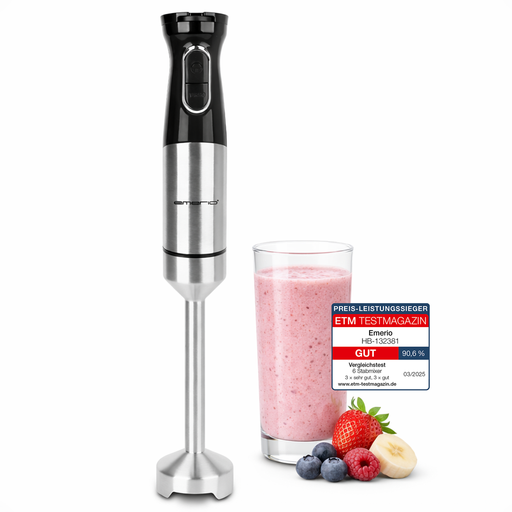
Suits anyone who wants to blend soup in a pan; the product information says it can be used with hot ingredients under certain conditions.
The product name lists 1000 W and variable speed. When working with hot ingredients, use a heat-resistant bowl and blend in small batches.
 No image available
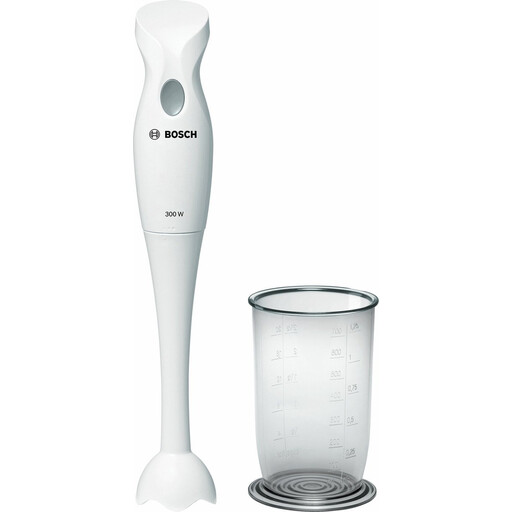
A stick blender option if you want to blend soup without using a separate blender jug as the blending container.
The model number is MSM6B150; the product name lists the colour as white.
 No image available
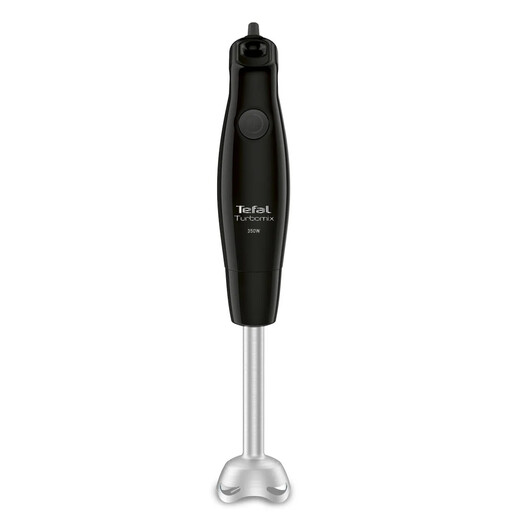
Suits anyone who wants to blend soup in a cooking vessel they already have instead of transferring it to a blender jug.
The model number is HB1218; the product name lists the colour as black.
 No image available
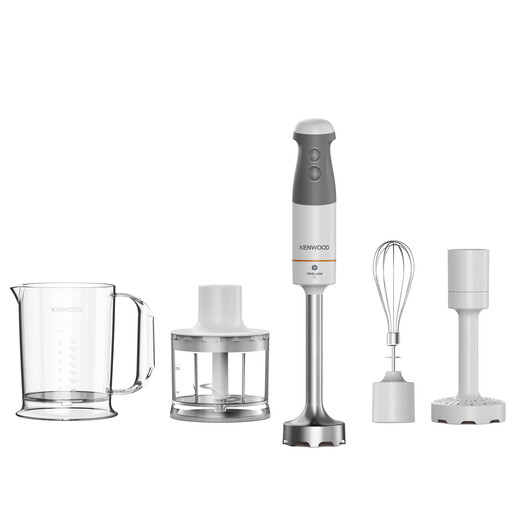
A stick blender option for blending soup in a pan; the product information also lists other included kitchen accessories.
The model number is HBM40; the product name lists the colour as white.
 No image available
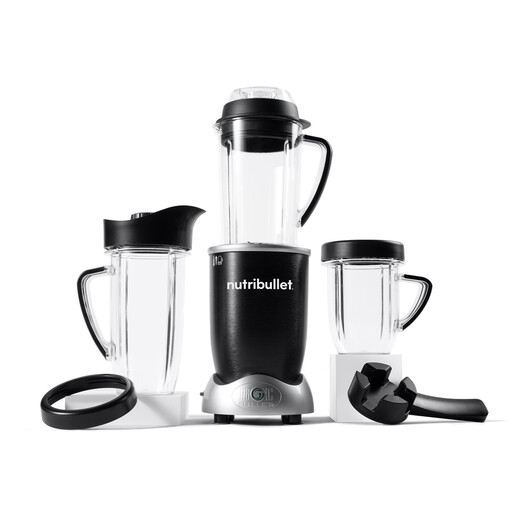
Suits anyone who wants to make soup in a blender that handles hot and cold recipes, rather than blending only in a pan they already have.
The product name lists a 1700 W motor and a 10-piece set. This countertop model uses a separate jug and needs worktop space; you’ll need to transfer soup from another pan.
No. Check the instructions for the exact model. Philips says to let ingredients cool to below 60 °C before using the HR2510/90, HR2511/90 and HR2512/90; for the HR3756/00, HR3752/00 and HR3868/00, Philips specifies cold or room-temperature ingredients only.
No, a stick blender doesn’t need fixed installation. However, place the pan on a stable surface and make sure the cord reaches the socket without being pulled tight. The Consumentenbond says a cord longer than 150 cm is useful if the socket is further away; also follow the instructions for your model when using it with warm dishes.
It varies by model and part. A detachable foot can make cleaning easier, but check the manual to see which parts are dishwasher-safe. For the MQ10.201MWH, Braun also refers users to the instruction manual.
In the Netherlands, the retailer is your point of contact for a solution under the statutory guarantee if a product is faulty. The Dutch government says there is no fixed statutory warranty period; a manufacturer’s guarantee or additional cover is separate from this. Before choosing, check which additional terms apply.
According to ACM ConsuWijzer, online purchases generally come with a statutory cooling-off period of up to 14 days after delivery. There are exceptions and rules about unpacking and trying out products, so check these and the returns policy before using the appliance.